Urban Form: Saint Sebastian
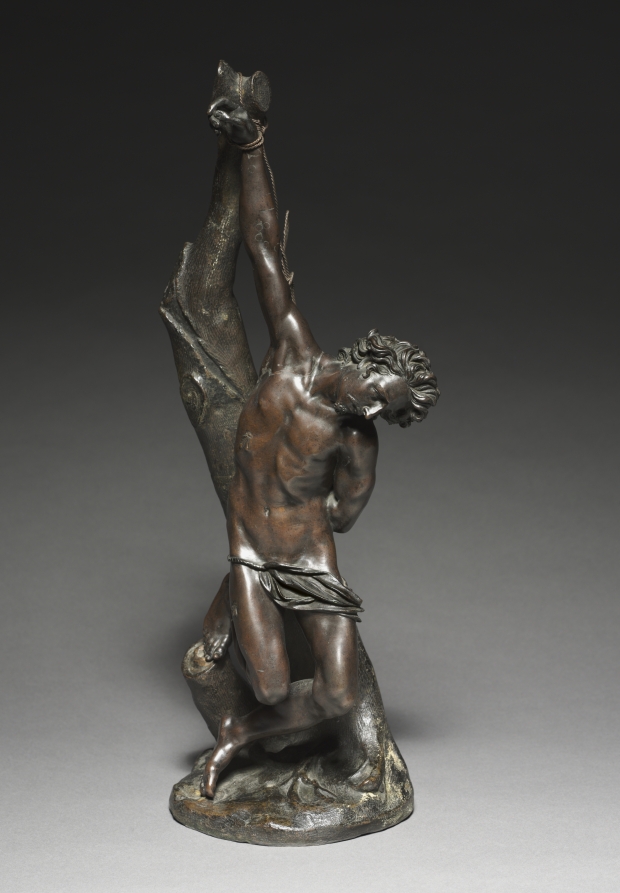
Urban Silhouette Research: Saint Sebastian — Form, Color, and the 2026 Executive Wardrobe
I. The Dialectical Premise: Event Versus State
The source DNA presents two aesthetic postures in productive opposition. The first is the event—David's Death of Socrates, a vertical tension between the hemlock cup and the upward-pointing finger, wherein the body's dissolution becomes the logos's triumph. The second is the state—the Meiping vase, whose wave motif is not representation but continuous rhythm, an abstracted curl that neither begins nor terminates. For Addison Fashion, this dichotomy is not a philosophical curiosity; it is a design brief. The 2026 executive wardrobe must reconcile the declarative gesture with the ambient condition—the single decisive line against the field of continuous motion. Saint Sebastian, as subject, supplies the mediating figure: the body pierced yet upright, form under pressure without collapse. He is the silhouette that absorbs force and retains structure.
II. Form Deconstruction: The Vertical Axis and the Contained Curve
We isolate three formal operators from the source material and translate each into garment architecture.
1. The Vertical Tension (Socratic Axis). In David's composition, the pointing arm establishes a vertical that organizes the entire pictorial field. We render this as the spine line of the tailored coat—a continuous, unbroken shoulder-to-hem axis achieved through a suppressed waist and a narrow, elongated lapel. The lapel is not decorative; it is directional, drawing the eye upward in the manner of the philosopher's gesture. Seam placement follows the same logic: princess seams migrate toward the center front, compressing the torso into a single column of intent. The result is a garment that reads as argument, not accommodation.
2. The Contained Curve (Meiping Profile). The vase's silhouette—constricted mouth, generous shoulder, tapered base—is a study in controlled volume. We adapt this as the shoulder-to-hem ratio in the outerwear block: a structured shoulder (the "丰肩" translated into a lightly extended, pad-free shoulder line) that tapers through the waist into a narrow, weighted hem. The curve is present but never soft; it is a regulated swell, the body's volume held within a disciplined envelope. This is the Saint Sebastian principle—form that yields without losing its boundary.
3. The Wave Register (Underglaze Rhythm). The Meiping's wave is abstract, repetitive, and non-hierarchical. We translate it into surface rhythm: tonal jacquard, micro-pleating at the cuff and collar, or a single engineered seam that traces a shallow arc across the back yoke. Critically, the wave is subordinate to the vertical axis—it provides continuity, not competition. In the 2026 executive context, this manifests as a garment that is legible at three meters (silhouette) and rewarding at thirty centimeters (surface).
III. Color Analysis: Slate as the Mediating Field
Slate is selected not as a neutral default but as a structural chromatic decision. It occupies the precise midpoint between the cool, mineral blue-grays of underglaze porcelain and the shadowed tonal range of neoclassical oil painting. Slate carries the following properties relevant to the executive wardrobe:
Depth without weight. Slate absorbs light rather than reflecting it, producing a matte density that reads as authority without the severity of Onyx. In the Socrates painting, the philosopher's robe is a mid-tone that anchors the composition without dominating it; slate performs the identical function on the body.
Chromatic continuity. Slate permits a monochromatic register—Slate outerwear over Slate-tinted knitwear over Slate-adjacent trousers—that mirrors the Meiping's tonal unity of glaze and ground. The eye is not interrupted by contrast; it is invited into sustained attention, which is the executive's scarcest commodity.
Material responsiveness. Slate reveals texture. A wool-cashmere flannel in Slate reads as depth; a technical nylon in Slate reads as precision. The color is a diagnostic surface, exposing the quality of the fabric and the rigor of the construction. It tolerates no compromise—which is precisely the standard the 2026 executive wardrobe should enforce.
IV. Synthesis: The Saint Sebastian Silhouette
The resulting garment is a Minimalist construction: a single-breasted coat or jacket with a suppressed vertical axis, a regulated shoulder-to-hem curve, and a subordinate surface rhythm. It is pierced—by seams, by the wave register, by the tension between structure and yield—yet it stands upright. The color is Slate, the field against which the form declares itself.
This is the Addison Fashion position for 2026: the executive wardrobe as philosophical instrument. It does not decorate the body; it organizes it. It does not follow the season; it establishes a condition. Socrates points upward; the vase holds the wave; Saint Sebastian absorbs the arrow and remains vertical. The garment does the same.