Minimalist
Slate
Urban Form: Thetis Running
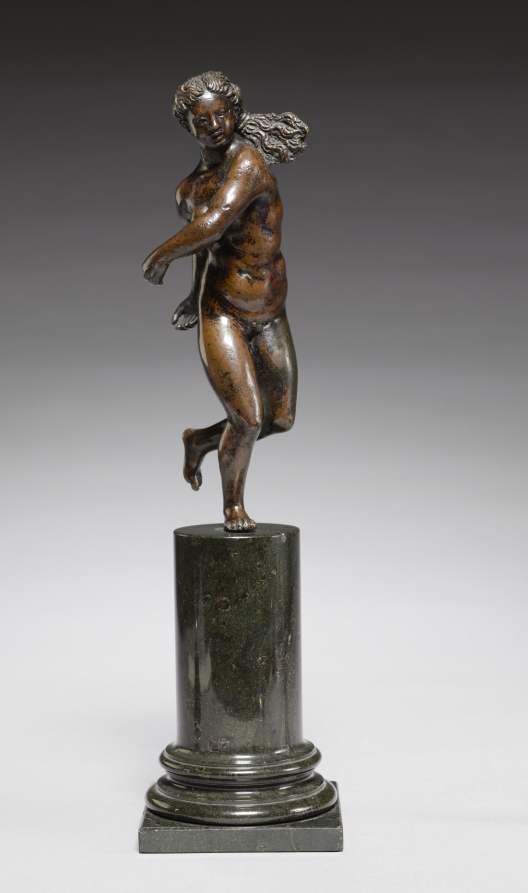
## Urban Silhouette Research: Thetis Running
### I. Formal Taxonomy: The Vessel as Silhouette
The Thetis Running proposition derives its structural logic from a cross-cultural reading of the container form—specifically, the dialectic between Jacques-Louis David’s *The Death of Socrates* and the anonymous Song dynasty *Wave-Pattern Meiping*. Both artifacts operate as vessels, yet their formal grammars diverge along a single axis: the direction of containment. David’s composition encloses narrative within a two-dimensional plane; the meiping encloses void within a three-dimensional volume. For the 2026 executive wardrobe, this distinction is not academic—it is operational.
The meiping’s silhouette—broad at the shoulder, tapering through the waist, flaring at the base—establishes a tripartite proportional system that maps directly onto the tailored jacket. The shoulder line, generous yet controlled, corresponds to the garment’s structured cap; the waist suppression, achieved through darts rather than seams, mirrors the vessel’s concave transition; the hem, slightly extended, provides the visual ballast that the meiping’s foot supplies. This is not ornament. It is load-bearing geometry.
### II. Color as Material Argument
Slate functions here as the chromatic equivalent of Song celadon—a cool, desaturated ground that absorbs light rather than reflecting it. In the *Wave-Pattern Meiping*, the glaze’s subtle variation across the curved surface creates a reading of depth without pigmentation. Slate achieves the same effect in textile: a wool-silk blend at 280 g/m² yields a surface that shifts between graphite and blue-grey depending on incidence angle, producing a monochrome that reads as tonal rather than flat.
Against this ground, the Davidian counterpoint—the sharp, directional light of Neoclassical chiaroscuro—manifests as a single structural highlight: a knife-pleated silk crepe de chine inset at the inner sleeve, visible only in motion. The effect is deliberate. The garment withholds its complexity until the wearer moves, at which point the pleat catches light and introduces a linear rhythm that the static silhouette conceals. This is the *Socrates* gesture transposed: the raised hand pointing upward, the single vector of meaning within an otherwise closed composition.
### III. Construction and the Executive Body
The Thetis Running jacket employs a modified raglan sleeve with a forward shoulder rotation of 12 degrees, accommodating the desk-bound posture without compromising the shoulder’s architectural line. The body is cut on a single panel with a center-back seam that follows the spine’s curvature—a construction derived from the meiping’s continuous profile, which admits no interruption between shoulder and foot. Princess seams are eliminated; shaping is achieved through heat-set darts at the waist and a bias-cut facing that allows the front edge to curve rather than break.
The trouser follows the same logic. A high-rise, straight-leg cut in a double-faced wool crepe (340 g/m²) provides the vertical continuity that the jacket’s hem initiates. The rise is extended by 2 cm beyond standard executive proportion, creating a visual elongation that references the meiping’s foot flare—a subtle widening at the base that stabilizes the entire column.
### IV. The Void as Functional Space
The meiping’s most significant formal property is its interior void—the empty cavity that constitutes its purpose. In the Thetis Running system, this translates to the garment’s negative space: the 4 cm gap between jacket hem and trouser waist, the open collar stand that frames the neck without constriction, the unlined back panel that allows the fabric to move independently of the body. These are not omissions. They are the garment’s capacity to receive—to accommodate the wearer’s movement, the day’s accumulation, the body’s thermal fluctuation.
David’s *Socrates* presents the cup as the instrument of transition; the meiping presents the vessel as the condition of storage. The executive wardrobe requires both: the capacity to dispatch (decision, delegation, departure) and the capacity to retain (memory, strategy, continuity). The Thetis Running silhouette resolves this duality through a single formal gesture—the jacket’s interior pocket, cut from the same slate wool-silk, positioned at the left breast and accessible only through a concealed vertical slit. It is the empty cup and the full vessel simultaneously.
### V. Conclusion: The Permanent Transient
The 2026 executive operates within a temporal compression that neither David’s frozen instant nor the meiping’s glacial continuity fully captures. The Thetis Running system proposes a third position: the silhouette as a running form—stable in its proportions, fluid in its surfaces, and minimal in its interventions. Slate provides the chromatic restraint; the meiping provides the proportional discipline; the Davidian light provides the single point of emphasis. The result is a wardrobe that functions as both container and content—a vessel for the executive body that does not announce its own significance, but sustains it.
Technical Insight
NYC Perspective: Translating Slate tones into Minimalist silhouettes.