Minimalist
Slate
Urban Form: Kenilworth Castle, Warwickshire, England
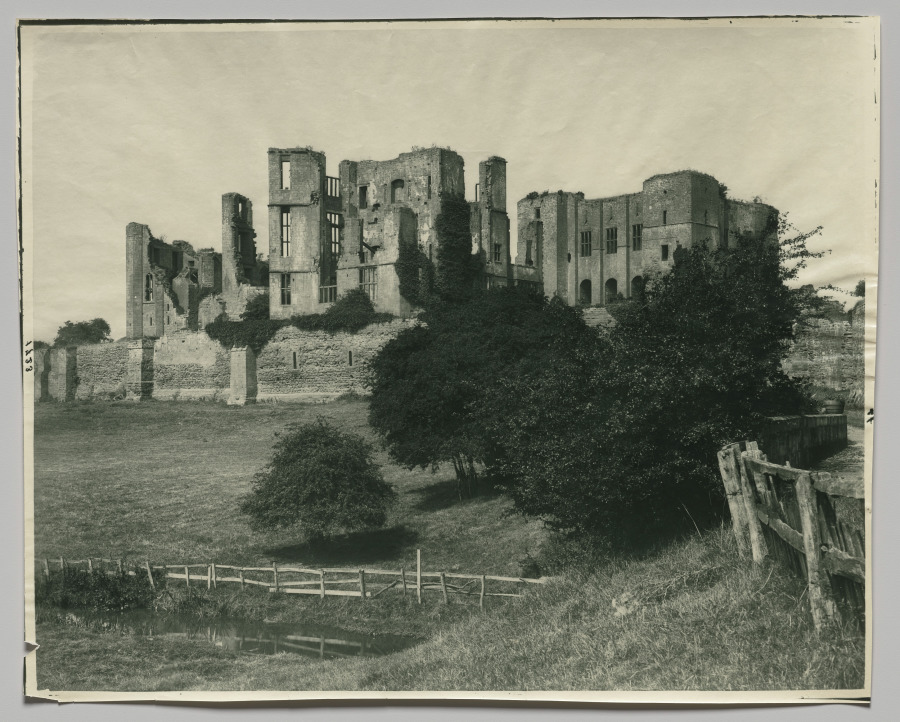
## Urban Silhouette Research: Kenilworth Castle — Structural Poetics of the Fortified Shell
### I. The Geometry of Endurance
Kenilworth Castle presents a silhouette defined not by ornament but by the relentless logic of load-bearing mass. The keep — the Norman tower at its core — operates as a near-perfect rectangular prism, its walls rising with a slight batter that tapers inward as they ascend. This is geometry in service of survival: the angled plane deflects force, distributes weight, and creates a profile that reads as both monumental and improbably light against the Warwickshire sky. For the 2026 executive silhouette, this is the governing principle — structure that conceals its own engineering beneath a surface of absolute calm.
The castle's later additions — the Elizabethan loggia, the gatehouse, the ruined curtain walls — introduce a counterpoint of aperture and void. Where the keep is solid, the ruins are skeletal; where the keep is closed, the walls are punctured by arrow loops and window openings that function as negative space. This dialectic between the fortified shell and the permeable boundary is the central tension of the Addison wardrobe: garments that enclose the body with architectural authority while permitting calculated exposure.
### II. Materiality: Stone, Shadow, and the Patina of Authority
The castle's stone — grey Warwickshire sandstone — has weathered into a surface of extraordinary complexity. Its color shifts from slate to silver depending on the hour, and its texture records centuries of erosion, lichen, and repair. This is materiality as autobiography: the fabric of the building tells the story of its own endurance. For 2026, we translate this into textiles that carry visible history — bonded wool with a faintly irregular surface, slate-grey cashmere whose nap catches light like weathered masonry, technical fabrics that develop a patina through wear rather than resisting it.
The critical insight is that Kenilworth's stone does not aspire to polish. It is matte, granular, and unyielding. The executive silhouette of 2026 must absorb this lesson: luxury defined not by sheen but by density, not by finish but by substance. A coat that reads as a single carved plane from shoulder to hem, its surface broken only by the faintest variation in tone — this is the Addison interpretation of the castle wall.
### III. The Silhouette: Fortification and Release
The Kenilworth profile is characterized by verticality interrupted by horizontal banding — string courses, window ledges, the line where roofline meets sky. This rhythm of ascent and pause defines the 2026 executive silhouette: long, columnar lines broken by precise horizontal interventions. A tailored coat with a single seam at the waist. A column dress interrupted by a single band of contrast at the hip. The body is not shaped; it is architecturally articulated.
The castle's ruins introduce the concept of the incomplete silhouette — walls that end abruptly, arches that frame emptiness. This is the poetics of the fragment, and it governs our approach to layering. The 2026 executive does not present a finished surface but a composition of planes: a sleeveless overcoat worn over a long-sleeved column, the outer layer cut away at the shoulder to reveal the structure beneath. The silhouette is complete only in its relationship to what it conceals.
### IV. Urban Translation: The Castle in the City
Kenilworth was built to command a landscape. Its silhouette was legible from miles distant — a declaration of presence. The 2026 executive operates in a different theater: the dense urban grid, where legibility is achieved through contrast rather than scale. The Addison silhouette achieves this through the discipline of the single gesture: a shoulder line that extends beyond the natural shoulder, a hem that falls precisely at the ankle, a collar that stands away from the neck with architectural deliberateness. These are not decorative choices but structural ones — each element defines the boundary between body and environment.
The castle's gatehouse — a compact, symmetrical structure with a central arch — offers a final lesson: the power of the framed opening. In the 2026 wardrobe, this translates into garments that frame the body rather than obscure it. A coat that closes with a single visible seam. A jacket whose lapels create a precise V of negative space. The executive silhouette is not a costume but a system of apertures and enclosures, each calibrated to project authority through restraint.
### V. Conclusion: The Fortified Minimal
Kenilworth Castle endures because it was built with a clarity of purpose that admits no superfluity. Its geometry is legible, its materials are honest, and its silhouette is unmistakable. The Addison 2026 executive silhouette inherits this legacy: garments that function as fortified shells, their surfaces dense with material intelligence, their forms reduced to the essential geometry of the body in motion. This is minimalism not as absence but as fortification — the slate-grey architecture of authority, worn with absolute conviction.
Technical Insight
Technical Insight: Translating Slate palettes into Minimalist silhouettes for the modern metropolis.