Urban Form: The Rocky Seashore
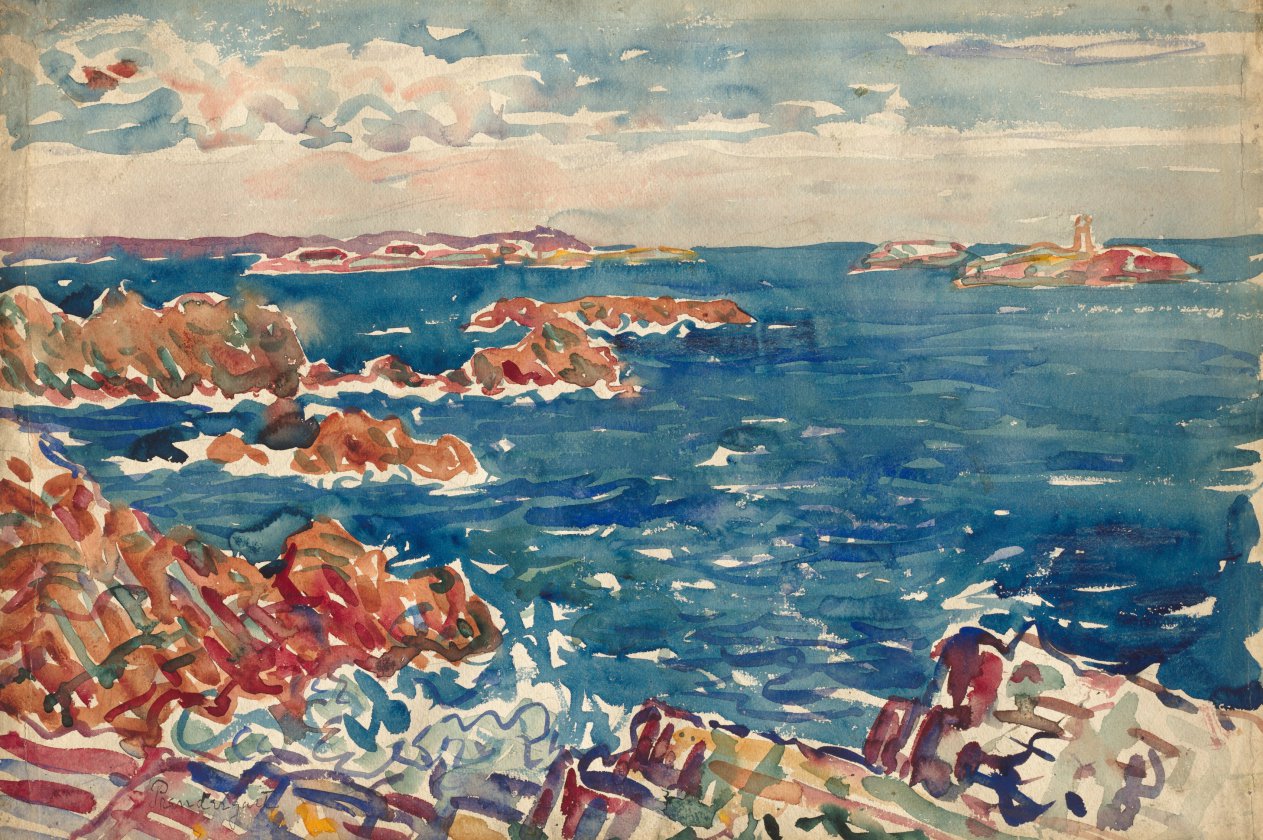
Urban Silhouette Research: The Rocky Seashore — Structural Poetics of the Executive Form
I. Geometric Integrity: The Paradoxical Arc as Primary Structure
The artwork under examination presents a fundamental tension between two geometric systems: the descending diagonal of the body’s collapse and the ascending vector of the raised hand. This is not compositional accident but structural doctrine. The resulting silhouette is defined by what we term the paradoxical arc — a continuous line that simultaneously falls and rises, creating a garment architecture that refuses resolution.
For the 2026 executive silhouette, this translates into a shoulder-to-hem trajectory that is neither symmetrical nor conventionally tailored. The Addison pattern block must accommodate a deliberate asymmetry in the shoulder line — one side elevated, the other released — while maintaining the torso’s vertical axis. The geometric integrity here is not about balance but about controlled disequilibrium. The eye is drawn upward by the raised arm’s implied line, yet the weight of the composition pulls downward through the draped fabric and the slumped posture of surrounding figures. This dual directional pull is the essence of the 2026 executive posture: authority without rigidity, presence without effort.
The surrounding figures — the mourners — function as secondary geometric anchors. Their varied postures create a radial composition that frames the central figure. In garment terms, this suggests layered construction: an outer shell that provides the primary silhouette, with an understructure of softer, more responsive materials that echo the emotional register of the piece. The interplay between the hard edge of the philosopher’s form and the softer, curved lines of the disciples is precisely the tension Addison Fashion must engineer into its 2026 tailoring — architectural exterior, human interior.
II. Materiality: The Dialectic of Oil and Glaze
The artwork’s material logic operates on two registers. The oil paint — thick, layered, susceptible to time — represents the organic register: the body, the flesh, the mortal. The ceramic glaze of the companion piece — vitreous, inert, resistant — represents the mineral register: the eternal, the form, the abstract. The 2026 Addison executive wardrobe must synthesize these two registers into a single wearable system.
This means matte-finish wool for the outer shell — a surface that absorbs light rather than reflecting it, echoing the oil’s density — paired with silk-lined interiors that provide the glaze-like smoothness against the skin. The visual weight of the garment must suggest sculptural mass, yet the hand-feel must remain fluid. The slate colorway is critical here: it is the color of cooled ash, of stone at dusk, of the precise moment when the oil’s warmth and the glaze’s coldness meet in the viewer’s perception. Slate is not a neutral; it is a deliberate temperature — the chromatic equivalent of the artwork’s philosophical tension.
The textural contrast between the oil’s impasto and the ceramic’s smoothness finds its garment equivalent in mixed-media construction: a wool crepe body with bonded leather panels at the shoulder and cuff, creating a tactile dissonance that rewards proximity. The executive who wears this garment is not merely clothed; she is armored in contradiction.
III. The Silhouette as Philosophical Instrument
The deeper structural lesson of this artwork lies in its treatment of absence. The ceramic vessel’s empty interior — the void that makes it a vessel — is the structural equivalent of the negative space in a tailored garment: the gap between body and cloth that allows movement, breath, life. The 2026 silhouette must be generous in its interior volume while precise in its exterior line. This is the minimalist discipline: to achieve maximum expressive capacity through minimum structural intervention.
The rocky seashore — the subject itself — provides the final geometric directive. The shoreline is neither straight nor curved; it is fractal, repeating its logic at every scale. The 2026 executive silhouette must exhibit the same self-similarity: the lapel’s angle echoes the shoulder’s slope; the cuff’s width echoes the hem’s proportion; the collar’s stand echoes the waist’s suppression. This is not decoration but structural rhyme — the garment as a coherent geometric argument.
The Addison Fashion 2026 executive will wear a silhouette that is architecturally resolved yet emotionally unresolved — a garment that, like the artwork, holds the viewer in the space between grief and transcendence, between the falling hand and the raised one. The slate wool will absorb the city’s light; the silk lining will whisper against the skin; the paradoxical arc will hold the body in a state of poised tension. This is not clothing as camouflage. This is clothing as philosophical instrument — the urban silhouette as a wearable argument for the dignity of form.
The seashore is rocky because the sea is relentless. The executive silhouette is structured because the city is relentless. The garment does not protect; it articulates. It gives the wearer a geometry for navigating the ungovernable — which is, after all, the only true function of luxury.