Urban Form: Wine Cask with Stamped Floral Decoration
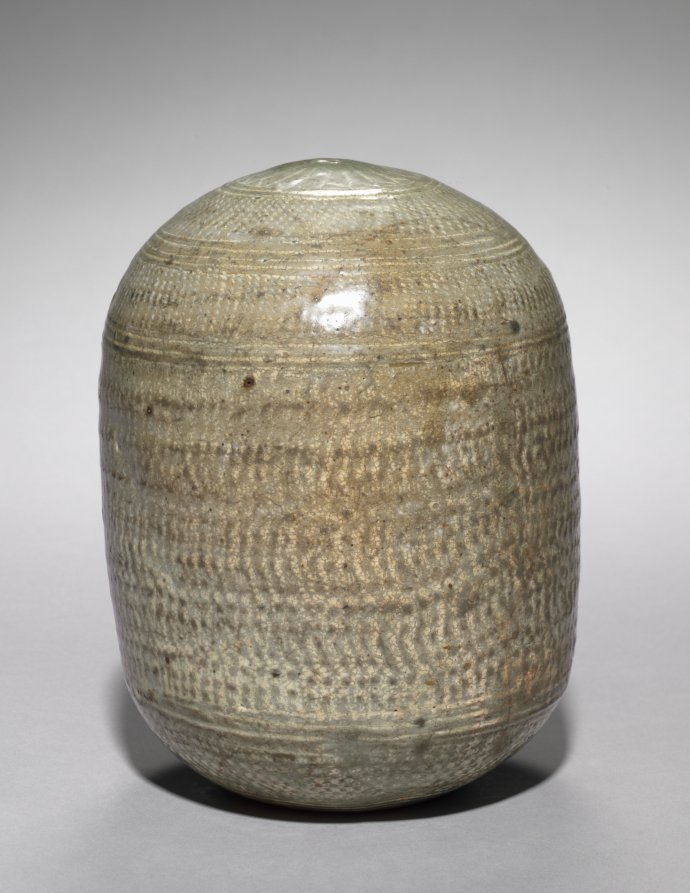
Urban Silhouette Research: Wine Cask with Stamped Floral Decoration
Preliminary Taxonomy and Structural Thesis
The artifact under review—a wine cask bearing stamped floral ornamentation—presents a deceptively simple geometric proposition: the cylinder, closed and load-bearing, interrupted only by a shallow relief matrix. For the Addison Fashion atelier, this object is not a vessel but a specification. It codifies the 2026 executive silhouette as a closed volumetric system in which decoration is not applied but stamped—compressed into the structural surface, subordinate to the load path. The silhouette we derive is Minimalist in category and Onyx in color: a near-black, matte-absorbent field against which every stamped motif reads as shadow rather than shine. The following analysis isolates the geometric integrity of the artifact and translates it into wearable architecture.
Geometric Integrity: The Cylinder as Primary Law
The cask’s governing geometry is the right circular cylinder—an extrusion of a single circle along a single axis. This is the most disciplined of all volumes: it admits no taper, no waist, no rhetorical flourish. Its integrity depends on constant radius and continuous curvature, meaning the eye can trace the entire form without encountering an interruption of logic. For 2026 tailoring, this translates into a shoulder-to-hem column that refuses the conventional waist suppression. The executive torso is re-specified as a constant-radius sheath: the bust, waist, and hip are reconciled to a single dominant circumference, and fit is achieved through internal engineering—darts concealed within seam allowances, a bias-cut yoke—rather than external cinching. The result is a silhouette that reads as one continuous gesture, austere and unbroken.
The cask’s end-caps supply the second geometric law: closure. The circular head and foot are flat planes that terminate the volume decisively. In garment terms, this demands a hem and a neckline that behave as planes rather than edges—a faced, weighted hem that falls with the gravity of a disc; a collarless neckline cut on a true horizontal. The silhouette must not fray into ambiguity at its boundaries. It must end.
The Stamped Motif: Relief Without Ornament
The floral decoration is stamped, not embroidered, not appliquéd. This distinction is the entire thesis. Stamping is a subtractive-compressive operation: the motif exists only as displacement of the host material, never as added mass. The surface remains planar; the flower is a depression, a shadow, a memory of pressure. For Addison Fashion, this prescribes a decorative regime of tonal relief: laser-ablated matte patterns on Onyx wool, heat-pressed micro-embossing on bonded crepe, seam-topstitch geometries that read only at raking light. No contrast thread. No hardware. The ornament must be legible only through shadow, which is to say, only through movement and proximity—an urban poetics of intimacy rather than display.
The floral motif itself, being stamped and repeated, introduces modular rhythm across the cylinder. The pattern is not centered; it tiles. This licenses a 2026 construction logic of panel repetition: identical pattern blocks rotated and mirrored across the body, so that the garment’s seams coincide with the motif’s axes. Structure and ornament become the same drawing.
Urban Materiality: The Onyx Specification
The cask is a container of liquid—it must resist, seal, and endure. Its materiality is density under pressure. We specify Onyx as the chromatic and tactile register: a black that is not glossy but light-absorptive, the black of charred oak and oxidized iron. The textile must carry weight without stiffness—double-faced wool, dense cotton-silk ottoman, resin-treated linen—surfaces that hold a stamp and return a shadow. In the urban field, this reads as architectural anonymity: the executive figure as a closed, load-bearing column moving through the city, ornamented only where the light chooses to graze.
Conclusion: The Silhouette as Vessel
The wine cask resolves into a single proposition: a closed cylinder whose only decoration is its own compressed surface. The 2026 Addison executive silhouette adopts this law without qualification—constant radius, planar closure, stamped relief, Onyx density. The garment becomes a vessel that carries the body as the cask carries wine: without leakage, without excess, with the quiet authority of a form that has nothing to prove and everything to hold.