Urban Form: Kneeling Carthusian Monk
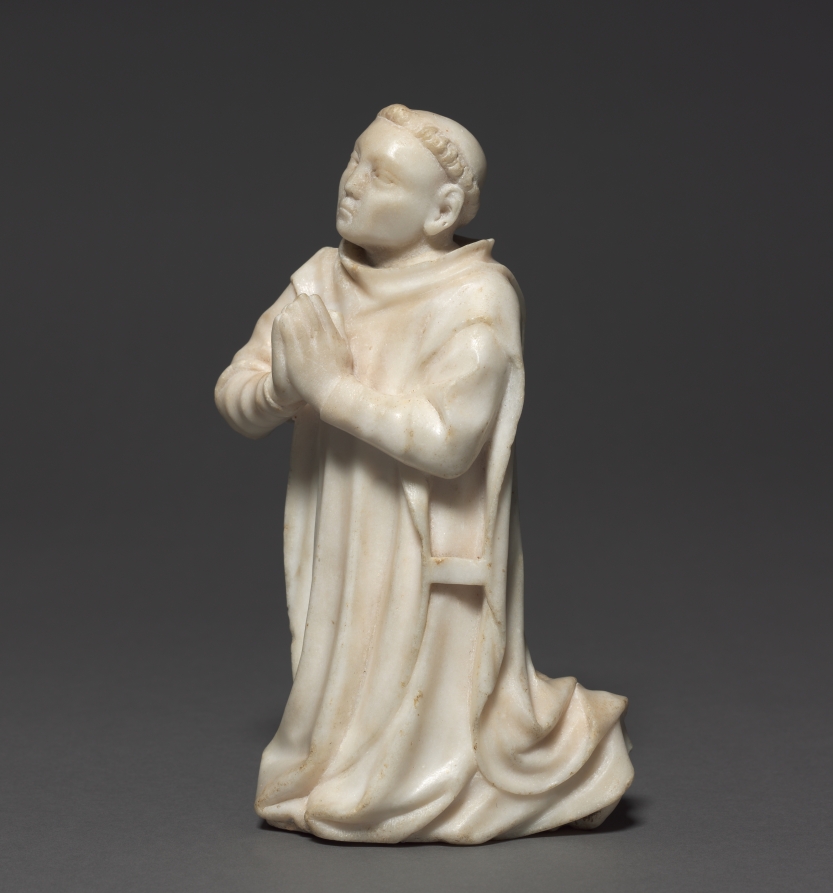
Urban Silhouette Research: The Kneeling Carthusian Monk as Architectural Prototype
I. Geometric Integrity: The Fold as Structural Unit
The Carthusian habit, when subjected to rigorous geometric analysis, reveals itself not as drapery but as load-bearing architecture. The kneeling posture generates a triangulated volume: the apex at the cowl, the base spanning the folded knees, and the vertical axis of the spine resolving into a plumb line of absolute stillness. This is not softness; it is compression. The fabric does not fall—it descends with the deliberateness of poured concrete, each fold acting as a buttress against gravitational collapse. For the 2026 executive silhouette, this translates into a radical proposition: the garment as structural envelope, where every seam is a stress line and every pleat a calculated deflection. The monk's silhouette is monolithic yet porous, a paradox Addison Fashion resolves through disciplined pattern-cutting—the cowl becomes a hooded shoulder, the sleeve a tapered column terminating in the precise negative space of clasped hands.
II. Materiality: The Weight of Silence
The wool of the Carthusian habit operates as urban materiality at its most austere. Its surface absorbs light rather than reflecting it, creating a depth of field that flattens the figure into a two-dimensional plane of absolute gravity. This is the antithesis of the Caravaggio chiaroscuro—no theatrical illumination, only the slow accumulation of shadow within shadow. For Addison Fashion's 2026 collections, this suggests a fabric philosophy rooted in optical density: heavy-gauge wool crepe, double-faced cashmere, bonded felt—materials that hold their shape without interfacing, that drape with the finality of stone. The kneeling monk's habit reveals no sheen, no surface chatter; it is matte as manifesto. In the executive wardrobe, this translates to garments that resist the vulgarity of reflection, that command space through the sheer authority of their weight.
III. The Kneeling Geometry: Posture as Silhouette
The kneeling position is the artwork's most radical formal decision. It collapses the vertical hierarchy of standing figures into a horizontal mass—a low, dense volume that occupies the lower third of the visual field. This is not submission; it is architectural grounding. The monk's body becomes a foundation, a plinth from which the cowl rises as a single, unbroken curve. For the 2026 executive silhouette, this suggests a rethinking of the power stance: not the towering shoulder or the aggressive lapel, but the settled volume—the jacket that sits low and wide, the trouser that pools with intention, the coat that anchors the body to the urban grid. The kneeling monk is the anti-hero of verticality, and yet his silhouette possesses a monumentality that no standing figure could achieve.
IV. The Cowl as Urban Armor
The cowl is the artwork's most sophisticated geometric element—a folded plane that conceals the head while defining the shoulder line. It is simultaneously protective and anonymous, a mobile architecture that frames the face as a negative space. In the context of urban poetics, the cowl is the ultimate minimalist gesture: a single piece of fabric that transforms the human form into a sculptural object. For Addison Fashion, this translates into the hooded coat, the funnel neck, the exaggerated collar—garments that create a controlled aperture around the face, that frame the wearer as a figure of mystery rather than display. The cowl is not a hood; it is a threshold, a liminal zone between the body and the city.
V. Conclusion: The Monk as Minimalist Prototype
The Kneeling Carthusian Monk is not a religious image; it is a geometric proposition. Its silhouette is defined by compression, weight, and the disciplined refusal of ornament. For the 2026 executive, this offers a radical alternative to the tailored aggression of traditional power dressing: a silhouette that commands through stillness, that asserts authority through material density, that speaks through silence. Addison Fashion's urban silhouette for 2026 is not a statement; it is a structure—a garment that stands on its own, that holds its shape against the wind, that kneels without surrender. The monk is the prototype; the city is the cloister.