Urban Form: Covered Teapot
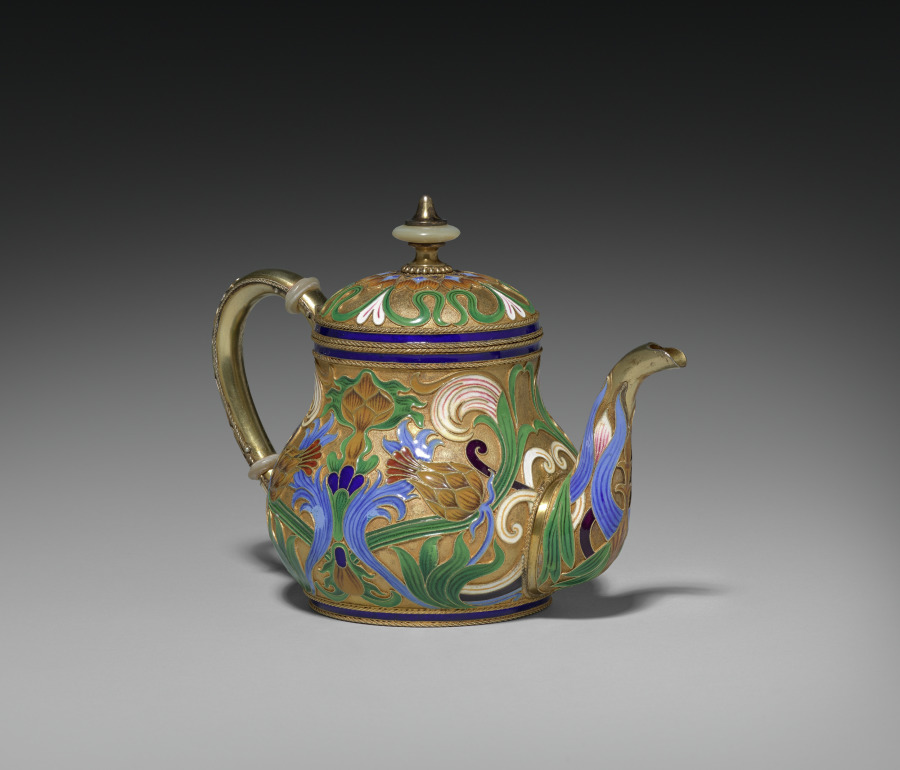
Urban Silhouette Research: The Covered Teapot as Formal Proposition
I. Typological Extraction: From Vessel to Silhouette
The covered teapot presents a closed volumetric system—body, lid, handle, spout—whose formal logic is defined by containment and controlled release. For the 2026 executive wardrobe, this typology translates into a garment architecture of sealed volume with a single point of egress. The body of the vessel corresponds to the torso: a continuous, uninterrupted mass that resists fragmentation. The lid is the collar or neckline—an element that completes the form rather than decorates it. The spout, critically, is the only aperture through which the interior communicates with the exterior; in garment terms, this is the sleeve opening, the vent, or the single seam that permits movement without compromising the integrity of the whole.
The teapot's silhouette is fundamentally centripetal. Unlike the tailored jacket, which projects authority through shoulder extension and waist suppression, the teapot form draws mass inward toward a vertical axis. The shoulder is rounded, not structured; the base is weighted, not tapered. This produces a silhouette that reads as self-contained—a quality increasingly demanded by a C-suite operating in environments of informational overload and aesthetic noise. The executive who wears a teapot-derived silhouette communicates containment: she is not leaking signal. She is not permeable.
II. The Lid as Structural Closure
The lid is the teapot's most under-theorized component and its most consequential for wardrobe application. In the vessel, the lid is not merely a cover; it is a calibrated seal—friction-fit, often with a knob that serves as the sole point of manual interface. Translated to garment, the lid becomes the neckline and collar assembly: a discrete, self-finishing module that sits atop the body volume without merging into it. The 2026 iteration is a stand collar with concealed closure, its top edge finished flush, its interior structure invisible. No lapel, no notch, no spread—these are apertures that leak form. The lid-collar completes the silhouette's upper terminus with the same finality as a ceramic lid meeting its gallery.
The knob—the single protrusion—corresponds to the single visible fastening: a monolithic button, a magnetic clasp, a bar-tack. This is the garment's only concession to operability. Everything else is sealed.
III. The Spout: Controlled Egress and the Problem of the Sleeve
The spout is where the teapot's formal purity encounters functional necessity. It is an asymmetric protrusion—a deliberate rupture of the rotational symmetry that otherwise governs the vessel. In the executive wardrobe, the sleeve is the spout: the point at which the body volume must open to accommodate the arm. The 2026 solution is a set-in sleeve with a narrow, elongated armhole, positioned to preserve the torso's sealed volume while permitting the arm to function as an independent vector. The sleeve is not a tube attached to a box; it is a tapered conduit, widest at the armhole and narrowing toward the wrist, its seam line rotated posteriorly to maintain a clean front plane.
Critically, the spout does not compromise the teapot's silhouette; it extends it. The sleeve must do the same—projecting from the body without disrupting the shoulder line's continuity. Raglan construction is rejected: it dissolves the shoulder into the sleeve, producing a softness incompatible with the vessel's formal discipline.
IV. Color: Slate as Fired Surface
Slate is the chromatic equivalent of reduction-fired stoneware—a gray that retains the memory of heat without displaying it. It is not neutral; it is resolved. In the teapot's glaze, slate manifests as the cool gray-green of celadon or the iron-speckled gray of Jian ware: a surface that absorbs light rather than reflecting it, producing depth through tonal variation within a narrow range. For the executive wardrobe, slate functions as a chromatic seal: it closes the silhouette, eliminating the visual noise of pattern or contrast. A slate garment reads as a single continuous surface, its form legible only through shadow and edge.
The color strategy is monolithic: slate body, slate lid-collar, slate sleeve. No contrast trim, no visible topstitching in a lighter thread. The only permitted variation is textural—a matte wool body against a slightly denser collar, a silk-cotton blend in the sleeve that catches light differently from the torso. This is the glaze's crazing: variation without rupture.
V. Formal Synthesis: The Closed Executive
The covered teapot yields a wardrobe proposition defined by closure, containment, and controlled aperture. The silhouette is vertical, weighted at the base, rounded at the shoulder, sealed at the neck, and opened only at the wrist. It rejects the tailored jacket's projectional authority in favor of a receptive authority—the authority of the vessel that holds without spilling. In the 2026 executive context, where visibility is constant and permeability is a liability, the teapot silhouette offers a formal language of strategic opacity. The wearer is present, complete, and closed. She communicates through form alone—and form, in slate, is sufficient.