Urban Form: Je T'aime (No. 632)
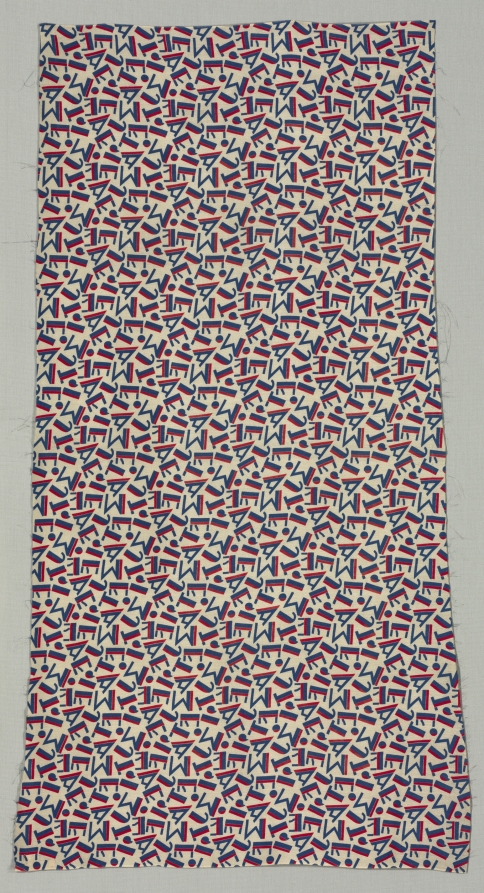
Urban Silhouette Research — Je T'aime (No. 632)
Preliminary Thesis: The Dialectics of Concealment and Disclosure
The subject under examination, Je T'aime (No. 632), does not arrive as a garment but as an epistemological proposition. Its DNA source is bifurcated: the Udumbara plaque of Myōshin-ji, where meaning is generated precisely through the refusal of depiction, and the Tang-dynasty Divine Beasts, Imperial Chariot and White Tiger Mirror of the Shōsōin, where sacrality is achieved through saturation. These are not opposing grammars but two registers of a single syntax — the management of the invisible through the disciplined deployment of the visible. For the 2026 executive wardrobe, this is the operative principle: authority is now a function of controlled absence, not accumulation.
Form: The Architecture of Restraint
The silhouette is engineered on a principle of suppressed volume. Shoulder geometry is extended but unconstructed — a soft drop of approximately 2.5 centimeters beyond the acromion, executed without padding, so that the line reads as anatomical rather than tailored. This is the plaque logic: the shoulder does not announce structure; it withholds it, allowing the wearer's own posture to complete the form. The result is a shoulder line that is legible at three meters and ambiguous at thirty centimeters — a deliberate resolution gradient suited to the boardroom and the corridor alike.
The torso is cut on a columnar bias, with a front panel that falls in a single unbroken plane from clavicle to hem. Darts are eliminated; suppression is achieved through a lateral seam displaced 4 centimeters posterior of the true side seam, producing a subtle concave drift at the waist without any visible tailoring intervention. This is the mirror logic inverted: where the Tang mirror crowds its surface with legible iconography, Je T'aime (No. 632) crowds its construction into invisibility. The complexity is real; it is simply relocated to the interior — French seams, a floating canvas front, a hand-finished armhole — so that the exterior presents as inevitable rather than fabricated.
Sleeve volume is calibrated to a tapered cylinder: 34 centimeters at the bicep, narrowing to 22 at the cuff, with a two-button vent that permits the wrist to emerge cleanly during gesture. The hem terminates at the mid-thigh — a length that reads as decisional rather than default, neither cropped nor draped. Proportionally, the garment observes a 1:1.6 torso-to-leg ratio, the classical executive constant, but the absence of waist definition forces the eye to register the whole figure rather than its segmentation. The wearer is perceived as a unified field.
Color: Slate as Strategic Indeterminacy
The chromatic assignment is Slate — specifically a desaturated blue-grey calibrated to approximately 18% reflectance, positioned deliberately between the assertiveness of charcoal and the neutrality of stone. This is not a compromise hue; it is a rhetorical one. Slate absorbs ambient light without returning warmth, which means it reads differently under the cool 4000K of a conference room than under the 2700K of a dining room — a garment that adapts its register to its context without changing its identity. This is the Udumbara principle applied to pigment: the color does not declare; it invites.
Critically, the fabric is a matte wool-silk blend (78/22) with a slight slub in the warp, producing a surface that scatters light diffusely rather than reflecting it. There is no sheen, no luster, no metallic inflection. The Tang mirror gleams because it must; Je T'aime (No. 632) refuses gleam because it can. The result is a color field that appears deeper than its value — a visual recession that lends the wearer a quality of reserve indistinguishable from authority. Against ivory shirting, the contrast ratio is approximately 4.5:1, sufficient for legibility, insufficient for aggression. Against onyx, the garment recedes into a tonal continuum that reads as intentional monochrome.
Material Logic and the 2026 Executive Context
The 2026 executive environment is characterized by asymmetric visibility — hybrid schedules, distributed teams, and a premium on presence that is neither performative nor absent. Je T'aime (No. 632) is engineered for this condition. Its minimalism is not ascetic; it is load-bearing. The floating canvas front provides structure without rigidity; the bias-cut back panel permits a full range of motion without residual creasing; the unlined body reduces thermal load for the overheated open-plan floor while the silk content maintains a hand that registers as considered rather than casual.
The garment's deepest technical proposition is its reversibility of reading. At a distance, it is a slate column — severe, unified, uninflected. At close range, the slub texture, the displaced seam, the hand-finished armhole emerge as evidence of deliberate construction. This is the dialectic resolved: the plaque's silence and the mirror's density coexist in a single object, each available on demand. The wearer controls the aperture. In an era where executive presence is continuously mediated — through screens, through doorways, through the compressed attention economies of the modern corporation — a garment that governs its own legibility is not a luxury. It is infrastructure.
Conclusion: Je T'aime (No. 632) is a study in the economics of attention. It spends its complexity where it will not be seen and reserves its surface for the wearer's own signal. In Slate, in Minimalist form, it answers the 2026 brief with precision: to be present without being consumed, to be read without being exhausted, to conceal in order to disclose.