Urban Form: The Age of Bronze
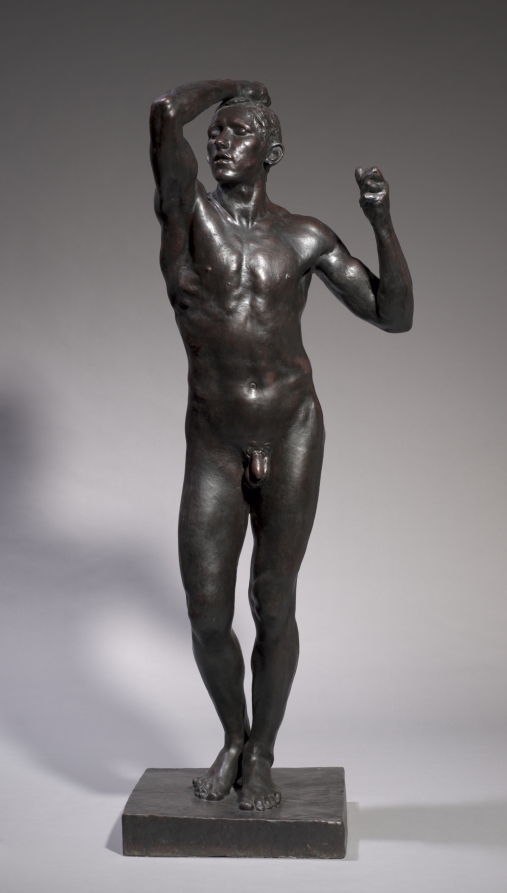
Urban Silhouette Research: The Age of Bronze — Geometric Integrity and the 2026 Executive Form
I. The Vessel as Architectural Prototype: Curvature Under Compression
The Yongzheng famille rose vase designated Landscapes, Figures, and Flowers operates, within our research framework, not as decorative artifact but as a closed geometric system under continuous load. Its silhouette is defined by a vertical axis interrupted by a deliberate sequence of swell and constriction — shoulder, waist, foot — each transition resolved through tangent rather than angle. For the 2026 executive wardrobe, this is the governing principle: the body is not draped but engineered. The vase demonstrates that a continuous curved surface can carry narrative density without surrendering structural discipline. Translated to tailoring, this yields a shoulder line that extends beyond the natural acromion and resolves into a sleeve head of controlled volume — a compression curve that absorbs the wearer's movement while preserving an unbroken exterior plane. The geometry is unforgiving: any interruption in the tangent reads as error. The 2026 silhouette therefore rejects the softened drop-shoulder of the previous cycle in favor of a sculpted, self-supporting shoulder whose curvature is calculated, not improvised.
II. The Planar Counterpoint: Negative Space as Structural Member
The Flowering Crab Apple presents the inverse proposition: a two-dimensional field activated by a single load-bearing gesture. The branch is not composition; it is cantilever. Its angularity — the sharp articulation at each node — establishes a grammar of discrete, load-bearing joints that the vessel, in its continuous curvature, suppresses. The 2026 executive silhouette synthesizes both: the torso maintains the vessel's unbroken vertical curvature, while the sleeve and hem introduce planar interruption — a single decisive fold, a seam placed as brushstroke, a hem cut on a true horizontal that reads as the painting's void. This is the essence of minimalist luxury: the garment must contain one gesture of absolute clarity, surrounded by disciplined emptiness. Excess detail is structural failure. The white field of the painting is not absence but reserved capacity — the same principle governs the unadorned wool of a 2026 overcoat, where a single architectural seam carries the entire visual argument.
III. Materiality: The Bronze Register and Urban Surface
The "Age of Bronze" designation is not chromatic nostalgia but a material specification. The famille rose glaze achieves its depth through layered translucency over an opaque ground — a technical analogue for the urban executive's relationship to surface. The 2026 palette demands fabrics that hold matte density with subsurface luminosity: heavy wool crepe, bonded cashmere, technical silk with a dry hand. These materials do not reflect; they absorb and return light at depth, exactly as the enamel returns the kiln's fire through its vitreous skin. The painting's ink, by contrast, offers the register of graphite and oxidized metal — the tonal range from slate to onyx that defines our color architecture. The synthesis is a wardrobe of two material states: the vessel's continuous, light-bearing surface for the primary silhouette, and the painting's dry, articulate line for the secondary layer — the shirt, the scarf, the exposed seam. Urban materiality is thus not a texture but a controlled contrast of optical behaviors.
IV. The Poetics of the Joint: Where East Asian Cosmology Meets Tailoring Engineering
The internal DNA of this research insists on 观物取象 — the extraction of form from sustained observation — and 生命共感 — the resonance between maker, object, and wearer. In structural terms, this is the articulated joint. The vase's figures turn within their landscape; the painting's branch turns at each node. Neither is static. The 2026 executive silhouette must therefore be engineered for rotation: a raglan-derived sleeve construction that permits the arm to advance without disturbing the shoulder plane; a waist seam set on a spiral rather than a circle, allowing the torso to twist within the garment. This is the technical meaning of "the viewer moving within the painting" — the garment must accommodate 游观, the mobile gaze, without collapsing its geometry. The result is a silhouette that reads as monolithic at rest and articulated in motion — the definitive executive requirement for a year of hybrid presence.
V. Conclusion: The Reserved Field
The dialogue between vessel and painting resolves into a single directive for Addison Fashion: construct the continuous curve, then interrupt it once, decisively, and reserve the remainder. The 2026 silhouette is not decorated; it is calibrated. Its luxury is the visible evidence of engineering discipline — the tangent that never breaks, the seam that carries the argument, the surface that holds light at depth. The bronze age of this research is the age of material confidence and geometric restraint. The executive who wears it does not occupy the garment; she operates within its architecture, and the architecture holds.