Urban Form: Covered Tea Caddy
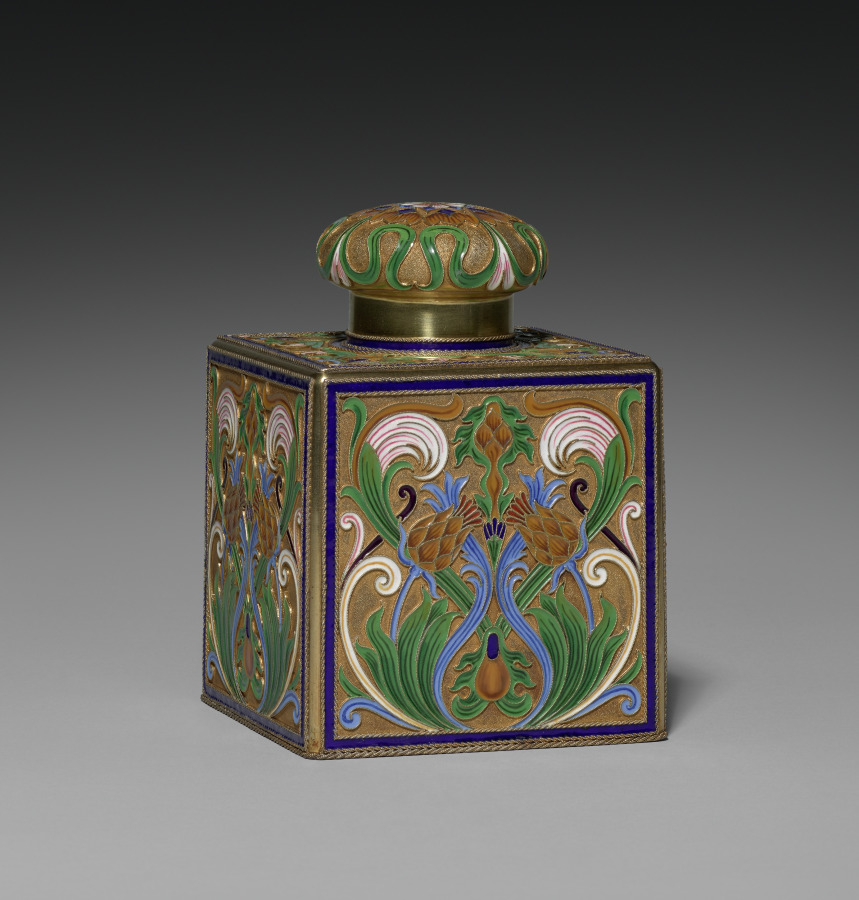
Urban Silhouette Research: The Covered Tea Caddy as Structural Paradigm
I. Object Taxonomy and the Logic of Containment
The covered tea caddy presents a deceptively simple formal proposition: a primary volume, a secondary lid, and the interstitial tolerance that governs their union. This tripartite architecture—body, closure, and the negative space of fit—constitutes the entire structural vocabulary we will extrapolate into the 2026 executive wardrobe. The caddy is, at its core, a discipline of proportion: the lid must exceed the body by a margin precise enough to signal function yet restrained enough to preserve the silhouette's integrity. There is no ornament to distract from the calibration of mass. What we observe is a closed system in which every millimeter of diameter, every degree of taper, is accountable to the logic of containment.
For Addison Fashion, this object functions as a formal precedent rather than a decorative reference. The caddy's geometry—its vertical axis, its horizontal seam, its resolved terminus—maps directly onto the tailoring principles we are advancing for the coming season. The executive wardrobe, like the caddy, must reconcile the demands of utility with the austerity of the minimal. The lid is not an accessory; it is the completion of the form, and its removal reveals the interior logic that the exterior has promised.
II. The Seam as Chromatic Event
In the caddy, the meeting of lid and body produces a horizontal line of maximum tension—a seam that is simultaneously structural and visual. This seam operates as a chromatic threshold, the point at which the object's material continuity is interrupted by the logic of assembly. In our color strategy, we translate this threshold into the principle of tonal adjacency: the juxtaposition of Slate against near-Slate, of matte against low-sheen, of surface against edge. The seam becomes the site where color is not applied but revealed—where the difference between two closely calibrated values produces a visual event more potent than any contrast could achieve.
The caddy's lid, when considered in isolation, is a shallow vessel—a form that contains without depth. This is the architecture of the lapel, the geometry of the shoulder yoke, the proportion of the cuff. Each of these elements must function as a lid: a discrete formal unit that completes the garment's silhouette while remaining legible as a separate component. The executive wardrobe of 2026 will be defined by this modular legibility—garments whose structural components are articulated with the precision of a fitted lid, each element accountable to the whole.
III. Slate as Structural Chromatic
Slate is not a neutral. It is a chromatic decision that carries the weight of the caddy's material logic—the cool, mineral density of fired clay, the muted authority of a surface that absorbs rather than reflects. In the urban executive context, Slate functions as a chromatic substrate: the ground against which the seam, the edge, and the closure are read. It is the color of infrastructure—the pavement, the overcast sky, the architectural shadow—and it confers upon the wearer the same quality of resolved containment that the caddy embodies.
The caddy's surface, whether glazed or unglazed, presents a continuous field interrupted only by the seam of its closure. This is the principle of chromatic continuity we apply to the 2026 wardrobe: a single Slate field, unbroken across the shoulder, the sleeve, the torso, interrupted only by the structural seams that articulate the garment's architecture. The result is a silhouette that reads as a single formal proposition—a closed system of tailored containment.
IV. Form as Executive Protocol
The covered tea caddy is, finally, an argument about decorum. Its form is resolved; its function is evident; its ornament is absent. This is the executive protocol for 2026: garments that do not argue, do not decorate, do not distract. The silhouette is the statement. The seam is the event. The color is the ground. The wearer is the content—contained, completed, and legible.
Addison Fashion's Urban Silhouette Research advances this paradigm: the executive wardrobe as a system of covered volumes, each garment a caddy of tailored containment, each seam a chromatic threshold, each Slate field a substrate for the wearer's authority. The lid is closed. The form is resolved. The question is not what the garment says, but what it contains.