Urban Form: Venus with a Burning Urn
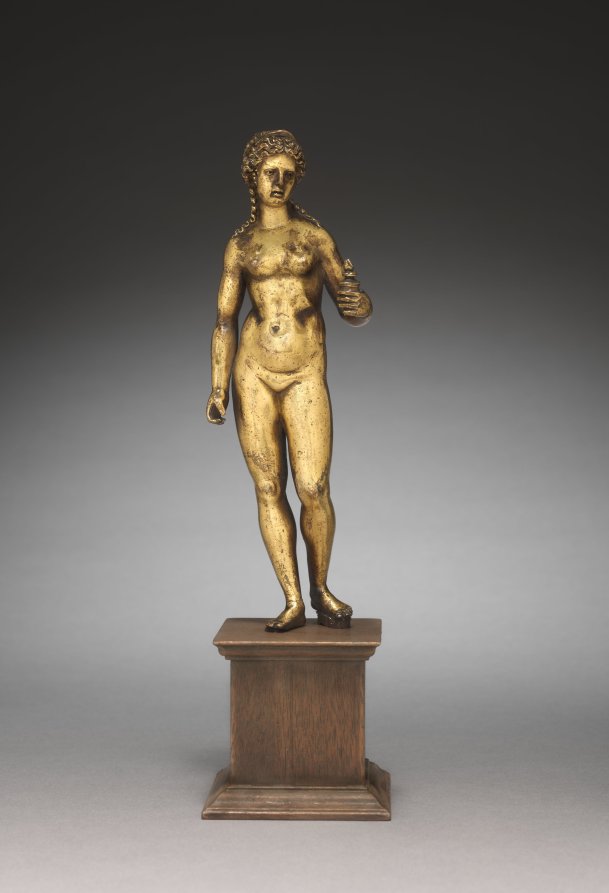
Urban Silhouette Research: The Venus with a Burning Urn — A Technical Deconstruction of Form and Chromatic Restraint
I. The Object as Temporal Vessel: Form Extracted from Duration
The Venus with a Burning Urn constitutes a singular formal proposition: a figure whose volume is defined not by mass but by the negative space it negotiates. The urn — that contained, self-referential geometry — functions as the compositional anchor against which the Venusian silhouette is measured. In the Udumbara plaque, the artisan's chisel arrests the flower at the precise threshold between dormancy and bloom; in the Jar, the vessel's interior is rendered as an absent presence, a void that organizes the entire pictorial field. Both objects, read through the lens of Addison Fashion's formal vocabulary, propose a wardrobe logic predicated on the interstitial — the space between the body and its garment, the pause between gesture and stillness.
For the 2026 executive wardrobe, this translates into a Minimalist architecture of containment. The urn's silhouette — cylindrical, unadorned, its mouth a precise aperture — informs the construction of the tailored column: a shoulder line that neither exaggerates nor retreats, a waist that is acknowledged rather than cinched, a hem that terminates with the finality of a vessel's base. The form is not decorative; it is structural. It performs the same function as the plaque's carved petals: it holds a moment of stillness within a system of movement.
II. Chromatic Restraint: Slate as the Color of Contained Time
The Slate palette — that cold, mineral gray with its undertow of blue — operates as the chromatic equivalent of the urn's patinated surface. It is neither the black of absolute negation nor the ivory of pure potential; it is the color of accumulated duration, of surfaces that have absorbed light and returned it with interest. In the Jar, the glaze's subtle tonal transitions — from shadowed base to illuminated rim — demonstrate how a single hue can articulate volume without recourse to ornament. Slate, in the Addison register, performs identically: it is a monochrome that reads as three-dimensional because its value shifts are calibrated to the body's topography.
The technical application is precise. A Slate wool-crepe column dress, cut on the bias, allows the fabric's natural drape to generate the same tonal gradations as the urn's curved surface. A Slate cashmere overcoat, unlined and single-breasted, achieves the plaque's carved quality through its raw-edge seams and the faint shadow-play of its lapel roll. The palette is not austere; it is concentrated. It refuses the distraction of color in order to foreground the form — the way a shoulder seam meets the arm, the way a hem breaks over a shoe, the way a collar stands away from the neck with the deliberateness of a vessel's lip.
III. The Negative Space Principle: Silhouette as Interval
The Jar's central tension — the unseen contents — is a lesson in negative-space engineering. The vessel's mouth is an aperture that admits the world while safeguarding the interior. In the Venus with a Burning Urn, the flame itself is the negative space made visible: a form defined by what it consumes. For the 2026 executive, this principle manifests as the deliberate interval between garment and body. The Addison silhouette does not cling; it hovers. A Slate silk-georgette blouse, cut with a generous armhole and a dropped shoulder, creates a pocket of air between fabric and skin — a void that reads as composure rather than volume. The trouser, pleated and wide, establishes a vertical column that echoes the urn's cylindrical logic while allowing the leg to move within its own architectural envelope.
This is not the oversized silhouette of casual disarray; it is the Minimalist silhouette of controlled containment. Every interval is measured. The gap between cuff and wrist is calibrated to the millimeter. The distance between hem and floor is a fixed ratio. The result is a wardrobe that functions as the plaque functions: a frame for the present moment, a structure that holds attention without demanding it.
IV. The Burning Urn as Executive Signifier: Form, Function, and the Eternal Present
The urn burns — it is not merely a vessel but an active one, converting matter into light and heat. This is the final formal lesson for the Addison executive: the garment must perform. A Slate double-faced wool blazer, unlined and softly constructed, is not a passive covering; it is an instrument of presence. Its lapels are narrow but not stingy; its buttons are concealed; its pockets are welted with a precision that recalls the chisel-mark on the Udumbara petal. The blazer does not announce authority; it enacts it through the quiet rigor of its proportions.
The Jar's lesson — that the unseen interior is the source of tension — finds its wardrobe corollary in the interior architecture of the garment: the bound seam, the French facing, the hand-finished hem. These are not visible to the observer, but they structure the garment's behavior, its drape, its longevity. The Addison executive does not dress for the glance; she dresses for the duration. Her Slate column dress, worn over a decade, will acquire the patina of the urn — a surface that records time without surrendering to it.
V. Conclusion: The Silhouette as Secular Reliquary
The Venus with a Burning Urn is, finally, a reliquary of the present. It holds fire without being consumed; it contains time without being eroded. The 2026 Addison wardrobe, articulated in Slate and governed by Minimalist formal logic, proposes the same contract: a system of garments that neither chase the future nor mourn the past, but instead inhabit the body with the exactness of a well-turned vessel. The flower has already bloomed; the jar is already full. The executive who wears this wardrobe does not wait for the moment — she is the moment, contained and burning, a silhouette carved from the interval between what is seen and what is held.