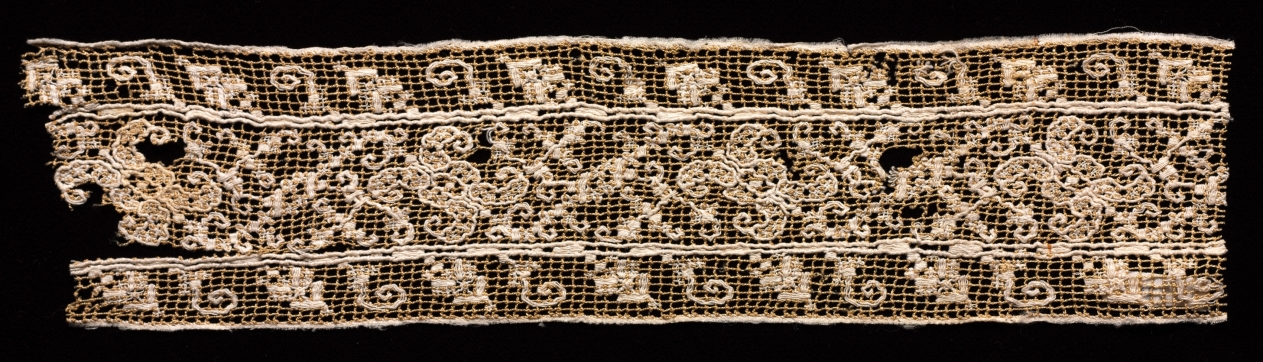
Urban Form: Fragment of a Band with Abstract Pattern
Urban Silhouette Research: Form as Ritual, Color as Continuum
I. The Mold Fragment: Subtraction as Structural Discipline
The Mold Fragment with Musicians operates, first and foremost, as a document of negative space engineering. The relief’s figures are not modeled additively but carved away—a subtractive logic that anticipates the core principle of the Addison 2026 executive wardrobe: silhouette is defined by what is removed, not what is applied. The elongated torsos, rendered in near-geometric arcs, establish a proportional grammar in which the shoulder-to-hip axis is compressed and the vertical line is extended. For our purposes, this translates into a columnar, unbroken line from clavicle to hem—a tailoring decision that eliminates waist suppression in favor of a continuous, architectural fall.
The musicians’ postures—harp and flute held at precise angles—reveal a second technical insight: articulation through joint placement. The elbow and wrist function as pivot points within an otherwise static mass, generating rhythm without ornament. In garment terms, this is the set-in sleeve at a lowered armhole, allowing the arm to move as a discrete unit while the torso maintains its planar integrity. The result is a garment that reads as sculptural at rest and kinetic in motion—precisely the requirement of the executive who moves between boardroom and transit without visual disruption.
Critically, the fragment’s status as a mold—a tool for replication—introduces the concept of seriality. The original relief was not a singular artwork but a matrix for multiple casts. This informs our approach to modular tailoring: a core slate suiting block, replicated across jacket, coat, and trouser, ensures chromatic and proportional consistency across the wardrobe. The executive does not assemble outfits; she deploys a system.
II. The Zodiac Ox: Symbolic Compression and Chromatic Restraint
The Mortuary Figure of the Zodiac Sign: Ox presents a countervailing logic: compression of cosmic order into a single, legible form. The ox’s horns—crescent, symmetrical, oriented skyward—function as a directional vector, anchoring the composition’s verticality. The body is rendered in decorative, almost calligraphic line, with musculature abstracted into parallel striations that read as both anatomy and constellation. This is not naturalism; it is diagrammatic essentialism.
For the 2026 wardrobe, this translates into surface discipline: the elimination of print, texture, and hardware in favor of tonal variation within a single hue. Slate—a blue-gray of low chroma and high value-contrast potential—permits the kind of subtle striation seen in the ox’s flank: a wool flannel trouser against a silk-crepe blouse against a cashmere coat, each registering as a distinct value within the same chromatic family. The eye reads texture as line, and line as order.
The ox’s funerary context—its role as psychopomp, guardian of the threshold between life and death—introduces the concept of garment as liminal architecture. The executive wardrobe must function at thresholds: the elevator lobby, the international departure gate, the transition from daylight to artificial light. Slate’s low reflectance and high absorption make it optically stable across these environments, resisting the chromatic shift that warmer neutrals undergo under fluorescent or LED conditions. It is a color that does not perform; it persists.
III. Synthesis: The Slate Column and the Ritual of Repetition
Brought into dialogue, the two artifacts propose a unified thesis: form is ritual made visible. The mold’s seriality and the ox’s symbolic compression converge on a wardrobe logic of repetition without redundancy. The Addison 2026 executive silhouette is therefore a slate column: a straight-cut, knee-length coat over a narrow trouser; a collarless jacket with a single concealed closure; a tunic in matte silk with a geometric neckline that echoes the musicians’ angular shoulders. No belt. No visible button. No logo.
The color strategy is equally reductive: Slate as ground, Silver as articulation, Onyx as depth. Silver appears only at the wrist—a cuff link, a watch case—functioning as the ox’s horn: a single point of directional light. Onyx is reserved for footwear and the interior lining of the coat, visible only in motion, a private darkness that mirrors the funerary ox’s stellar backdrop.
The result is a wardrobe that operates as infrastructure: modular, chromatic-consistent, and structurally indifferent to trend. It is not designed to be noticed. It is designed to endure—to carry the executive through the day’s rituals with the same silent authority as a clay mold carries a song across three millennia. In the Addison aesthetic, the highest form of luxury is legibility without ornament: a silhouette that states its purpose and then holds its peace.