Urban Form: The Immaculate Conception
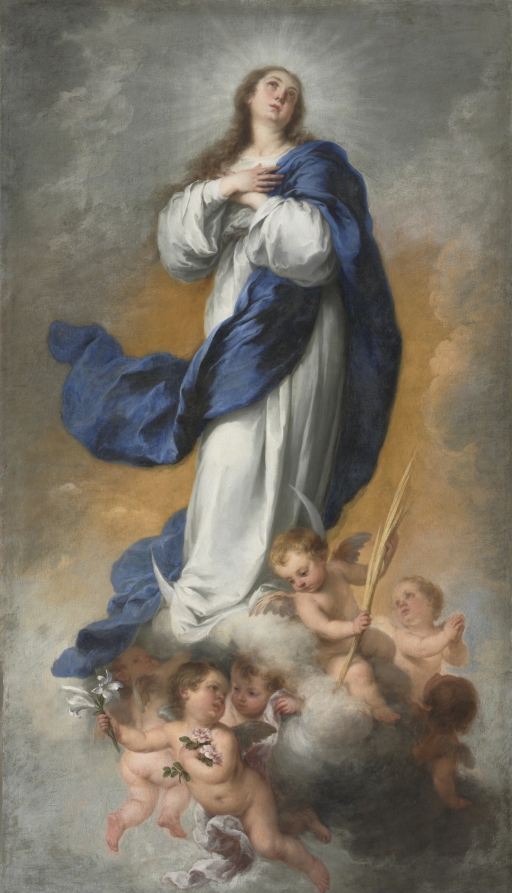
Urban Silhouette Research: The Immaculate Conception — Form, Color, and the Architecture of Restraint
I. Thesis: Two Vessels, One Grammar
The Addison Fashion NYC research directive for 2026 opens with an apparent contradiction that resolves, upon technical inspection, into a single structural proposition. The Wangchuan Villa handscroll and the Three-Piercing Ritual Blade operate at opposite poles of material logic — silk and ink versus bronze and patina — yet both are, in the strictest sense, vessels. One is a container for interiority; the other, a container for authority. For the executive wardrobe, this duality is not decorative reference but a construction brief: the 2026 silhouette must simultaneously accommodate habitation and command. The garment is neither refuge nor armor exclusively; it is the negotiated interface between the two.
II. Form Analysis: The Scroll as Spatial System
The Wangchuan scroll is frequently misread as landscape. Technically, it is a circulation plan. Its horizontal extension and graduated depth constitute a designed path — pavilions nested in mountain folds, bridges spanning water — each element positioned to regulate the viewer's tempo. The scroll does not depict space; it choreographs it.
Translated to pattern-cutting, this yields the defining formal principle of the collection: sequential volume. Panels are engineered to unfold across the body in the manner of a scroll unrolling — a continuous lateral drape interrupted by deliberate structural nodes at shoulder, waist, and hem. The result is a silhouette that reads as inhabitable: generous in the back and side-body, where the wearer's movement requires latitude, yet disciplined at the front placket, where the executive presence is registered. The garment offers a path, not a cage. This is the Minimalist category executed with intent — reduction as spatial planning, not absence.
III. Form Analysis: The Blade as Geometric Absolute
The Three-Piercing Blade supplies the countervailing discipline. Its authority derives from three properties: material permanence (bronze, patina as temporal signature), absolute symmetry (the three apertures as codified, non-negotiable intervals), and functional sublimation (the weapon elevated into ritual object). The blade does not persuade; it declares.
In tailoring terms, the blade informs the hard edges of the collection: the knife-sharp lapel roll, the precisely calibrated shoulder line, the vent and seam placements that function as the garment's "apertures" — fixed intervals of exposure and closure that signal order. Where the scroll permits drift, the blade mandates registration. The 2026 executive jacket therefore carries a tripartite seam architecture — three structural reference points at collar, waist suppression, and hem — echoing the blade's three piercings as a quiet grammar of control. Restraint here is not softness; it is calibrated威慑 —威慑 rendered in wool rather than bronze.
IV. Color Strategy: Slate as the Mediating Register
The palette resolution is Slate — selected precisely because it belongs to neither source. It is not the mineral green of the scroll's pigments, nor the verdigris of the blade's oxidation, but the intermediate grey-blue that both materials assume under controlled light. Slate functions as the collection's chromatic constant: cool, recessive, and structurally legible.
Technically, Slate is deployed in a three-value system: a deep charcoal-slate for the blade-derived tailoring (jackets, structured trousers), a mid-slate for the scroll-derived drape (tunics, unstructured coats), and a pale slate-grey for the interface layer (shirting, linings). The tonal progression mirrors the scroll's depth recession — foreground, middle ground, distance — while the value discipline honors the blade's refusal of ornament. No accent color is admitted. The collection's visual interest is carried entirely by form and surface: matte wool crepe against a low-sheen technical twill, the patina logic of subtle texture variation replacing applied decoration.
V. Synthesis: The Immaculate Conception as Wardrobe Logic
The collection's title is a deliberate provocation. "Immaculate" here denotes not purity but faultless engineering — the absence of excess seam, redundant detail, or unresolved proportion. The conception is immaculate because every element is accounted for. The scroll contributes the right to occupy space; the blade contributes the obligation to define it. The executive who wears the collection is, in effect, carrying both vessels: the capacity for interior retreat and the projection of institutional authority, resolved into a single Slate silhouette.
This is the Addison Fashion NYC position for 2026: the wardrobe as ritual object and habitable architecture simultaneously — 器以载道, the vessel that carries the way, cut in wool and calibrated in grey.