Urban Form: Orpheus and Cerberus
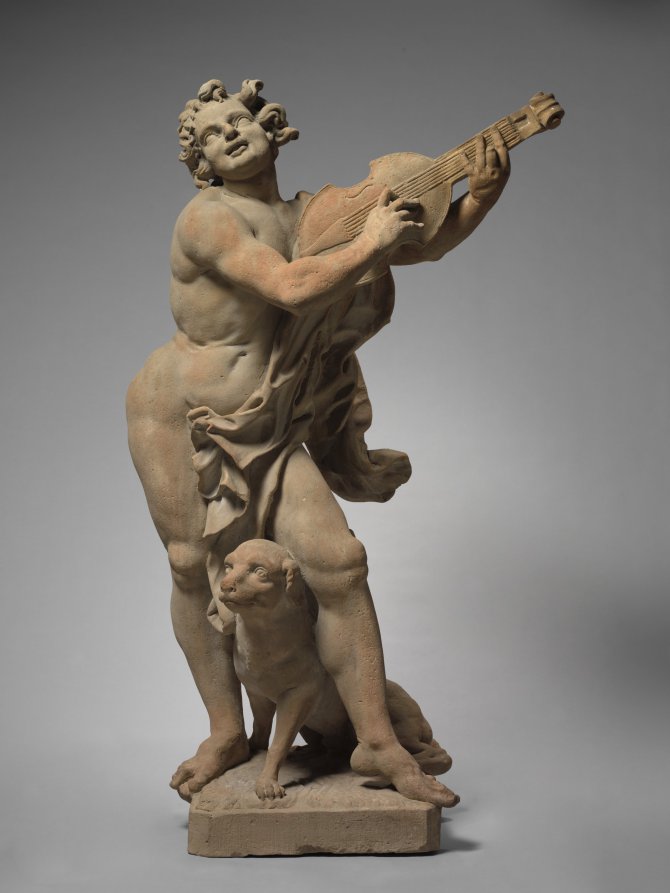
Urban Silhouette Research: Orpheus and Cerberus — Structural Poetics of the Threshold
I. Geometric Integrity: The Closed Volume and the Suspended Curve
The artwork under examination presents a dual geometric proposition that is, for our purposes, definitive. On one axis, we observe the centripetal mass — a near-closed, self-sufficient volume derived from the Pilgrim Sudhana lineage: the body as a contained architectural unit, its contours resolving into a soft but absolute boundary. On the opposing axis, the rhythmic diagonal of the Harpist tradition: the arm, the instrument, the implied gesture forming an S-curve that refuses closure and instead projects outward, a vector of latent motion. The tension between these two geometries — containment and projection — is the precise structural dialectic that will govern the 2026 executive silhouette.
What concerns us is not the narrative of Orpheus and Cerberus but the threshold condition it encodes: the moment of negotiation between the underworld and the living world, between stillness and sound. Geometrically, this translates into a silhouette that is anchored at the base and released at the shoulder — a columnar lower body with a controlled, asymmetric upper volume. The Cerberus element — tripartite, vigilant, multi-directional — manifests as a three-point tension system across the torso: shoulder, sternum, and opposite hip. This is not ornament. This is load-bearing structure.
II. The 2026 Executive Silhouette: Column, Cantilever, Release
The 2026 executive silhouette, as derived from this geometric reading, operates on three structural principles:
1. The Columnar Base. The lower body is resolved into a single, uninterrupted vertical mass — trousers or skirt cut with architectural severity, the hem line calibrated to the millimeter. No break, no taper, no concession to the casual. The fabric must possess sufficient weight to hang with the gravity of fired clay: double-faced wool, bonded crepe, or a technical Ottoman with a matte, light-absorbing surface. The column is the ground condition — the underworld, if you will — the stable plane from which all gesture departs.
2. The Cantilevered Shoulder. The upper body introduces the Harpist's diagonal: a shoulder line that extends beyond the natural acromion, supported by internal structure rather than padding. The effect is one of suspended extension — the jacket appears to float from the frame of the body, its volume held in tension by the fabric's own memory. This is achieved through canvassed construction with a floating chest piece, allowing the front panel to project forward while the back remains close to the spine. The silhouette reads as simultaneously protective and provisional — a shelter, not a fortress.
3. The Threshold Closure. The point of intersection — where the column meets the cantilever — is resolved through a single, deliberate closure gesture: a high, asymmetric button stance, a diagonal seam, or a wrapped front that references the himation without literal quotation. This is the Orpheus moment: the pause at the gate, the structural decision that holds the entire composition in balance. It must be executed with absolute precision. A millimeter of drift and the geometry collapses into mere styling.
III. Urban Materiality: The Onyx Surface and the Interior Light
The color directive — Onyx — is not a chromatic choice but a material argument. Onyx, in the Addison lexicon, denotes a black that absorbs rather than reflects: pigment-dyed cotton with a matte finish, brushed wool gabardine, or a resin-treated linen that holds a crease without sheen. The surface must read as mineral, not textile — the visual equivalent of polished stone under low light.
Crucially, the interior must contradict the exterior. Where the shell is Onyx and absolute, the lining — visible at the cuff, the collar stand, the vent — should introduce the ivory or sand tonality of the Sudhana ceramic: a warm, matte, light-emanating counter-surface. This is the "inner glow" principle translated into garment architecture: the wearer carries a private luminosity, revealed only in motion, only at the threshold of the garment's opening. The effect is one of contained interiority — the executive as a closed system with a controlled point of access.
IV. Structural Poetics: The Garment as Threshold Object
The final consideration is poetic, and therefore non-negotiable. The Orpheus-Cerberus threshold is a liminal architecture — a passage that is also a confrontation. The 2026 silhouette must embody this duality: it must be impenetrable in profile and generous in movement. The back of the garment should present a single, uninterrupted plane — the wall of the underworld. The front, in motion, should reveal the layered construction: the floating chest piece, the diagonal closure, the interior lining. The wearer becomes a walking threshold — a figure who negotiates between the closed and the open, the silent and the sounded.
This is the Addison position: silhouette as spatial argument. The garment does not decorate the body; it defines the terms of its occupation. In Onyx, in column and cantilever, in the precise negotiation of closure and release, the 2026 executive silhouette becomes what the artwork has always been — a meditation on the boundary between states, executed in the hardest of materials: geometry, light, and restraint.