Urban Form: Gold Box
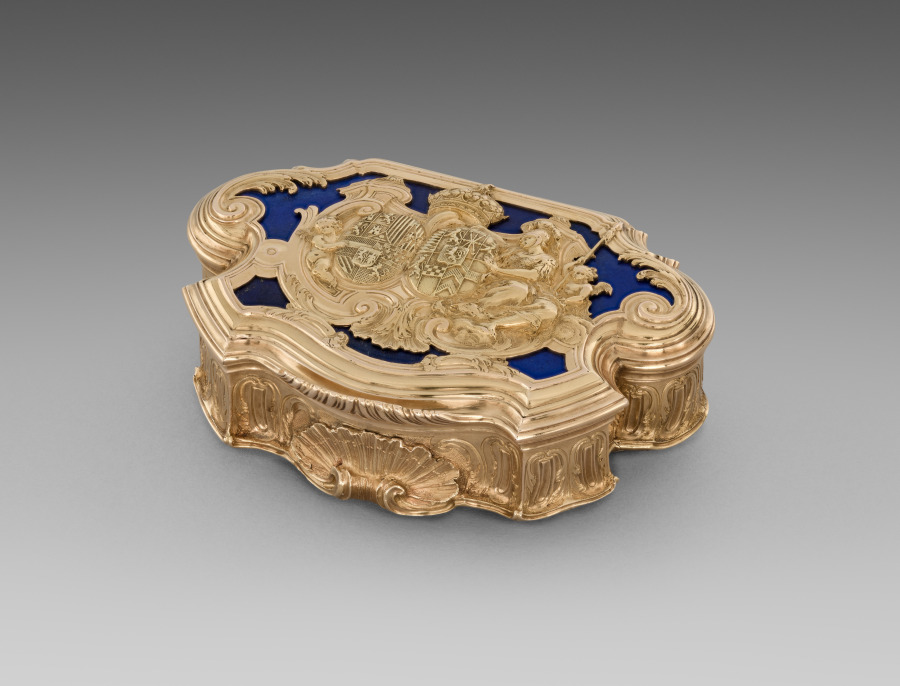
Urban Silhouette Research: Gold Box — Structural Poetics of the Liminal Vessel
I. Geometric Integrity: The Symmetrical Armature
The Gold Box presents a dual geometric proposition that must be read as a single architectural system. The Socratic composition operates on a closed symmetrical grid: the philosopher’s outstretched arm establishes a horizontal axis of absolute determination, while the vertical mass of the seated body and the descending drapery lock the figure into a rectilinear frame. This is a silhouette governed by orthogonal certainty — every gesture is resolved into a load-bearing line. The Meiping vessel, by contrast, offers a continuous curvature — a controlled swell that rises from a narrow foot, expands at the shoulder, and tapers into a restrained neck. Where the marble delivers the silhouette through planar fracture, the celadon delivers it through volumetric continuity.
For the 2026 executive silhouette, this duality is not decorative — it is structural doctrine. The Addison wardrobe must reconcile the hard edge with the soft volume: a shoulder line cut with lapidary precision against a torso that breathes through controlled ease. The Gold Box teaches that geometry is not a constraint but a grammar of authority. The executive form is neither rigid nor fluid — it is precisely calibrated.
II. Materiality: Marble, Celadon, and the Urban Surface
The artwork’s material dialectic is its most transferable asset. Marble is cold, dense, and light-refusing — it absorbs illumination and returns it as shadow. Celadon is translucent, glazed, and light-conducting — it holds light within its surface and releases it slowly. This is the exact tension the 2026 executive wardrobe must resolve: the opacity of authority against the luminosity of intelligence.
In urban terms, this translates to a layered material hierarchy. The outer shell — the coat, the structured jacket — must carry the marble weight: dense wool, bonded cashmere, matte-finish technical cloth that refuses glare. The inner layer — the shirt, the knit, the lining — must carry the celadon translucency: fine-gauge silk, washed poplin, a surface that catches light without reflecting it. The Gold Box demonstrates that material contrast is structural, not ornamental. The silhouette is defined by the interface between these two registers — the point where the hard shell meets the soft interior.
III. The Liminal Vessel: Death, Wave, and the Executive Form
The Gold Box’s internal DNA — the Socratic cup and the Meiping wave — proposes a philosophy of the liminal. The cup is a vessel of transition: it holds the poison that converts the body into idea. The Meiping is a vessel of containment: it holds the wave that converts time into surface. Both are objects of threshold — they mark the boundary between the material and the immaterial, the momentary and the eternal.
The 2026 executive silhouette must function as a liminal vessel. It is not a uniform; it is a threshold garment — worn at the boundary between the private self and the public performance, between the body and the institution. This requires a silhouette that is closed enough to project authority and open enough to permit interiority. The Gold Box resolves this through controlled negative space: the drapery folds, the vessel’s hollow, the gaps between figures. The Addison silhouette must do the same — through strategic ease, precise venting, and deliberate intervals between garment and body.
IV. Structural Poetics: The Silhouette as Argument
The Gold Box is not a representation of death or waves — it is an argument about form. The Socratic marble argues that structure is transcendence: the body collapses, but the geometry holds. The Meiping celadon argues that flow is permanence: the wave dissolves, but the curve remains. For Addison Fashion, this is the central design brief for 2026: the executive silhouette must be both argument and vessel — a structure that holds the body and a surface that holds the gaze.
This means the silhouette must be readable at a distance — a clear, irreducible shape — and legible at close range — a surface that rewards scrutiny. The Gold Box achieves this through macro-geometry and micro-texture: the overall composition is symmetrical and stable, while the surface is alive with chisel marks, glaze crackle, and the subtle unevenness of handwork. The Addison silhouette must operate on the same principle: a bold, minimal outline paired with a dense, tactile surface.
V. Urban Materiality: The City as Kiln and Quarry
The Gold Box’s materials — marble and celadon — are extracted from the earth and transformed by fire. This is the urban materiality Addison Fashion must claim for 2026: the city is both quarry and kiln — a source of raw, hard materials and a site of transformation. The executive silhouette must carry the weight of the quarry (stone, concrete, steel) and the refinement of the kiln (glass, glaze, polished surface).
This translates into a palette of Onyx, Slate, and Ivory — the deep, light-absorbing black of marble; the cool, mineral grey of urban stone; the soft, glazed white of celadon. The silhouette itself must be architectural but not rigid: a tailored shoulder that references the Socratic axis, a fluid torso that references the Meiping curve, and a hemline that resolves the tension — neither sharp nor soft, but precisely weighted.
VI. Conclusion: The Gold Box Protocol
The Gold Box is a protocol for the 2026 executive silhouette. It dictates that the silhouette must be geometrically resolved, materially layered, and philosophically liminal. It must hold the body like a vessel holds water — with firmness and permeability. It must project authority through structure and intelligence through surface. And it must, above all, function as a visual argument about presence: that the executive form is not a costume but a calibrated instrument — a shape that holds the self and the city in precise, deliberate tension.
Addison Fashion’s 2026 silhouette is therefore not a trend but a thesis: that the urban executive is a liminal vessel, moving between the marble and the wave, the cup and the curve, the death of the momentary and the life of the form. The Gold Box is its first principle — and its final measure.