Urban Form: Carving from an Overmantel
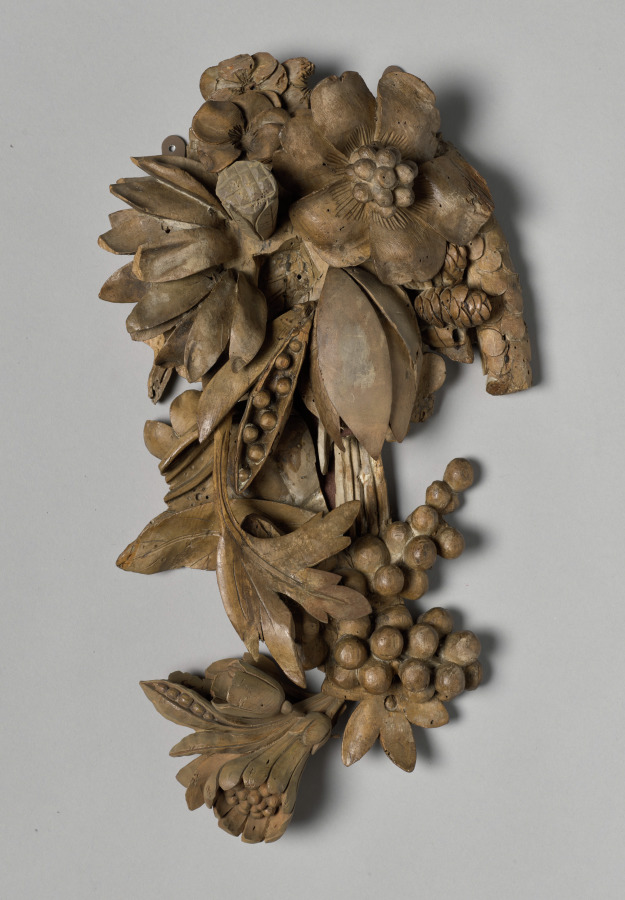
Urban Silhouette Research: Carving from an Overmantel
I. Source Artifact and Structural Premise
The DNA source under examination comprises two artifacts separated by material and epoch yet convergent in aesthetic deep structure: the Mold Fragment with Musicians (乐师纹陶范残片), a functional ceramic mold bearing three musician figures, and the Lotus Pod and Water Caltrop painting (《莲蓬与菱角图》), a selective still-life executed against total void. Both operate through the logic of interception—the deliberate truncation of the complete object—to interrogate the dialectic between the instantaneous and the eternal, sound and silence. For the 2026 executive wardrobe, this premise translates into a singular design directive: the garment is not a completed form but a strategic excision of form. We are not tailoring cloth; we are carving negative space from an overmantel of inherited silhouette conventions.
II. Form: The Aesthetics of the Fragment
The ceramic mold's aesthetic authority derives precisely from its fracture. Originally a utilitarian instrument for casting musical instruments, its integrity was broken by time—and in that breakage, utility was superseded by a higher order of value. The three musicians, frozen in differentiated postures, perform a score that cannot be heard. This is the "music without sound" (无声之乐) proposition: Zhuangzi's formulation in the Tian Yun chapter—"within silence, one alone hears harmony"—establishes that sound, in disappearing, acquires a larger imaginative field. The fragment's surface, mottled with temporal abrasion, is simultaneously a record of time and an aesthetic nirvana.
Transposed to tailoring, this yields the interrupted seam and the suspended closure. For 2026, Addison proposes outerwear whose lapel structure terminates before conventional completion—a raw-edge break at the sternum, a placket that stops short of the hem. The eye completes the line; the wearer's movement supplies the missing music. This is not deconstruction for its own sake. It is the disciplined removal of redundant cloth so that gesture—the executive's actual motion through space—becomes the finishing element. The silhouette is therefore open-form: stable in shoulder and spine, deliberately unresolved at the perimeter.
III. Form: Selection as Subtraction
The Lotus Pod and Water Caltrop achieves interception through a different mechanism: curation. The painter admits only two objects—the drooping lotus pod, the emergent water caltrop—against an entirely blank ground. The lotus pod is the residue of the "broken lotus" (残荷), symbolizing the humility of a life that has completed its roundness; the caltrop, still wet with marsh water, is the witness of life in another state. The Qing painter Yun Shouping's dictum—"the broken mountain is most pleasing, and the bare mountain surpasses it"—is here pushed to its limit: the pod has surrendered its bloom yet retains its substance.
This is the governing principle of the Minimalist executive uniform: the reduction of the wardrobe to its load-bearing elements. A single slate column—trouser, shell, overcoat—where every seam is justified and every panel earns its area. The blank ground is the void between garments: the unaccessorized wrist, the unbroken neckline, the absence of ornament that permits the wearer's presence to register as content. In an information-saturated corporate environment, the executive who presents fewer signals commands greater interpretive authority. Selection is not austerity; it is editorial control over the reading of the self.
IV. Color: Slate as Temporal Patina
The color program derives from the fragment's surface rather than its original glaze. Slate—a cool, desaturated blue-grey—occupies the precise chromatic register of weathered ceramic: neither the black of onyx nor the warmth of sand, but the evidence of exposure. It reads as authority without assertion, depth without display. In the 2026 executive context, slate functions as a neutralizing field against which the wearer's face and gesture acquire contrast. We specify a tonal ladder: slate at 85% value for the overcoat, 60% for the shell, 40% for the trouser—a controlled gradient that mimics the fragment's tonal erosion from intact body to broken edge. Accents are withheld entirely; the only permitted variation is texture, where matte wool absorbs light and a single silk panel at the inner placket returns it.
V. Synthesis: The Executive as Curator of the Incomplete
Both artifacts converge on a single proposition: only by cutting away the redundant does the real appear; only by preserving the incomplete does the perfect manifest. This is the aesthetic wisdom of "diminishing and again diminishing, until one arrives at non-action" (损之又损,以至于无为). The 2026 Addison executive wardrobe operationalizes this as a system of deliberate incompletion—garments whose authority resides in what they refuse to state. The musician's frozen posture and the lotus pod's bowed head are the same gesture: the confidence to stop short. In the New York boardroom, that confidence is the final luxury.