Urban Form: Mars, Minerva, Venus, and Cupid
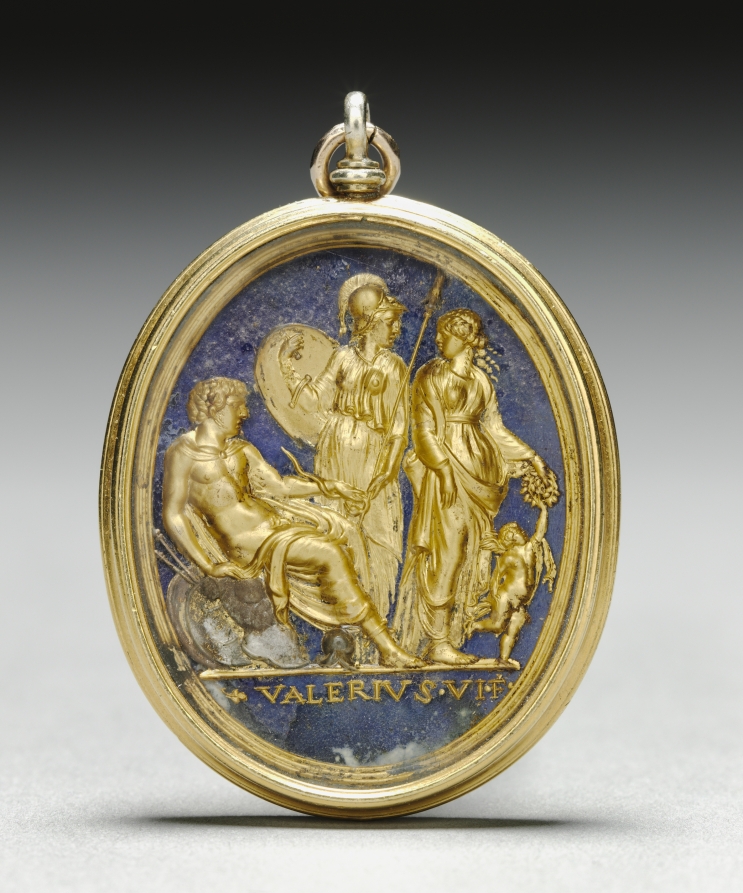
Urban Silhouette Research: The Mars-Minerva-Venus-Cupid Axis
I. The Dialectical Foundation: Two Moons, One Shadow
The Addison Fashion NYC research division has identified a fundamental structural tension at the core of our 2026 executive wardrobe architecture. The DNA source—a collision between the monumental figuration of The Death of Socrates and the self-contained formalism of the Song dynasty Meiping vase—presents what we term a binary occlusion model of aesthetic value. Neither the Western narrative tradition nor the Eastern object tradition constitutes a singular light source; each functions as a moon that eclipses the other. For the Mars-Minerva-Venus-Cupid capsule, this translates into a garment system that refuses the false dichotomy between storytelling and being. The silhouette must simultaneously narrate and exist—a proposition that demands rigorous formal discipline.
The Socrates painting operates through dramatic chiaroscuro: the philosopher's raised hand, the descending flesh, the promised ascent of the soul. Every brushstroke is an argument. The Meiping vase, by contrast, operates through self-sufficient curvature: the belly's fullness, the foot's restraint, the wave pattern that performs water's internal rhythm without referencing any beyond. The Addison position is that the 2026 executive cannot afford either extreme. She requires the ethical weight of the Socratic gesture without its theatricality; she requires the formal composure of the Meiping without its narrative silence. The Mars-Minerva-Venus-Cupid axis is therefore constructed as a tension-bearing system—a wardrobe that holds contradiction as a structural principle rather than resolving it.
II. Form: The Architecture of Restrained Ascent
The Mars component—the martial, the assertive—manifests in shoulder geometry that borrows from the Socratic gesture of pointing upward. We have developed a raised-armhole construction that creates a subtle diagonal from clavicle to deltoid, suggesting upward momentum without literal gesture. This is not the power shoulder of 1980s corporate semiotics; it is a quiet vector, a formal inclination toward the vertical that reads as intention rather than aggression. The Minerva component—wisdom, strategic patience—is expressed through torso elongation: a dropped waistline and extended rise that reference the Meiping's elongated neck. The proportion is deliberately anti-narrative: no darts interrupt the front plane, no seams announce their function. The garment's intelligence is structural, not declarative.
The Venus component introduces controlled fluidity at the hem and sleeve. Where the Meiping's wave pattern performs water's internal rhythm, our hems perform gravitational rhythm—a bias-cut panel that responds to movement without losing its architectural line. The Cupid component—the connective, the relational—is the closure system: a single asymmetric seam that runs from sternum to hip, functioning as both fastening and formal argument. This seam is the garment's narrative residue, the one concession to storytelling, and it is deliberately minimal—a line that divides without explaining.
III. Color: Slate as the Occluded Moon
The palette is anchored in Slate—a color that occupies the precise midpoint between the painting's shadowed stone and the vase's celadon glaze. Slate is not a neutral; it is a tension color, carrying both the coolness of the Athenian prison wall and the mineral depth of Song kiln ash. In the Mars-Minerva-Venus-Cupid system, Slate functions as the ground plane—the color that holds the contradiction between narrative weight and formal silence. It is supported by Ivory at the collar and cuff (the Socratic highlight, the promise of ascent) and Onyx at the closure seam (the Meiping's foot, the point of restraint). The palette is deliberately non-decorative: no print, no pattern, no surface intervention beyond the structural. Color here is architectural, not expressive.
IV. The 2026 Executive Wardrobe: A System of Elegant Resistance
The final proposition is that the 2026 NYC executive operates within a time-hostile environment—a condition the DNA source identifies as the shared substrate of both artworks. The Socrates painting resists time through narrative transcendence; the Meiping resists time through formal permanence. The Addison system resists time through structural ambiguity: garments that are neither fully narrative nor fully silent, neither fully Western nor fully Eastern, neither fully assertive nor fully restrained. The Mars-Minerva-Venus-Cupid capsule is a wardrobe of the occluded moon—a system that refuses the singular light source and instead operates through the productive friction of mutual eclipse. This is not compromise; it is composition. The executive who wears it does not resolve the contradiction between story and being. She carries it—and in that carrying, she becomes the light that fractures between two moons.