Urban Form: Landscape with Two Monks
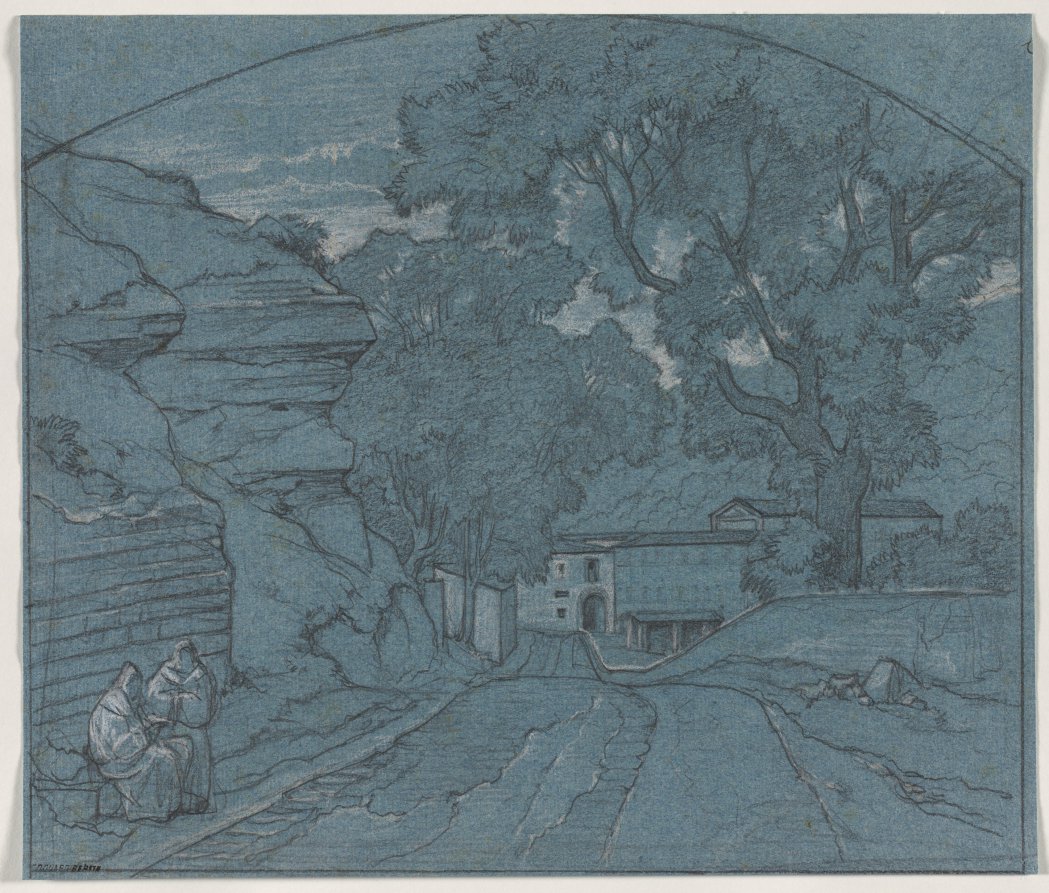
Urban Silhouette Research: Landscape with Two Monks — Form, Void, and the Architecture of Restraint
I. The Container as Silhouette: A Structural Premise
The two artifacts under examination—the Khmer Mold Fragment with Musicians and the Dunhuang Standing Disciple Mahakasyapa Holding a Cylindrical Reliquary—operate as a single thesis on the relationship between envelope and absence. For the Addison Fashion NYC design intelligence, this is not an exercise in cultural quotation. It is a formal audit. Both objects are, at the level of pure geometry, containers: one a mold that once shaped vessels, the other a reliquary held in ritual suspension. The 2026 executive wardrobe must be read through the same lens—garment as vessel, body as content, and the negative space between them as the site where authority is either confirmed or dissolved.
II. The Fragment: Incompletion as Structural Logic
The mold fragment presents a broken perimeter—an irregular, eroded edge that refuses closure. Yet within that fracture, the musicians are captured in a state of suspended motion: torsos inclined, fingers poised above instruments, mouths arrested at the threshold of sound. The formal lesson is precise. The fragment does not depict rhythm; it structures rhythm through the deliberate withholding of completion. The eye is compelled to complete the arc, and in that cognitive labor, the viewer becomes the co-author of the form.
Translated to tailoring, this is the logic of the open seam and the unfinished hem—not as distress, but as invitation. The 2026 Addison executive blazer should employ a deconstructed shoulder line in which the sleeve head is set slightly forward, creating a visible gap between the deltoid and the fabric plane. This is not a defect; it is a controlled aperture that permits the wearer's movement to complete the silhouette in real time. The garment remains perpetually in the state of becoming—which is precisely the condition of executive presence in a market that rewards adaptability over fixity.
III. The Reliquary: Closure and the Discipline of Line
Against the fragment's productive incompletion, the Mahakasyapa figure offers the counter-discipline: total formal closure. The cylindrical reliquary is rendered with geometric exactitude—vertical shaft, defined finial, unambiguous base. The drapery falls in regulated cascades, each fold calibrated to a rhythm that reads as internal order rather than external decoration. The figure's downward gaze and the horizontal plane of the hands create a stabilized triangle—the most inert and therefore most authoritative of compositional structures.
This is the grammar of the column silhouette. For the 2026 wardrobe, the Addison interpretation is a single-breasted, floor-grazing coat cut on a strict vertical axis, with a shoulder that sits precisely at the acromion and a lapel that terminates at the sternal notch—no further. The fabric must possess sufficient gram-weight to hold the fold without collapse: a double-faced wool in Slate, bonded to a technical membrane that resists the urban environment while preserving the drape's architectural integrity. The closure is the statement. The wearer does not gesture toward authority; the garment is the authority, self-contained and non-negotiable.
IV. Color as Structural Material: The Slate Register
Both artifacts share a chromatic register that is neither warm nor cold but suspended—the oxidized grey of fired clay, the mineral wash of aged pigment. This is the Slate spectrum: a blue-grey that absorbs light rather than reflecting it, creating a surface that reads as depth rather than sheen. In the Addison 2026 palette, Slate functions as a neutralizing agent against the high-contrast codes of legacy corporate dress. It is the color of the ruin and the reliquary alike—the hue of things that have endured long enough to shed ornament.
Applied to the wardrobe, Slate should be deployed in monolithic blocks: a full coat, a full trouser, a full knit—never fragmented into pattern. The monochrome treatment amplifies the silhouette's formal logic by removing the distraction of contrast. Where differentiation is required, it is achieved through texture variance rather than hue shift: a matte wool against a low-luster silk, a dry hand against a fluid one. This is the chromatic equivalent of the fragment's broken edge—difference registered through surface, not through coloristic rupture.
V. The Negative Space: Where the 2026 Executive Resides
The critical insight uniting both objects is that meaning resides in the interval—the void between the mold's fractured walls, the space between the reliquary's cylinder and the enclosing hands. The Addison 2026 silhouette must be engineered around the same principle. The ease in a tailored jacket is not dead space; it is activated volume, the zone in which the wearer's breath and gesture complete the design. The minimalist category demands that this volume be precisely calibrated—too little and the garment becomes armor; too much and it becomes abstraction.
The recommendation is a four-centimeter functional ease at the chest, tapering to a suppressed waist and a straight, unbroken fall from hip to hem. The trouser follows the same logic: a high rise that anchors the vertical line, a single forward pleat that introduces controlled volume at the thigh, and a clean break at the shoe. Every element is a decision about where the body ends and the garment begins—and the executive wardrobe of 2026 must make that boundary legible, intentional, and calm.
VI. Conclusion: The Disciplined Fragment
The Addison Fashion NYC position for 2026 is neither the ruin nor the reliquary alone, but their synthesis: a wardrobe that holds the fragment's openness within the reliquary's discipline. The Slate monochrome, the columnar coat, the deconstructed shoulder, the calibrated void—these are not stylistic gestures. They are structural arguments about how authority is worn in a landscape that rewards neither rigidity nor dissolution. The executive who dresses in this register does not announce presence. She contains it—and in that containment, the silhouette becomes the message.