Urban Form: Madonna and Child
Urban Silhouette Research: The Madonna and Child as Architectural Prototype
I. The Geometry of Containment: Reading the Silhouette as Structure
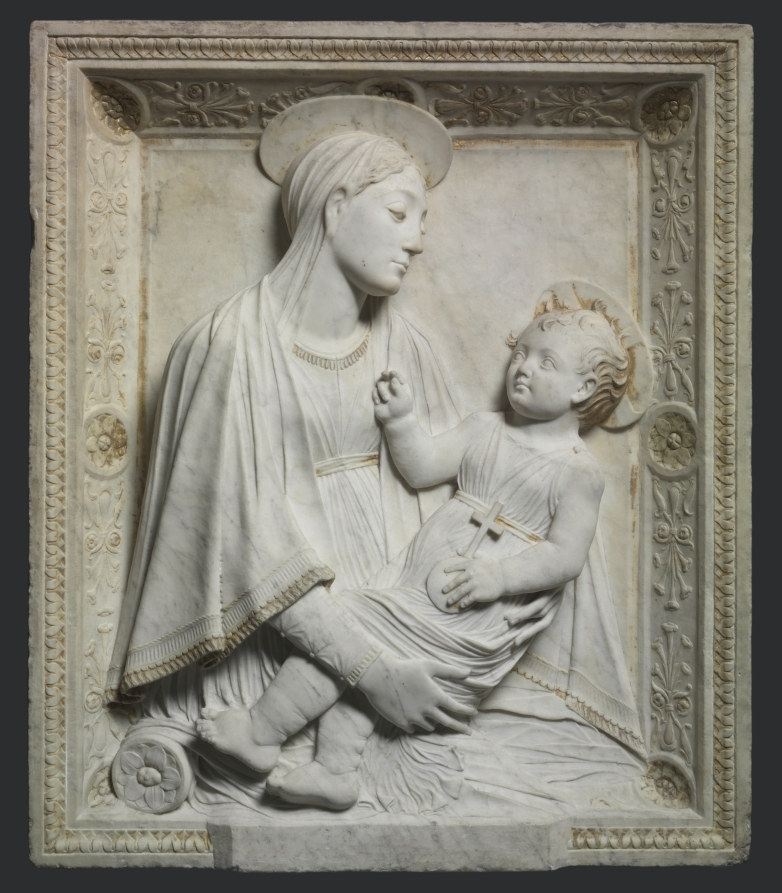
The Madonna and Child, stripped of iconographic sentiment, presents itself to the Addison eye as a study in nested volume and gravitational hierarchy. The composition is not a portrait; it is a structural diagram. The maternal figure forms the primary mass—a broad, columnar torso that tapers upward into the cranial apex, establishing a silhouette of deliberate verticality. Against this, the child functions as a secondary, subordinate volume: a compact, rounded counterweight positioned at the lower quadrant of the primary mass. The resulting geometry is one of asymmetric balance, wherein the larger form absorbs and stabilizes the smaller without collapsing into it. This is the essential grammar of the 2026 executive silhouette: a dominant architectural shell that houses, rather than displays, a secondary interior volume.
The drapery—that most treacherous of formal elements—operates here as a system of controlled folds, each crease a load-bearing line. Observe how the fabric descends in unbroken verticals from shoulder to hem, interrupted only where the child's form exerts pressure. These interruptions are not flaws; they are tension points, the visual equivalent of structural joints. The Addison interpretation translates this directly: a tailored coat whose shoulder line remains rigid while the waist and hip register the presence of the body beneath through calculated, minimal disruption. The garment must appear carved, not sewn—a monolith with a single point of organic resistance.
II. Materiality and the Urban Surface: From Pigment to Fabric
The surface quality of the work—its particular fusion of matte ground and selective luminosity—demands a corresponding textile logic. The flesh tones are rendered with a cool, desaturated warmth, neither ruddy nor pallid, suggesting a material that absorbs light rather than reflecting it. For 2026, this translates to heavyweight wool crepe in Slate: a fabric with sufficient body to hold an architectural line, yet possessing a microscopic surface irregularity that prevents the dead flatness of synthetic textiles. The drapery, by contrast, exhibits a subtle sheen at the fold crests—evidence of a tight weave with directional nap. The Addison equivalent is a bonded wool-silk composite, matte in repose, faintly luminous under directional light.
The child's form introduces a secondary material register: smoother, more compact, with a density that reads as compressed softness. This suggests an interior layer—a fine-gauge knit or a double-faced cashmere—that provides thermal mass without adding visual bulk. The urban executive of 2026 requires precisely this layered materiality: an outer shell of uncompromising structure, an inner core of tactile efficiency. The silhouette must read as a single gesture from without, yet reward proximity with material complexity.
III. The Poetics of the Void: Negative Space as Executive Armor
The most radical element of this composition is its economy of negative space. The background is not empty; it is activated void—a dark field against which the figures achieve their sculptural clarity. The Addison principle derived here is that the silhouette is defined as much by what it excludes as by what it contains. The 2026 executive garment must create a clean perimeter, a boundary so decisive that the surrounding environment becomes a deliberate contrast rather than an accidental context. This means: no extraneous hardware, no decorative stitching, no visible closure systems. The garment closes upon itself with the finality of a carved monolith.
The spatial relationship between the two figures—the child's position slightly forward and to the side of the maternal center—establishes a principle of offset alignment. The Addison tailoring for 2026 will employ this: a coat whose center front is subtly displaced, a collar that sits fractionally off-axis, a hem that registers a millimeter of asymmetry. These are not gestures of whimsy; they are structural corrections that prevent the architectural silhouette from becoming inert. The eye requires a point of productive instability to remain engaged.
IV. Temporal Compression: The Silhouette as Suspended Event
Returning to the internal DNA—the Meiping vase's frozen wave, the Socratic moment of suspension—the Madonna and Child operates within the same temporal paradox. It is a static image of a dynamic relationship: the holding, the being held, the perpetual tension of care. The silhouette captures not a moment but a condition. For Addison Fashion, this is the definitive brief: the 2026 executive garment must function as suspended architecture, a form that appears to have been arrested mid-gesture, its lines carrying the memory of movement without depicting it. The shoulder is raised, not shrugged. The hem falls, not drops. Every line is a decision held in abeyance.
The color logic follows: Slate—the gray that is neither warm nor cool, neither light nor dark, but a suspension of chromatic decision. It is the color of urban stone after rain, of overcast light on concrete, of the executive who has learned that authority resides in refusal—the refusal to announce, to decorate, to apologize. The silhouette speaks; the color listens.
V. Conclusion: The Architectural Body
The Madonna and Child, read through the Addison lens, is not a devotional image but a prototype for the executive form: a primary mass of uncompromising verticality, a secondary volume of contained energy, a surface logic of matte density and selective luminosity, and a perimeter of absolute clarity. The 2026 silhouette will be carved, not constructed; inhabited, not worn. It will hold the body as the maternal figure holds the child—with structural authority and without sentiment. This is the urban poetics of Addison Fashion: the garment as monolith, the body as event, the silhouette as the silence between them.