Urban Form: Kneeling Satyr
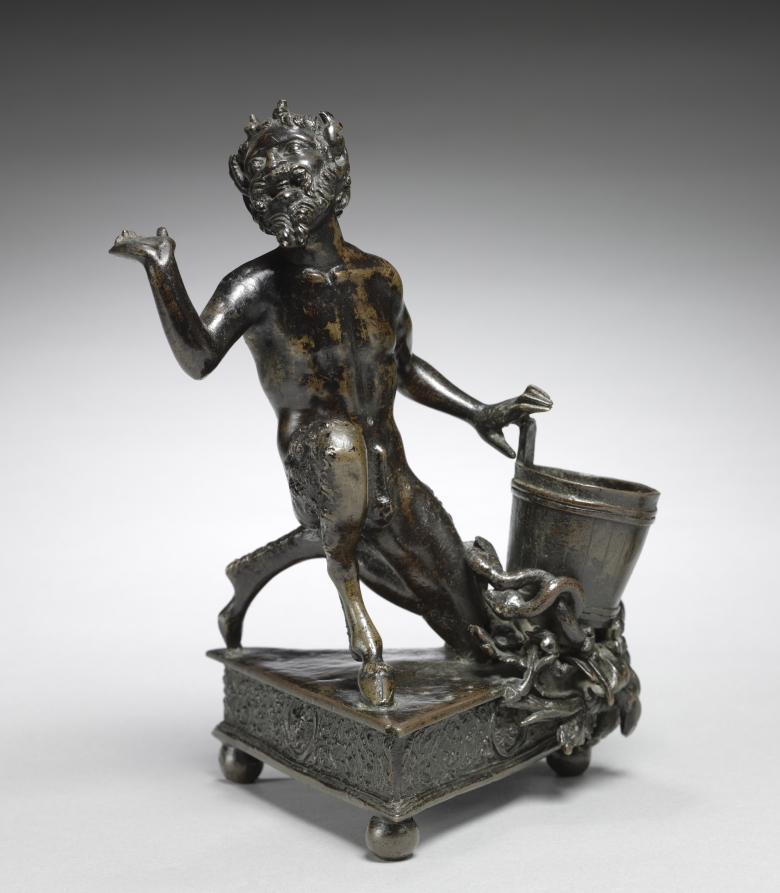
Urban Silhouette Research: The Kneeling Satyr as Structural Artifact
I. Geometric Integrity: The Architecture of Subjugation
The Kneeling Satyr presents a closed geometric system of extraordinary discipline. Its silhouette is governed by a descending diagonal—from the raised shoulder through the flexed spine to the grounded knee—that establishes a triangular load-bearing structure of remarkable stability. This is not the triangle of repose; it is the triangle of contained tension, a form that absorbs force without releasing it. The torso rotates along a secondary axis, creating a helical torsion that prevents the composition from collapsing into flatness. Every limb is folded inward, reducing the figure's spatial footprint to a compressed cubic volume—a mass that occupies space with deliberate economy.
This is the geometry of architectural compression. The satyr does not sprawl; it coils. The negative space carved between forearm and thigh functions as a structural void, a deliberate aperture that lightens the visual mass while reinforcing the internal logic of the pose. In Addison's 2026 framework, this translates directly to the executive silhouette: a form that is simultaneously grounded and kinetic, its power derived not from expansion but from precise internal articulation.
II. Structural Poetics: The Grammar of Restraint
The poetics of this figure reside in its refusal of narrative excess. Unlike the Baroque body, which announces its suffering to the viewer, the Kneeling Satyr withholds. Its gesture is inward—a private architecture of endurance. The head, inclined but not bowed, suggests cognitive sovereignty within physical limitation. This is the poetics of the executive posture: authority expressed through containment, not display.
Consider the articulation of the knee joint—the pivot upon which the entire composition rests. It functions as a fulcrum, distributing weight across a tripartite support system (knee, foot, hand) that mirrors the three-point tailoring of a structured shoulder. The 2026 Addison executive will recognize this principle: garments must be engineered as load-bearing systems, where every seam and dart serves a structural function rather than a decorative one. The satyr's folded arm becomes the analogue of a set-in sleeve—precise, anatomical, and unyielding in its line.
The surface tension of the figure—the taut skin over flexed muscle—corresponds to the material discipline of Addison's proposed bonded wool and technical slate. The silhouette must read as a single continuous gesture, from shoulder to hem, with no interruption of the descending diagonal. This is the poetics of the unbroken line: a form that communicates controlled potential energy, perpetually on the verge of release but never surrendering to it.
III. Urban Materiality: The Surface as Argument
The materiality of the Kneeling Satyr—whether rendered in marble, bronze, or ceramic—is monolithic and matte. It absorbs light rather than reflecting it, creating a dense visual field that resists easy consumption. This is the materiality of the urban executive: slate-toned, non-reflective, and structurally honest. The surface does not ornament; it declares.
In Addison's 2026 collection, this translates to fabrications that privilege weight over sheen. Double-faced cashmere in onyx and slate, bonded technical jersey with a matte hand, architectural felt—these are materials that hold a crease like a stone holds a shadow. The satyr's surface is unforgiving; it reveals every structural decision. Similarly, the executive silhouette must be self-evident in its construction, with exposed seams, raw edges, and visible topstitching functioning as structural signatures rather than flaws.
The patina of the original—the weathering of stone or the oxidation of bronze—suggests a temporal materiality that Addison will adopt through garment-dyed finishes and reactive surface treatments. The 2026 executive does not wear pristine garments; they wear evidence of structural integrity under pressure. The slate palette must read as geological, not cosmetic—the color of load-bearing stone, not the color of fashion.
IV. The 2026 Executive Silhouette: A Synthesis
The Kneeling Satyr defines the 2026 Addison silhouette through three structural imperatives:
First, the descending diagonal. Every garment must establish a primary line of force from shoulder to hem, uninterrupted by horizontal breaks. This is achieved through raglan construction, continuous side panels, and bias-cut insets that redirect visual weight downward.
Second, the helical torso. The executive form must suggest rotation within stillness—a wrapped, asymmetric closure that implies movement without sacrificing the closed geometric volume. The body is a column under torsion, not a flat plane.
Third, the structural void. Negative space must be engineered, not incidental. Cutaway armholes, deep side vents, and articulated knee pleats create apertures of release that prevent the silhouette from becoming a monolith. The void is the breath of the architecture.
The Kneeling Satyr is not a figure of defeat. It is a study in structural poise—a form that has negotiated with gravity and emerged with its geometry intact. This is the Addison executive for 2026: compressed, deliberate, and architecturally absolute. The silhouette does not ask for permission. It occupies space with the quiet authority of stone.