Urban Form: Clog-shaped Teabowl
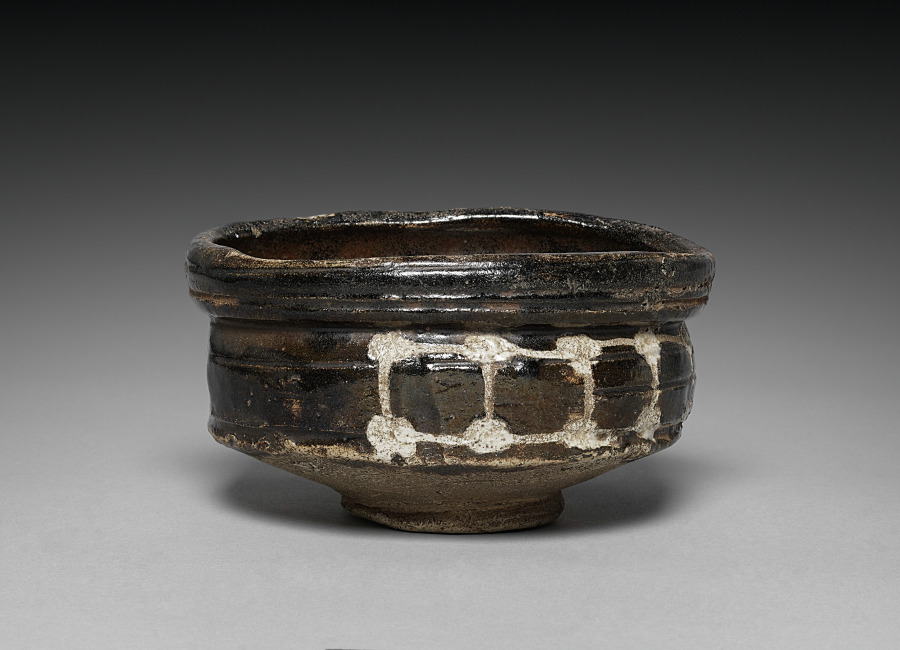
Urban Silhouette Research: The Clog-Shaped Teabowl as Structural Artifact
I. Preliminary Geometry: The Clog as Anti-Vessel
The clog-shaped teabowl presents a deliberate rupture in the classical vocabulary of ceramic form. Where the Song meiping aspires to vertical grace—a columnar body tapering to a narrow neck—the clog silhouette operates on a horizontal axis of compression. Its mass is distributed low and forward, the toe box extending into a blunt prow, the heel collapsing into a weighted counterform. This is not a vessel that reaches upward toward the heavens; it is a form that occupies ground, asserting weight, proximity, and the tactile logic of the foot. For Addison Fashion, this inversion is instructive. The 2026 executive silhouette must similarly abandon the aspirational vertical—the elongated lapel, the tapering trouser—in favor of a grounded, architectural mass that communicates authority through stability rather than ascent.
II. The Marble Skin and the Socratic Arm
The internal DNA of this artifact invokes the marble flesh of Socrates at the moment of hemlock. The sculptor's chisel renders the philosopher's arm as a load-bearing element—extended, deliberate, geometrically certain. The clog teabowl echoes this gesture in clay: its walls are thick where the hand grips, thin where the light passes, and the transition between these zones is governed by the same cold logic that governs the marble drapery. There is no ornament here, only structural necessity made visible. The surface—whether glazed in slate or left raw—records the pressure of the maker's palm as a fossil records a tide. In tailoring terms, this translates to a shoulder that is built rather than padded, a seam that is exposed rather than concealed, a garment whose interior architecture is legible from the exterior. The 2026 executive does not wear clothing that hides its construction; the construction is the statement.
III. Wave Logic: The Meiping Inversion
The meiping's wave motif—those incised ripples that circulate the belly of the vessel—finds its negative image in the clog teabowl. Where the meiping's waves are continuous, rhythmic, and subordinated to the vessel's vertical axis, the clog's surface is interrupted by the geometry of the foot: a horizontal plane that cuts the wave, a fault line in the ceramic body. This is the urban condition rendered in clay—the grid imposed upon the organic, the sidewalk interrupting the river. For Addison Fashion, the lesson is one of controlled discontinuity. The 2026 silhouette will not flow; it will fracture with intention. A coat that stops abruptly at the hip. A trouser whose crease is offset from the seam. A collar that refuses the neck's curve in favor of a plane. These are not errors; they are the clog's foot, the deliberate interruption that generates tension and, therefore, presence.
IV. Materiality: Slate, Grit, and the Weight of the Real
The clog teabowl's surface—whether the cool grey of a reduced glaze or the raw tooth of unglazed stoneware—speaks to a material honesty that the 2026 executive wardrobe must absorb. Slate, as a color and as a concept, carries the weight of the urban: the pavement, the storm sky, the unpolished edge of the built environment. The fabric counterpart is a dense wool with visible weave, a technical canvas that holds its shape without stiffness, a leather that creases rather than cracks. The clog's thick walls—designed to retain heat, to resist the shock of the table—translate to garments that insulate the body from the volatility of the day. This is not armor; it is architecture. The executive does not need protection from the world so much as a stable interior from which to observe it.
V. The Foot as Foundation: Silhouette and Stance
Perhaps the most radical proposition of the clog-shaped teabowl is its insistence on the foot as the generator of form. The vessel's profile is determined not by its rim but by its base—a wide, flat, unapologetic platform that distributes weight and anchors the object to the table. In the 2026 executive silhouette, this principle manifests as a descending hierarchy of mass: broad, grounded shoulders; a torso that tapers only slightly; trousers that fall in a straight, unbroken line to a shoe that is itself a platform—a solid, low block of leather or rubber that refuses the delicacy of the stiletto. The silhouette is a pyramid inverted, or rather a pyramid compressed: the weight is at the base, the intention at the crown, and the line between them is direct, uninflected, and severe.
VI. Conclusion: The Artifact as Blueprint
The clog-shaped teabowl is not a beautiful object in the conventional sense. It is difficult—awkward in the hand, resistant to the expected rituals of tea. And yet it is precisely this difficulty that makes it a viable model for the 2026 executive silhouette. The coming season will not reward elegance that is effortless; it will reward elegance that is constructed, visible, and unapologetic. The clog's geometry—compressed, grounded, interrupted—offers a blueprint for garments that do not flatter the body but frame it, that do not follow the body's curves but propose alternatives. In slate and stone, in wool and grit, the Addison Fashion executive will wear the clog's logic: a silhouette that stands, that holds, and that refuses to apologize for its weight.