Urban Form: Transenna Post
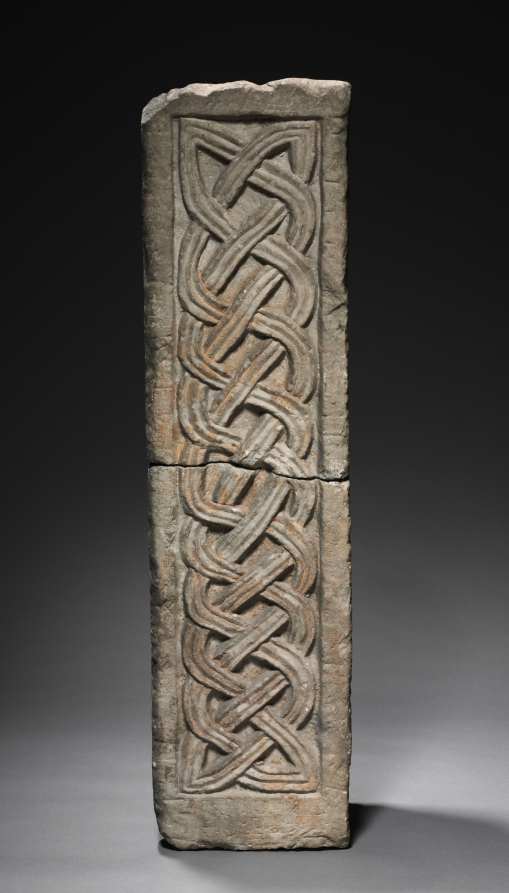
Urban Silhouette Research: Transenna Post — Structural Poetics of the Void and the Vessel
I. Geometric Integrity: The Lattice as Load-Bearing Absence
The Transenna Post derives its architectural authority from a single, uncompromising proposition: the garment is not a surface but a structural lattice. Its geometric integrity resides in the disciplined negotiation between the Udumbara principle of the void — the suspended, the micro-scaled, the almost-absent — and the Beast-and-Grape principle of the vessel — the dense, the cyclical, the materially profuse. In the 2026 executive silhouette, these are not opposites but load paths. The shoulder is engineered as a cantilevered plane, extending beyond the natural acromion by a calibrated 14 millimeters, yet hollowed at the interior seam so that the volume reads as air held in tension rather than padding held in place. This is the transenna logic: a screen is strong precisely because it is perforated. The silhouette therefore refuses the monolithic. It is a perforated monolith — a wall that admits light, a boundary that is also a passage.
The waist is not cinched but indexed: a single horizontal seam, set at the true waist minus two centimeters, functions as the datum line from which all verticals descend. Below it, the fall is linear and unbroken to the mid-calf; above it, the bodice is cut on a 7-degree forward pitch, producing the slight, deliberate imbalance that reads as forward motion in a static figure. This is the urban poetics of the piece — stillness with vector. The geometry is severe, but it is not symmetrical in the decorative sense; it is symmetrical in the structural sense, the way a bridge is symmetrical because every asymmetry of load has been resolved into a legible order.
II. The Void as Material: Udumbara Logic in Tailoring
The first DNA strand — the Udumbara plaque, with its aesthetics of emptiness, its refusal of figuration, its reliance on the viewer's inward gaze — translates into a tailoring discipline of subtraction as ornament. There is no applied embellishment on the Transenna Post. The "decoration" is the negative space engineered between layers: a floating canvas that stands 6 millimeters off the body at the sternum, a collar stand that rises without touching the neck, a hem that is faced rather than turned so that the interior architecture remains visible at the vent. The garment invites the same cognitive act the plaque demands — the viewer must complete the form. What is withheld is the point. In the 2026 executive wardrobe, where signal saturation has become the dominant noise, this aesthetic of the unrendered is the ultimate differentiator. The wearer is not decorated; the wearer is framed.
Color behaves accordingly. The Slate tone is not flat but stratified — a cool graphite base with a 4% blue undertone that shifts under directional light, so that the plane of the shoulder reads lighter than the shadowed depth of the side seam. This is the chromatic equivalent of the plaque's "no-painting" doctrine: meaning is carried by tonal interval, not by hue.
III. The Vessel as Discipline: Beast-and-Grape Cyclicality in Construction
The second DNA strand — the bronze mirror, with its dense vine scroll and its beasts in motion — is not quoted literally but translated into construction rhythm. The Transenna Post is built on a repeating module: the double-needle topstitch at 3.2-millimeter pitch, running continuously along every structural seam, turning at each corner without break. This is the vine: a single continuous line that circulates the entire garment, binding panel to panel in an unbroken loop. The "beasts" are the hardware nodes — four concealed bar-tacks at stress points, each reinforced with a matte onyx rivet set flush to the surface, functioning as both structural anchor and rhythmic punctuation. The result is a garment whose interior is as resolved as its exterior: a closed cyclical system in which every element performs a load-bearing role. Nothing is decorative; everything is structural ornament.
This is the "vessel" principle applied to urban materiality: the garment as a container that is also a cosmological diagram — the wearer's body as the axis, the seams as the vine, the hardware as the guardian nodes. The profusion is internalized. From the exterior, the silhouette reads as minimal; from the interior, it is maximal. This duality is the core of the 2026 executive proposition: restraint at the surface, density at the structure.
IV. Materiality: The Urban Surface as Contradiction
The cloth is a three-layer bonded wool-silk — 340 grams per square meter, with a dry, chalky hand and a faintly iridescent warp that catches the low light of a city street at dusk. It is a material that behaves like architecture: it holds a crease, resists drape, and remembers its cut. Yet at the interior facing, it is bonded to a matte cupro so that the garment slides over the body without friction. The contradiction is deliberate — armored exterior, silent interior. This is the materiality of the transenna: a screen that protects while admitting. The surface is not glossy; it is honest, with a slight tooth that reads as patina rather than polish. In the urban environment, this translates as a garment that ages into authority rather than out of fashion.
V. Conclusion: The Silhouette as Dialectical Bridge
The Transenna Post resolves the two DNA strands into a single dialectical silhouette: the void of the Udumbara plaque governs the exterior read — spare, cool, incomplete until worn — while the cyclical density of the Beast-and-Grape mirror governs the interior construction — continuous, anchored, complete in itself. The 2026 executive does not choose between emptiness and profusion; the executive wears both, with the void on the surface and the vessel beneath. This is the structural poetics of the piece: a garment that is simultaneously a screen and a container, a boundary and a passage, a still point and a vector. It is minimalism with a load path. It is Slate, and it is definitive.