Urban Form: The Immaculate Conception
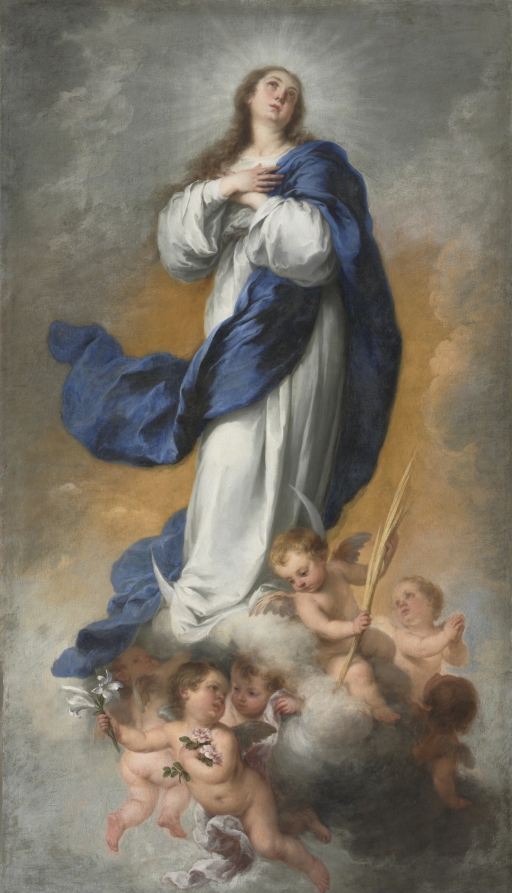
Urban Silhouette Research: The Immaculate Conception — Form, Color, and the Dialectics of Motion and Stillness
I. Thesis: Two Artifacts, One Structural Grammar
The Addison Fashion NYC research division submits the following technical deconstruction. The source DNA comprises two Eastern artifacts of divergent materiality: the Musician-Patterned Pottery Mold Fragment (a ceramic negative space, bearing the residual imprint of a lost positive) and the diptych Arhat Holding Peach / Arhat Holding Fly-Whisk and Hound (silk-borne figuration). Our mandate is not connoisseurship but extraction: to isolate the formal logic by which these objects encode kinetic exuberance and absolute stillness, and to translate that logic into a wearable architecture for the 2026 executive wardrobe. The operative category is Minimalist; the governing palette, Slate. The argument proceeds from form to color to commercial application.
II. The Mold Fragment: Form as Arrested Velocity
The pottery mold is, strictly speaking, a matrix—a concave instrument whose function was reproduction, yet whose survival is singular. Its formal value lies in the paradox of captured motion. The musician's drapery is incised with directional line-work whose density and torsion simulate the physics of fabric under rotational force; the fingers are rendered as abbreviated vectors rather than anatomical detail. The silhouette is therefore not descriptive but diagrammatic: it records energy expenditure, not the body expending it.
For tailoring, this yields a principle we designate arrested velocity. A garment may imply movement through cut rather than through fabric volume—a shoulder seam pitched forward two degrees, a side panel released at the hem while anchored at the waist, a sleeve head rotated to suggest the arm mid-gesture. The 2026 executive does not require garments that move; she requires garments that evidence movement having occurred and been resolved. The fragment's fracture—its incompleteness—is equally instructive. Minimalism has long mistaken finish for rigor. The mold demonstrates that strategic absence (an unfinished hem, an exposed seam allowance, a deleted pocket) generates narrative tension superior to closure. We recommend a single deliberate interruption per garment: one raw edge, one omitted closure, one seam left structurally visible.
III. The Arhat Diptych: Form as Contained Stillness
The diptych operates by inverse means. Its line-work is continuous, fine, and non-vectorial—it describes contour without implying force. The arhats' drapery falls in stable verticals; the peach and the hound are rendered as attributes absorbed into the figure's compositional gravity rather than as independent agents. The formal achievement is containment: every element is subordinate to a central mass that does not displace. The silhouette is columnar, weighted at the base, tapering at the crown—a structural typology directly transferable to outerwear.
We extract the columnar executive silhouette: a coat or jacket whose shoulder line is level and unexaggerated, whose waist is indicated by suppression rather than cinching, and whose hem carries the visual mass. This is not the oversized silhouette, which distributes volume indiscriminately; it is a graded mass, heaviest at the base, resolving upward into restraint. The arhat's stillness is achieved not by rigidity but by the elimination of competing gestures—a discipline of subtraction that Minimalism claims but rarely executes. The technical instruction is one focal mass per look: a single weighted hem, a single suppressed waist, a single point of closure. Everything else recedes.
IV. Color: Slate as the Reconciliation
The palette resolves the dialectic. Slate—a desaturated blue-grey of low chroma and mid-to-low value—occupies the precise chromatic territory between the mold's fired earth and the painting's mineral pigments. It is the color of neither heat nor shadow, and therefore of both. In technical terms, Slate functions as a chromatic neutral with directional bias: it reads cool under daylight and warm under tungsten, making it uniquely adaptive to the executive's diurnal-to-nocturnal schedule. We specify Slate across three values—graphite-slate (outerwear, structural), mid-slate (tailoring, transitional), and pale-slate (shirting, atmospheric)—with tonal monochrome as the default configuration. Contrast is permitted only in texture, never in hue. The result is a wardrobe that photographs as a single continuous field, which is the commercial definition of authority.
V. Synthesis: The Immaculate Conception as Wardrobe Logic
The two artifacts are not opposites but phases of a single cycle: energy captured, energy contained. The mold proves that motion can be frozen into form; the diptych proves that stillness can be made structurally active. The 2026 Addison executive garment must hold both—kinetic evidence in the cut, static authority in the mass. We therefore propose the following specification: columnar outerwear in graphite-slate with a single forward-pitched shoulder and one visible structural seam; mid-slate tailoring with suppressed waist and graded hem; pale-slate shirting with an interrupted placket. No print, no hardware, no logo. The immaculate conception of this collection is precisely that: a wardrobe conceived without ornament, in which form alone carries the argument—and the argument is that stillness, correctly engineered, is the most dynamic statement available to the executive.