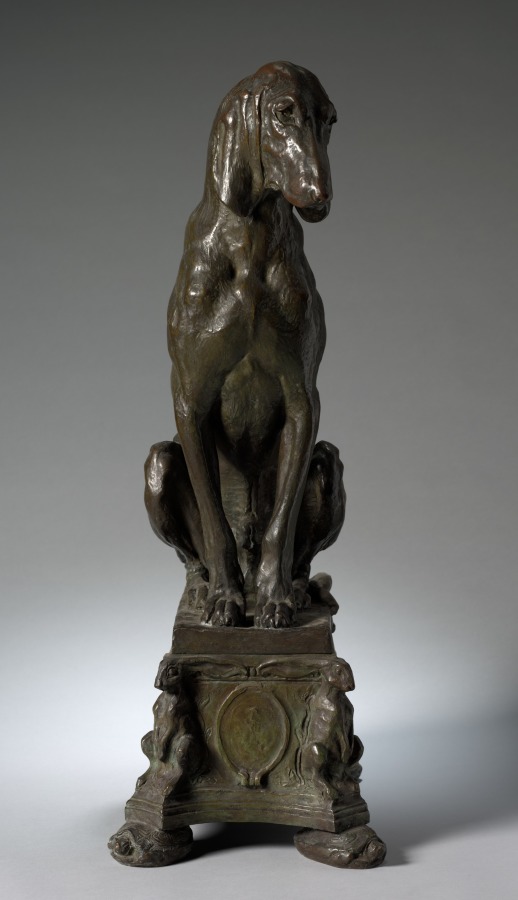
Urban Form: Hound (2 of 2)
Urban Silhouette Research: The Safina Protocol — Structural Poetics of the Interstitial
I. The Rectangular Canon: Format as Architecture
The Safina presents a decisive geometric proposition: the elongated rectangle as a vessel of compressed spiritual density. Its proportions—narrow in width, extended in vertical reach—establish a silhouette logic that rejects the horizontal sprawl of conventional tailoring. For the 2026 executive, this translates into a columnar discipline: the shoulder line held taut, the waist suppressed rather than cinched, the hem falling with the gravity of a closed manuscript. The format is not decorative; it is structural inevitability. Every proportion derives from the necessity of containment—of text, of image, of breath.
This is the first principle of the Addison silhouette: the garment as reliquary. The body does not fill the cloth; the cloth frames the body’s interiority. The Safina’s spine—rigid, unyielding—becomes the tailored back seam, a single continuous line from nape to hem that organizes the entire architecture. No darts interrupt its descent. No seams negotiate its authority.
II. Nastaʿlīq and the Suspended Stroke: Calligraphic Tension
The interweaving of Naskh and Nastaʿlīq across the page introduces a second structural principle: controlled asymmetry within a fixed frame. The Nastaʿlīq stroke—descending, tapering, suspended—operates as a dynamic diagonal within the rectangular field. It does not break the frame; it activates it. The pressure of the reed pen, the modulation of ink density, the deliberate thinning of the terminal stroke—these are not ornament. They are load-bearing gestures.
Translated to the 2026 executive silhouette, this manifests as the articulated seam: a single diagonal line—shoulder to hip, collar to cuff—that carries the visual weight of the garment without disrupting its planar integrity. The fabric must behave like ink: dense at the origin, attenuated at the extremity. Matte wool crêpe, bonded cashmere, resin-treated silk—materials that hold a crease like a pen holds a line. The sleeve, in particular, must taper with calligraphic precision: full at the shoulder, narrowing at the wrist, the cuff closing like the final stroke of a bayt.
III. The Juggler’s Suspension: Equilibrium as Silhouette
The Juggler—that solitary figure arrested mid-arc—provides the third structural axiom: the silhouette exists in the interval between forces. The balls do not fall; they are held in the geometry of the juggler’s stance. The body leans, the arms extend, the gaze fixes—and in that suspension, a temporary architecture is erected. This is the poetics of the interstitial: form generated not by rest but by the management of opposing tensions.
For Addison’s 2026 executive, this demands garments that hold tension without visible effort. The shoulder is not padded into rigidity; it is suspended between the collar’s anchor and the sleeve’s fall. The waist is not suppressed by darts but balanced between the chest’s volume and the hip’s release. The result is a silhouette that appears—at every angle—to be mid-gesture: never static, never resolved, always in the act of becoming. This is the difference between tailoring that fits and tailoring that performs equilibrium.
IV. The Decorative Sublime: Ornament as Structural Logic
The marginal vine scrolls of the Safina—those “useless” arabesques—are not peripheral. They are the frame that elevates the text into space. They lift the written word from the flat plane into a dimension that can be inhabited. This is the principle of decorative sublimity: ornament that does not embellish but architects. The vine does not grow on the page; it grows from the page, establishing a secondary grid—a lattice of interlocking curves—that gives the rectangle its interior volume.
In the 2026 silhouette, this translates into topological surface treatment: quilting that follows a geometric rather than organic logic; bonding that creates relief without weight; seam placement that generates shadow as a structural element. The garment’s surface must reward close inspection—not with applied decoration, but with integrated texture that behaves like the Safina’s marginalia: present, precise, and utterly essential to the whole.
V. The Interstitial Body: Between Gravity and Flight
The final axiom is the most demanding: the silhouette must occupy the interval between earth and air. The Safina is a boat—a vessel that moves between shores. The juggler is a body—suspended between gravity and release. The executive of 2026 operates in the same interstitial zone: between the physical and the digital, the private and the public, the fixed and the fluid. The garment must acknowledge both poles without resolving into either.
This means weight without heaviness: dense fabrics cut with architectural precision, but finished with a lightness of hand that allows movement without collapse. Structure without rigidity: seams that hold their line but yield to the body’s gesture. Presence without assertion: a silhouette that commands the room not by volume but by the perfection of its internal logic. The Safina does not shout; it holds. The juggler does not grasp; he receives. The Addison executive does not dress to be seen; they dress to inhabit the interval—that suspended, luminous space where form and meaning coincide.
VI. Materiality: The Onyx Register
The color directive—Onyx—is not a chromatic choice but a material argument. Onyx absorbs light; it does not reflect it. It creates depth through subtraction, not addition. The 2026 executive silhouette, rendered in onyx, becomes a study in negative luminosity: the garment’s structure is read through shadow, through the subtle modulation of black against black, through the way matte surfaces meet low-sheen ones at the seam line. This is the Safina’s ink logic carried to its terminus: the page is dark, the text is darker, and meaning emerges from the tension between densities.
The urban materiality of this silhouette is therefore architectural and nocturnal: bonded wool with a dry hand, silk faille with a controlled luster, calf leather with a matte finish. These are materials that hold their shape in low light, that reveal their structure through movement rather than surface, that reward the informed eye over the casual glance. This is the Addison proposition for 2026: a silhouette that does not announce itself but withholds—and in that withholding, achieves the decorative sublime.
Conclusion. The Safina and the juggler converge on a single truth: form is the management of suspension. The 2026 executive silhouette must be built on this principle—columnar, calligraphic, interstitial, and onyx-dark. It must hold tension without strain, ornament without excess, and presence without noise. This is not fashion. This is structural poetics—and it is the only silhouette that matters.