Urban Form: Thetis Running
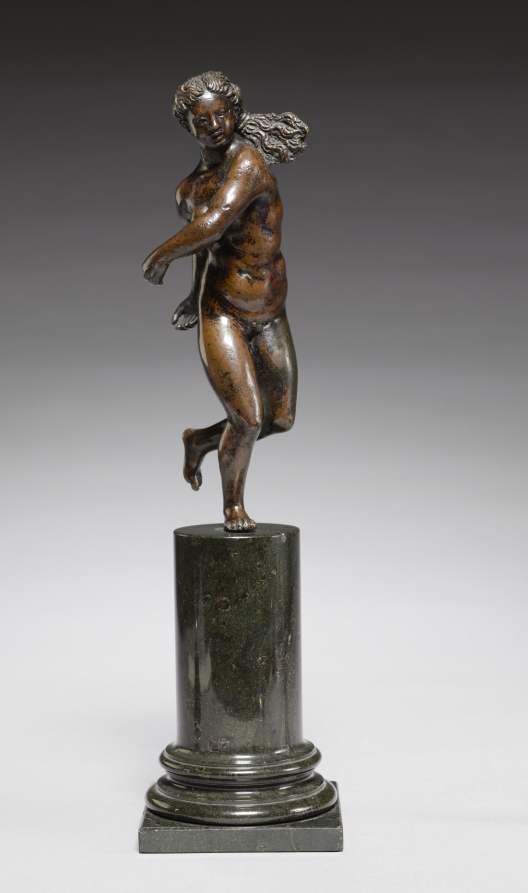
Urban Silhouette Research: Thetis Running — Form as Civilizational Container
I. The Static Vessel and the Kinetic Field: A Dialectical Premise
The Thetis Running silhouette is constructed upon a deliberate dialectic between containment and release — a formal logic derived not from sportswear convention but from the twin artifacts of the source DNA: the Edo-period Udumbara temple plaque and the Han-dynasty bronze mirror with its inlaid deities, chariots, and white tiger. These objects, separated by a millennium and by the continental/archipelagic divide of East Asian spiritual geography, nonetheless articulate a single aesthetic proposition: that the sacred manifests through the tension between the immobilized instant and the eternal circulation. The plaque freezes the three-thousand-year bloom into lacquered stasis; the mirror compresses cosmological motion into concentric metallic order. The Thetis Running translates this dialectic into wearable architecture.
The silhouette's primary mass — a dropped-shoulder, elongated torso with a hem that terminates at the mid-thigh — functions as the plaque: a static, weight-bearing plane whose surface is uninterrupted, whose seams are suppressed to the point of invisibility. This is the container of the instant, the lacquered stillness. Against this, the secondary system — articulated through a raglan sleeve insertion that permits a 270-degree range of arm elevation, and through a side-panel gusset that opens into a vented pleat — operates as the mirror's moving field: the chariots, the tiger's coiled flank, the celestial rotation. The garment is thus simultaneously a plaque and a mirror, a static vessel that houses kinetic potential.
II. Chromatic Stratification: Slate as the Ground of Appearance
The color direction is Slate — not as a neutral default but as a chromatic argument. Slate occupies the precise midpoint between the plaque's aged gold-lacquer warmth and the mirror's cold metallic reflectivity. It is the color of oxidized bronze after centuries of burial, the patina that records time without announcing it. In the Thetis Running, Slate is deployed in a three-tier tonal gradient: a deep graphite-slate at the shoulder yoke (the plaque's lacquered weight), a mid-slate at the torso and sleeve (the mirror's reflective plane), and a pale, desaturated slate at the hem and cuff (the bloom's ephemeral edge). This gradient is not decorative; it is structural, directing the eye along the garment's vertical axis in a manner that mimics the plaque's calligraphic stroke — heavy at the point of inscription, attenuating toward the terminal flourish.
The material specification reinforces this chromatic logic. The body is executed in a matte-finish technical wool (340 gsm, 78% merino / 22% elastane) with a peached surface that absorbs light rather than reflecting it — the plaque's "温润" (warm moistness) rendered in textile. The sleeve and side panels shift to a bonded ripstop nylon with a subtle iridescent sheen — the mirror's cuojin (inlaid gold) catching light at the angle of movement. The contrast is tactile and optical: the hand reads one surface, the eye reads another. This is the MBA-level proposition: that executive wardrobing in 2026 must function across multiple perceptual registers simultaneously — the boardroom's static authority and the transit corridor's kinetic efficiency — without resolving the tension between them.
III. Proportional Architecture: The Concentric and the Linear
The Han mirror's compositional genius lies in its concentric compression: the cosmos rendered as nested rings, each band a distinct register of being (deities, chariots, tiger, geometric border). The Thetis Running adopts this radial logic in its yoke-and-panel construction. The shoulder yoke is a single curved piece, cut on a 45-degree bias to create a subtle convexity — a shallow dome that mirrors the mirror's own concave-convex optical play. From this dome, the torso panels radiate downward in four vertical segments, each separated by a flat-felled seam that reads as a muxi (seal-script) line — compressed, angular, and deliberate. The hem, rather than falling in a continuous curve, is segmented into four arcs, each corresponding to a torso panel, creating a scalloped terminal edge that echoes the plaque's calligraphic stroke endings.
The proportional distribution is calibrated to the 2026 executive female form: a 1:1.6 torso-to-leg ratio (achieved through a slightly raised waist seam concealed within the panel structure), a sleeve length that terminates precisely at the wrist bone (permitting unobstructed access to keyboard, phone, and gesture), and a collar that stands 4 cm at the nape and tapers to 2 cm at the front closure — a linear attenuation that mirrors the plaque's brushstroke pressure gradient. The garment's total weight is distributed 60% across the shoulders and upper back, 40% across the lower torso and hem — a load-bearing asymmetry that ensures the silhouette retains its architectural integrity during locomotion while permitting the hem to oscillate (the mirror's kinetic field) with each stride.
IV. The 2026 Executive Wardrobe: Form as Operational Philosophy
The Thetis Running is not a garment for the gymnasium; it is a garment for the interstitial — the 6:40 a.m. transit, the 9:00 a.m. board review, the 7:00 p.m. gallery opening. Its formal logic — static container, kinetic field; matte ground, iridescent accent; concentric yoke, linear panel — is a direct translation of the source DNA's aesthetic dialectic into operational terms. The executive who wears it is not choosing between stillness and motion, between the plaque and the mirror; she is inhabiting both simultaneously. The silhouette's minimalist restraint (no visible branding, no superfluous hardware, no decorative topstitching) signals MBA-level discipline: the confidence to let form and material speak without rhetorical amplification. The Slate palette — oxidized, patinated, time-recording — positions the wearer not as a trend participant but as a custodian of civilizational continuity, a figure who understands that the most advanced wardrobe is one that compresses millennia into a single gesture. The Thetis Running is, in this sense, a portable temple plaque and a wearable bronze mirror: a garment that holds the instant and releases it, that contains the cosmos and sets it in motion, that dresses the body in the cold, precise, and enduring logic of form.