Urban Form: Cover for a Tea Caddy
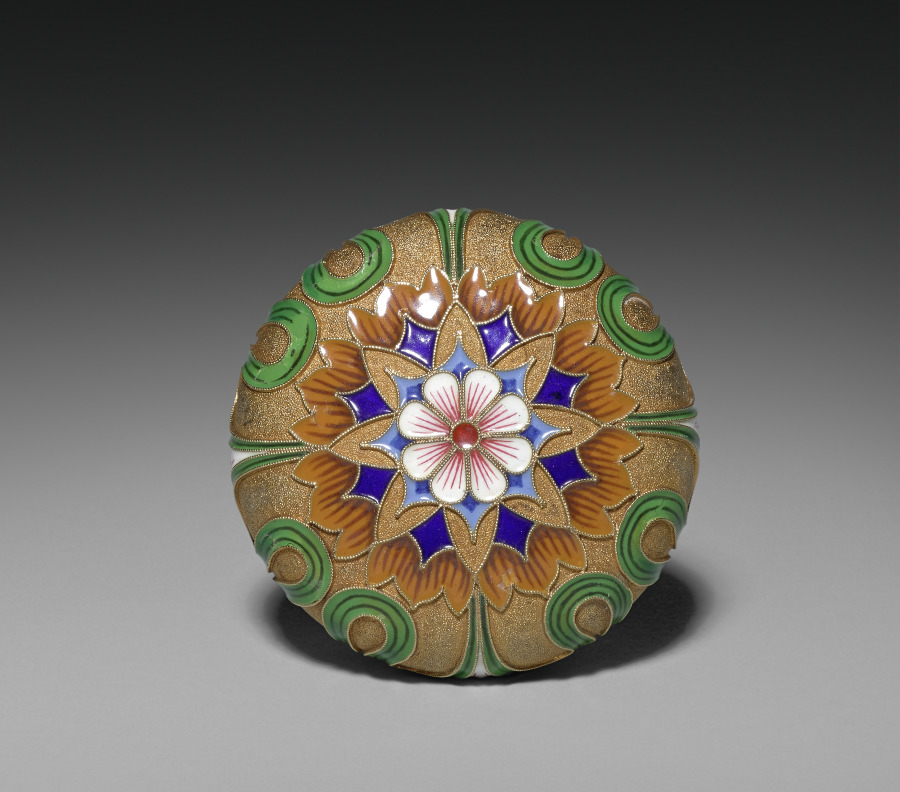
Urban Silhouette Research: The Tea Caddy as Architectural Vessel
I. Geometric Integrity and the Ontology of the Cover
The subject under examination—a cover for a tea caddy—presents a deceptively simple geometric proposition. Its primary form is a cylinder, terminated by a planar lid whose circumference must resolve with absolute precision against the body’s vertical wall. This is not ornament; it is structural poetics at its most rigorous. The intersection of horizontal plane and vertical curve constitutes a seam of philosophical consequence: the lid is the boundary between containment and exposure, between the vessel’s interior void and the urban atmosphere it negotiates. In the Addison Fashion lexicon, this seam is the executive datum line—the precise horizontal from which all proportional relationships descend.
The artwork’s geometric integrity resides in its refusal of excess. There is no flange, no decorative lip, no applied motif to distract from the purity of the junction. The cover’s radius is calibrated to the body’s radius with a tolerance that reads as inevitability rather than manufacture. This is the same discipline we impose upon the 2026 executive silhouette: a shoulder line that meets the sleeve head without rupture, a collar that sits upon the neck like a lid upon a caddy—closed, resolved, absolute. The geometry is not merely functional; it is a statement of intent. The wearer of such a silhouette does not adorn; they contain.
II. The Void as Structural Material
Eastern ceramic philosophy—the Jar as cited in the internal DNA—insists that the vessel’s utility lies in its emptiness. The tea caddy cover is the architectural expression of this principle. It does not fill the void; it frames it. The lid’s underside, invisible in use, is the negative space that gives the object its purpose. In translating this to the 2026 executive silhouette, we treat the body’s interior volume—the space between fabric and skin—as a structural material of equal importance to the wool, the silk, the cashmere. The garment must breathe around the wearer, not cling. The cover teaches us that containment without compression is the highest form of tailoring.
This is the antithesis of the Western impulse to fill, to saturate, to render every surface legible. The Socratic death—rational, declarative, pointing heavenward—demands a silhouette that announces its presence. The tea caddy cover, by contrast, withholds. It is a lid, not a proclamation. For the 2026 executive, this translates into garments whose authority is derived from restraint: a coat that closes with a single concealed placket, a trouser whose crease is the only visible line, a shoulder that requires no padding to assert its geometry. The void does the work.
III. Urban Materiality: Onyx, Slate, and the Patina of Use
The tea caddy cover, in its finest iterations, is executed in materials that record time without surrendering to it. Unglazed stoneware, burnished earthenware, the faint sheen of a well-handled lid—these surfaces develop a patina that is not degradation but biography. In the urban context, this principle governs our selection of Onyx as the defining color for the 2026 executive wardrobe. Onyx is not black; it is the color of a surface that has absorbed light and returned it as depth. It is the color of a lid that has been lifted ten thousand times and still seats perfectly.
The materiality of the cover—its weight, its thermal conductivity, its acoustic signature when replaced upon the body—must be translated into textile. A cover that rings hollow is a failure of ceramic craft; a garment that rustles with synthetic stiffness is a failure of urban tailoring. The 2026 executive silhouette demands dense, quiet fabrics: double-faced wool that requires no lining, silk crepe that falls with the gravity of a well-thrown vessel, leather that creases at the elbow in a language of use rather than wear. The city is the kiln; the executive is the vessel; the silhouette is the cover—precise, removable, and absolutely necessary.
IV. The Seam as Philosophical Statement
Finally, we must address the seam where cover meets body. In the artwork, this junction is neither hidden nor celebrated; it is simply true. There is no gilded band to distract from the fit, no contrasting glaze to advertise the joinery. This is the urban poetics of the honest seam—a principle that will define the 2026 executive silhouette more than any other. The shoulder seam that sits precisely at the acromion, the side seam that falls perpendicular to the floor, the collar seam that follows the neck’s curve without gap or gather: these are not details. They are the architecture of credibility.
The tea caddy cover is a small object, but its geometric integrity is absolute. It teaches us that the executive silhouette of 2026 is not a matter of volume or embellishment, but of resolution—the resolution of curve and plane, of void and material, of use and beauty. The cover does not ask to be admired. It asks to be lifted, replaced, trusted. That is the standard to which we hold every garment in the Addison Fashion atelier: a standard of silent, structural, and utterly contemporary perfection.