Urban Form: Cupid Complaining to Venus
Urban Silhouette Research: Structural Poetics of the Cupid Complaining to Venus Motif
I. Geometric Integrity and the Architecture of Restraint
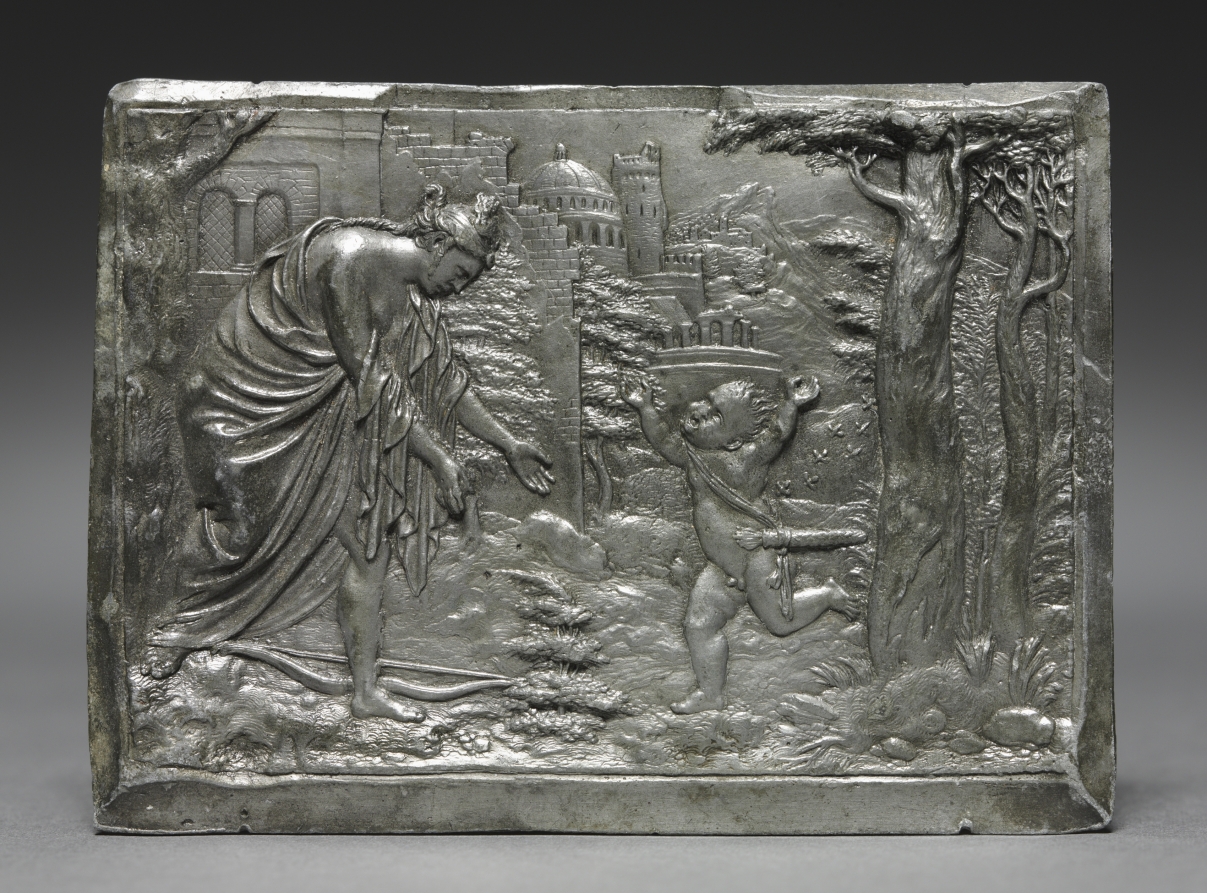
The compositional armature of Cupid Complaining to Venus operates on a principle of controlled asymmetry—a structural logic that directly informs the 2026 executive silhouette. The figural grouping establishes a diagonal tension between the supplicant Cupid and the seated Venus, a vector that resolves not through symmetry but through weighted balance. This is the essence of architectural minimalism: the silhouette does not decorate the body; it negotiates it. The 2026 Addison executive womenswear translates this into a shoulder line that is deliberately offset—one side extended, the other compressed—creating a dynamic equilibrium that reads as intentional authority rather than accidental distortion.
The geometric integrity here is not Euclidean. It is topological—concerned with the deformation of surfaces under emotional and spatial pressure. Venus's drapery cascades in parabolic arcs, while Cupid's form contracts into a tighter, more angular mass. The resulting silhouette is a study in contrasting densities: the maternal figure occupies volume, the child figure occupies line. For the 2026 executive, this translates into a garment architecture where bulk and void coexist—a structured wool coat over a fluid silk column, a broad shoulder tapering into a narrow cuff. The silhouette is not a single shape but a dialogue between shapes.
II. Structural Poetics: The Tension Between Gesture and Grid
The poetics of this work reside in the friction between organic gesture and geometric containment. Venus's hand—raised in a gesture of reproach or reassurance—breaks the verticality of her form, introducing a vector of interruption. This is the structural principle that defines the Addison 2026 approach to tailoring: the garment must contain a deliberate rupture. A seam that does not follow the body's curve. A lapel that extends beyond its functional necessity. A hem that is cut on a bias that contradicts the grain of the fabric.
This is not ornamentation. It is structural poetics—the insertion of a gesture into a grid. The urban executive operates within systems of control (schedules, hierarchies, digital interfaces), and the silhouette must reflect that negotiation between order and instinct. The Cupid figure, with its twisted torso and raised arm, represents the instinctual vector—the body's refusal to be fully contained by the composition. In the 2026 Addison silhouette, this manifests as a controlled disruption: a tailored jacket whose back panel is cut longer than the front, a trouser whose crease is pressed off-center. The garment is architecturally sound but emotionally asymmetric.
III. Urban Materiality: Surface as Psychological Armor
The materiality of the painting—its aged varnish, its craquelure, its stratification of pigment and time—offers a direct corollary to the urban executive's relationship with surface. The 2026 Addison wardrobe treats fabric not as decoration but as psychological armor. The palette is Slate: a color that absorbs light rather than reflecting it, that suggests depth without transparency. The textiles are dense—double-faced wool, bonded crepe, matte silk—materials that hold their shape while yielding to movement.
The painting's surface is a record of accumulated time: layers of glaze, the erosion of edges, the softening of contour. This is the urban patina that the Addison executive embodies—a silhouette that is not pristine but resolved, not new but inevitable. The 2026 collection introduces a technique of controlled abrasion: seams that are pressed flat and then re-creased, edges that are left raw but sealed, surfaces that appear weathered yet remain structurally intact. The garment is a document of its own use, just as the painting is a document of its own aging.
IV. The Silhouette as Moral Position
Finally, the geometric integrity of Cupid Complaining to Venus is not merely formal—it is ethical. The composition stages a negotiation between power and vulnerability, between the maternal body and the supplicant child. The 2026 executive silhouette adopts this stance: it is authoritative without being aggressive, protected without being closed. The shoulder is strong; the neckline is exposed. The waist is defined; the hem is fluid. This is the minimalist dialectic—a silhouette that holds contradiction without resolving it.
The urban environment demands a garment that can withstand scrutiny while remaining opaque. The Addison 2026 silhouette is not a statement of arrival but a structure of endurance. It is built on the same principle as the painting: that beauty resides not in the elimination of tension but in its precise calibration. The executive who wears it does not announce herself; she occupies space with geometric certainty. The silhouette is Slate—cool, dense, and unyielding—and it is enough.