Urban Form: Frieze with Dancer and Musicians
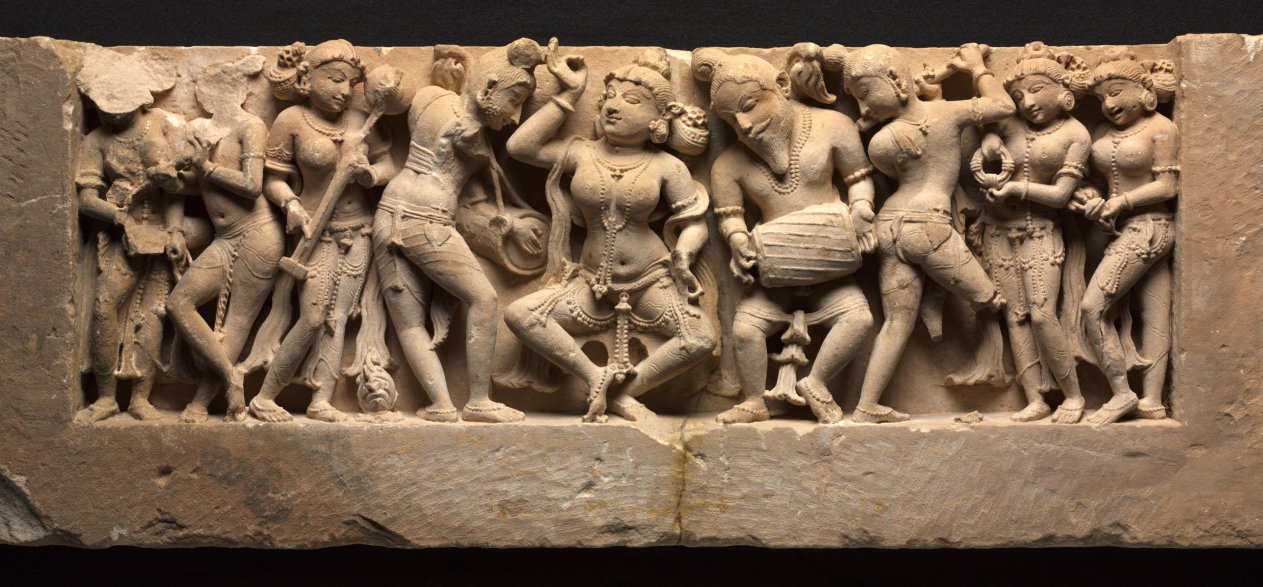
Structural Poetics: The Frieze as Architectural Garment
The Frieze with Dancer and Musicians presents a horizontal narrative of rhythmic bodies in motion, yet its deepest resonance for the 2026 executive silhouette lies not in its figuration but in its geometric integrity. The frieze format itself—a continuous, low-relief band—demands a reading of compression and expansion. The figures are not free-standing; they are bound to the architectural plane, their gestures contained within a strict horizontal register. This is the foundational principle for the coming season: the body as a carrier of architectural volume, not a vessel for organic drape.
For Addison Fashion, we extract the frieze’s core structural poetics: the tension between the static ground and the dynamic figure. The dancer’s raised arm and the musician’s inclined torso create diagonal vectors that puncture the horizontal line. In garment terms, this translates to an oversized silhouette that is not amorphous but rigorously anchored. The shoulder becomes the frieze’s upper register—a clean, broad plane. The waist is the ground line, subtly implied rather than cinched. The hem falls as the lower boundary, a decisive cut that terminates the composition. The 2026 executive does not wear a coat; she inhabits a mobile architectural frieze.
Geometric Integrity: The Three-Register System
We deconstruct the frieze into three horizontal registers, each dictating a specific construction principle for the oversized silhouette:
1. The Upper Register (Shoulder to Bust): The frieze’s top edge is unbroken. In the artwork, the heads of the dancer and musicians align to form a near-continuous horizontal line. For the garment, this demands a structured, extended shoulder—a clean, unpadded but sharply cut line that extends beyond the natural shoulder point by 3-5 cm. This is not the aggressive power shoulder of the 1980s; it is a minimalist architectural projection, akin to a cantilever. The fabric must hold a crisp edge; we specify a double-faced wool with a fused interlining for the body, and a satin-backed crepe for the lining to allow the garment to slide over the body without distorting the line.
2. The Middle Register (Bust to Hip): This is the narrative field. In the frieze, the torsos of the figures are the most compressed area, where the most intricate carving occurs. In the silhouette, this zone must be voluminous but controlled. We achieve this through a single, vertical dart from the armhole to the hem, creating a subtle A-line expansion from the bust downward. The fabric is allowed to fall away from the body, creating a negative space—an air gap—between the garment and the torso. This is the urban poetics of absence: the garment does not cling; it encloses. The dancer’s dynamic twist is echoed in a slight asymmetry in the closure—a hidden magnetic placket that shifts the visual weight to one side, mimicking the off-axis energy of the frieze’s central figure.
3. The Lower Register (Hip to Hem): The frieze’s base is the most stable element. The feet of the figures are firmly planted, grounding the composition. For the garment, this translates to a weighted hem. We specify a 5 cm deep hem with a chain-weight insert sewn into the facing. This ensures the coat falls with a decisive, clean line, resisting any flutter or movement that would disrupt the architectural integrity. The hem hits at mid-calf—the point of maximum elongation for the executive silhouette—creating a vertical terminus that echoes the frieze’s horizontal finality.
Urban Materiality: Onyx and the Texture of Power
The Onyx color palette is not a choice; it is a structural requirement. Onyx is the color of compressed time—the geological black of basalt, the polished darkness of a museum plinth. It absorbs light rather than reflecting it, creating a matte, monolithic surface that reads as a single, unbroken plane. This is essential for the oversized silhouette: a glossy black would reveal every fold and crease, breaking the frieze-like integrity. Onyx, in a heavy wool-cashmere blend (80/20), presents a surface that is visually silent. The fabric’s slight nap catches ambient light in a way that mimics the low-relief carving of the frieze—subtle shadows define the form without disrupting the whole.
The materiality must also address the urban context. The executive moves through glass, steel, and concrete. The garment must not compete with these materials but dialogue with them. We propose a double-faced construction where the exterior is the matte Onyx wool, and the interior is a liquid silver satin. This is a deliberate inversion: the cold, reflective interior is hidden, revealed only in motion—when the coat is thrown open or when the wearer sits. This interior flash echoes the musician’s instrument in the frieze, a sudden gleam of metallic life within the stone-like composition.
Construction Details: The Invisible Armature
To achieve the frieze’s geometric integrity, the garment requires an internal armature that is invisible from the exterior. We specify:
Shoulder Taping: A 2 cm wide horsehair canvas tape is fused along the shoulder seam and extended 4 cm down the armhole. This prevents the shoulder from collapsing under the weight of the fabric, maintaining the cantilevered line.
Side Seam Stays: A 1 cm wide grosgrain ribbon is sewn into the side seams from the underarm to the hem. This ribbon is cut 2 cm shorter than the seam itself, creating a slight tension that pulls the fabric forward, mimicking the frieze’s forward-leaning dancer. This is the structural poetics of movement—the garment appears to be in a state of arrested motion.
Hem Weighting: As noted, a continuous chain-weight (brass, nickel-free) is encased in a silk organza tube and hand-stitched into the hem facing. The weight is calibrated to the fabric’s density: 15 grams per meter for the wool-cashmere blend. This ensures the hem drops with a decisive, architectural finality, never curling or lifting.
Conclusion: The Frieze as Executive Armor
The Frieze with Dancer and Musicians teaches us that the most powerful forms are those that contain energy within a strict boundary. The 2026 Addison executive does not need to display her power through overt tailoring or aggressive cuts. She wears a monolithic, oversized shell—a garment that is at once a frieze, a plinth, and a shield. The Onyx color absorbs the chaos of the urban environment. The geometric integrity of the three-register system provides a silent, authoritative presence. The interior silver satin is a private luxury, a secret gleam for the wearer alone. This is not fashion; this is urban materiality as a form of discipline. The silhouette is the statement. The body is the architecture.