Urban Form: Floral Still Life (Bleeding Hearts)
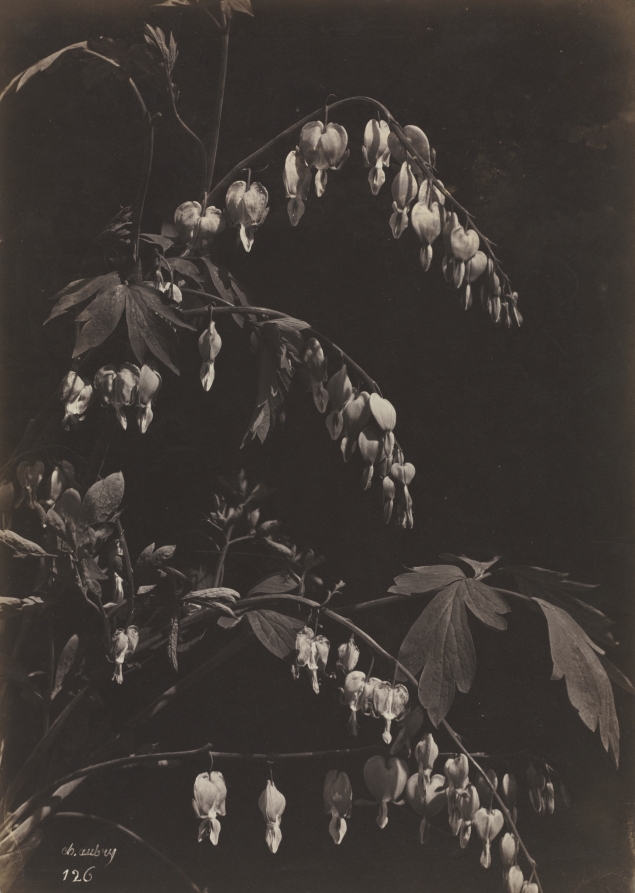
Urban Silhouette Research: Floral Still Life (Bleeding Hearts) — Structural Poetics of the Suspended Axis
I. Preliminary Geometry: The Dropped Vertical and the Architecture of Gravity
The specimen under examination — a floral still life organized around the Bleeding Hearts motif — presents a deceptively simple geometric proposition: a central ascending stem from which dependent, heart-form pendants descend along a controlled vertical axis. This is not a decorative arrangement. It is a structural diagram. The composition operates on a principle we designate as the suspended axis: a rigid spine of vertical intent interrupted by a series of calibrated, downward-hanging volumes. For the 2026 executive silhouette, this geometry is definitive. It proposes a garment architecture in which the shoulder line functions as the ascending stem — taut, linear, unnegotiable — while the body below is released into a sequence of dependent, teardrop-derived volumes that hang from that line rather than cling to the torso.
The geometric integrity of the artwork resides in its tension between axial discipline and gravitational surrender. The stem does not curve; it asserts. The pendants do not scatter; they descend in regulated intervals, each one a closed curve tapering to a point of release. Translated to tailoring, this yields a silhouette in which the shoulder and upper chest remain architecturally fixed — a slate-toned wool crepe, perhaps, cut with a suppressed waist and a clean, extended shoulder — while the lower body is articulated through suspended, lobed panels that fall from the yoke. The result is a garment that reads as controlled descent: severe above, fluid below, never soft in its logic.
II. The Heart-Form as Constructed Volume: Curvature Under Compression
The bleeding-heart unit is, geometrically, a bilobed spheroid compressed at the apex and drawn to a terminal point. It is a volume defined by two opposing arcs meeting at a cleft and converging at a tip — in effect, a teardrop with an internal fracture. This is the precise morphology the 2026 executive silhouette requires: forms that are rounded but not amorphous, curved yet accountable to a governing axis. The cleft at the top of each pendant is critical. It introduces a controlled rupture — a seam, a vent, a released pleat — that prevents the volume from becoming sentimental. In material terms, this suggests double-faced wool or bonded jersey shaped over an internal corrugated structure, so that each hanging panel holds its bilobed curve without collapsing into drape.
The artwork's geometry further dictates vertical registration. The pendants are not staggered arbitrarily; they align along the stem in a rhythm of graduated drop-lengths, longest at the base. Applied to the silhouette, this produces a tiered hem logic — layered, suspended panels of increasing depth — that elongates the figure while maintaining a strict vertical read. The executive presence is thus achieved not through width or ornament but through sequenced verticality: a column of descending forms, each one a closed geometric event, together composing a single uninterrupted line of intent.
III. Urban Materiality: Slate, Matte, and the Cold Surface
The materiality implied by the specimen is resolutely urban and non-illustrative. The palette is slate — the grey of wet pavement, of brushed steel in overcast light, of stone that has absorbed the city's particulate. There is no botanical green here, no romantic blush; the still life is read as tonal architecture, its forms rendered in matte, light-absorbing surfaces. For Addison Fashion's 2026 executive line, this translates to fabrics with a dry, mineral hand: compact wool, resin-treated cotton, matte silk faille. Surfaces must refuse gloss. The geometry of the suspended axis is legible only when the material suppresses reflection and allows shadow to describe the curve.
The structural poetics of the piece lie in its economy of means. A single stem, a repeated unit, a disciplined palette. This is minimalist luxury in its coldest register: the garment's authority derived from proportion and sequence rather than applied detail. Hardware, where present, should be reduced to a single functional point — a concealed closure at the stem-line, a weighted hem that maintains the pendant's terminal drop. The silhouette does not decorate the body; it architects the body's vertical field, suspending volume from structure with the same inexorable logic as the bleeding heart suspended from its stem: gravity acknowledged, geometry obeyed, sentiment refused.
IV. Conclusion: The Suspended Executive
The definitive 2026 executive silhouette, as derived from this specimen, is a column of controlled descents — fixed at the shoulder, released into calibrated bilobed volumes, executed in slate-toned matte textiles, and governed throughout by a single unbroken vertical axis. It is a silhouette of quiet structural severity: the poetics of the hanging form, rendered in the materials of the urban surface. The artwork's geometric integrity — axial discipline, compressed curvature, graduated vertical rhythm — is not merely referenced but operationalized. What the still life states in pigment, the garment states in cloth: that elegance is a matter of load-bearing geometry, and that the most persuasive luxury is the kind that hangs, precisely, from an unbroken line.