Urban Form: Orpheus and Cerberus
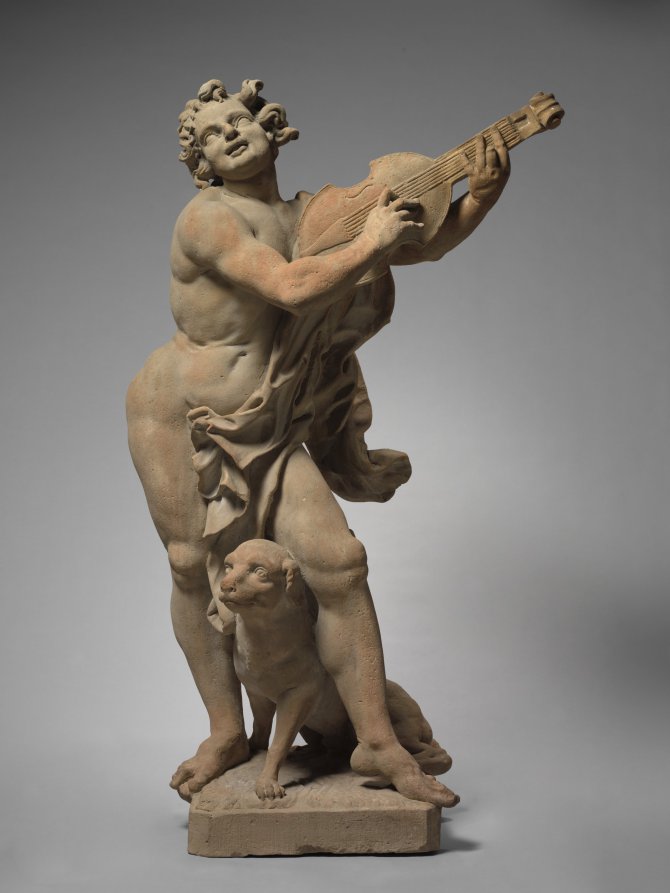
Urban Silhouette Research: Orpheus and Cerberus — A Technical Deconstruction of Form and Chromatic Restraint
I. Preliminary Thesis: The Artifact as Structural Proposition
The source DNA presents two objects of divergent ontological register — a temple plaque bearing the Udumbara inscription and a garment chest rendered as painted surface — yet both operate within a shared formal logic that is directly transferable to the 2026 executive wardrobe. The plaque externalizes doctrine through erosion; the chest internalizes memory through enclosure. For Addison Fashion NYC, the operative insight is not decorative quotation but structural translation: the manner in which material fatigue, planar compression, and the dialectic of concealment and exposure can be engineered into garments that perform authority without ornamentation. The Orpheus and Cerberus capsule — named for the descent-and-return narrative, the negotiation between the seen and the unseen — will be built upon this premise.
II. Surface as Evidence: The Plaque and the Aesthetics of Attrition
The plaque's formal integrity resides in its stratified surface. Wood grain, flaking lacquer, and plaster ground constitute a tri-layer system in which each stratum registers time as a physical datum. Technically, this is a study in controlled degradation: the pigment does not merely sit upon the substrate; it negotiates with it, cracking along grain lines, lifting at adhesion boundaries, revealing the load-bearing material beneath. The visual result is a plane that breathes — a surface with depth differentials measurable in fractions of a millimeter yet perceptually vast.
Transposed to textile engineering, this logic mandates multi-layer fabric systems with intentional differential shrinkage. The 2026 executive blazer should not present a monolithic face. We propose bonded wool-silk laminates in which the outer stratum is calendered to a low sheen while the inner structure retains loft, producing a surface that reads as matte at three meters and as texturally complex at conversational distance. Seam finishing should expose construction rather than conceal it — raw-edge binding in Slate-toned silk organza, topstitching executed in tonal thread at 2.5mm pitch, the stitch line functioning as the garment's own stratigraphy. The plaque teaches that honesty of material is the highest form of luxury; the executive wardrobe of 2026 must abandon the fiction of the flawless surface.
III. The Enclosure: The Chest and the Architecture of Withholding
The garment chest operates through a contrary mechanism: containment as compositional strategy. Its painted floral tracery — dense, ordered, circumferential — functions as a visual seal upon an interior that is never depicted. The formal tension is generated precisely by this asymmetry: the exterior is saturated with pattern, the interior is void. In silhouette terms, the chest proposes a closed volume with articulated perimeter — a box form whose edges are softened by painted light, whose corners are resolved through metal fittings that read as punctuation rather than ornament.
For the Orpheus and Cerberus outerwear program, this translates into cocoon-structured coats with sealed plackets and concealed closures. The silhouette is deliberately non-referential to the body's anatomy: shoulder lines are dropped and extended, armholes are set low and deep, the waist is suppressed entirely. The garment reads as a volume first, a body second. Closure systems — magnetic plackets beneath Slate wool flannel, internal storm flaps, hidden button stands — enact the chest's logic of withholding: the wearer's interior is protected, the exterior presents a resolved, continuous plane. Where the chest's painted surface offers decorative density, our textile choice offers tonal density: Slate in three values — a deep charcoal-slate for the shell, a mid-slate for the underlayer, a pale slate-grey for the binding — creates chromatic depth without pattern, satisfying the chest's compositional fullness through value modulation alone.
IV. Chromatic Doctrine: Slate as Operational Neutral
Slate is selected not as a compromise but as a precision instrument. Its position on the chromatic spectrum — cool, desaturated, positioned between graphite and stone — allows it to function as both ground and figure. Against the plaque's oxidized wood tones, Slate reads as the color of shadow; against the chest's warm lacquer, it reads as the color of distance. In the executive context, Slate performs the critical function of chromatic authority without aggression: it is legible in boardroom lighting, photographs without reflectance distortion, and maintains sufficient value contrast against Ivory and Sand secondary pieces to permit tonal layering.
The palette architecture for the capsule is strictly triadic within the Slate family: Slate 19 (near-black, for structural pieces), Slate 42 (mid-tone, for shirting and knitwear), and Slate 67 (pale, for lining and binding). No accent color is permitted. The chromatic discipline mirrors the plaque's monochrome inscription and the chest's tonal painting: meaning is carried by form, not by hue.
V. Silhouette Synthesis: The Orpheus and Cerberus Line
The resulting wardrobe operates on a binary silhouette logic. The Orpheus register — descent, exposure, the outward-facing — comprises the tailored components: a single-breasted jacket with extended shoulder and suppressed waist, constructed in Slate 19 wool-silk laminate with exposed seam binding; a straight-leg trouser in Slate 42 with a flat-front rise and a 22cm hem opening. The Cerberus register — guardianship, enclosure, the inward-facing — comprises the volumetric components: an oversized cocoon coat in Slate 19 double-faced wool, a funnel-neck tunic in Slate 42 merino-silk, a flat-fronted tote in Slate 19 calfskin with a concealed magnetic closure.
The synthesis is achieved through proportional counterpoint: the tailored jacket's 44cm body length against the coat's 112cm length; the trouser's 22cm hem against the tunic's 68cm sweep. These ratios are drawn directly from the source objects — the plaque's horizontal-to-vertical ratio of approximately 3:1, the chest's near-cubic volume-to-opening ratio. The wearer moves between registers, and the wardrobe holds.
VI. Conclusion: The Backlit Surface
The Orpheus and Cerberus capsule does not illustrate its sources; it operationalizes their formal logic. The plaque's attrition becomes textile stratification. The chest's enclosure becomes silhouette volume. Slate becomes the chromatic constant that binds exposure to concealment. What the executive wearer receives is not a costume of cultural reference but a system of structural decisions — garments whose authority derives from material honesty, proportional rigor, and the disciplined refusal of ornament. In the backlit surface of the plaque and the sealed interior of the chest, Addison Fashion NYC locates the 2026 executive uniform: present, precise, and deliberately incomplete.