Urban Form: Brahma-Shiva
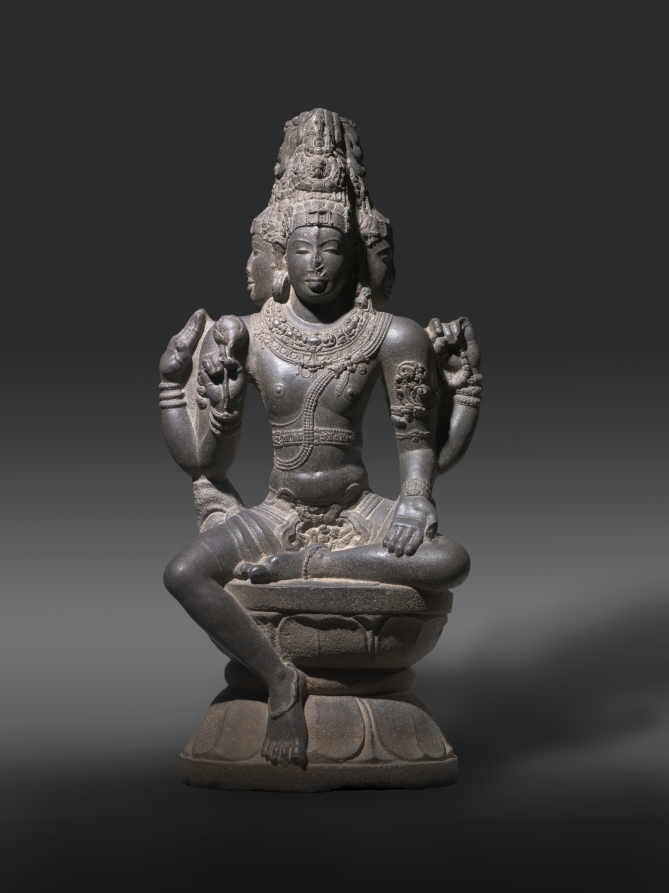
Urban Silhouette Research: Brahma-Shiva — Structural Poetics of the Divided Form
I. Geometric Integrity: The Bilateral Axis as Architectural Armature
The Brahma-Shiva composition operates on a strict bilateral axis that functions less as symmetry than as structural load-bearing logic. The vertical division is not decorative; it is the primary geometric event from which all secondary form derives. In the 2026 executive silhouette, this translates to a central spine seam — a continuous, unbroken line running from the nape through the sacrum — that organizes the garment's entire mass. The shoulder line must remain horizontal and uncompromised, a rigid datum against which the vertical axis asserts dominance. Any deviation into asymmetry is a failure of structural discipline.
The figure's dual nature — one profile ascending, one descending — establishes a counterbalanced volume distribution. The upper register carries the weight of the ascending gesture; the lower register absorbs it through a grounded, columnar base. This is the precise logic of the 2026 tailored executive: a compressed shoulder yoke paired with a columnar lower body that resists flare. The silhouette reads as a single architectural unit, not a collection of parts. The eye travels the vertical axis without interruption, registering mass only at the extremities — the crown and the hem — where the form terminates with deliberate finality.
II. The Divided Plane: Materiality as Conceptual Rupture
The artwork's most radical gesture is the material bifurcation of the figure — one half rendered in the density of carved stone, the other in the porosity of pigment or void. This is not a surface treatment; it is an ontological seam. For Addison Fashion's 2026 executive wardrobe, this demands a dual-textile construction where the front and back planes of a single garment operate in deliberate material opposition. A matte, tightly woven wool face against a fluid, light-absorbing reverse. The seam that joins them must be exposed and engineered — a flat-felled or bound finish that reads as intentional architecture rather than concealment.
The urban materiality here is cold and mineral. Slate-toned surfaces with a low sheen. No reflection, no warmth. The fabric must behave like compressed urban sediment — dense, quiet, and structurally inert until the body activates it. The contrast between the two halves should register at a distance of three meters: one side absorbing light, the other deflecting it. This is the poetics of the seam — a visible line of intellectual rupture that the wearer carries through the corporate landscape as a statement of controlled duality.
III. The Ascending Profile: Tailored Volume and the Executive Shoulder
The ascending profile of the Brahma-Shiva figure — the upward gaze, the elongated neck, the lifted chest — defines the upper-body architecture of the 2026 silhouette. The shoulder must be extended and squared, but not padded into softness. The construction requires a structured canvas front with a horsehair chest piece that holds the plane flat against the torso. The lapel — if present — must be narrow and knife-edged, a vertical blade that reinforces the central axis rather than interrupting it.
The neckline is critical. The artwork's elongated cervical column demands a raised collar or standing band that frames the head without encumbrance. In outerwear, this manifests as a funnel neck with a concealed closure — no visible buttons, no hardware. The closure is internal, the surface uninterrupted. This is the minimalist executive uniform: a garment that reads as a single carved form, its complexity hidden in the engineering of its interior.
IV. The Descending Base: Columnar Hem and Urban Grounding
The lower register of the composition — the descending profile, the grounded base — dictates a columnar hem that falls without interruption to the ankle or below. No vents, no pleats, no break at the knee. The fabric must carry sufficient weight to hang under its own gravity, creating a continuous vertical fall that mirrors the artwork's lower axis. This is the architectural trouser or skirt as load-bearing element: a single, unbroken plane from waist to floor.
The urban materiality of this lower register is dense and sound-absorbing. Heavy wool crepe, double-faced cashmere, or a bonded technical fabric with a matte finish. The hem must be weighted — either through a concealed tape or a doubled fabric layer — to ensure the column holds its line in motion. The silhouette does not move with the body; it moves around the body, maintaining its geometric integrity as the wearer navigates the city.
V. Conclusion: The Divided Executive as Urban Archetype
The Brahma-Shiva composition offers Addison Fashion a definitive structural thesis for 2026: the executive silhouette as a divided architectural column, its integrity maintained through a strict vertical axis, a material seam of conceptual rupture, and a counterbalanced distribution of volume between shoulder and hem. The palette is Slate — cold, mineral, and unyielding. The category is Minimalist — not as absence, but as the rigorous elimination of the non-structural. The result is a garment that reads as a single carved gesture: urban, intellectual, and architecturally absolute.