Urban Form: The Death of Count Ugolino della Gherardesca and His Sons (Inferno Canto XXXIII)
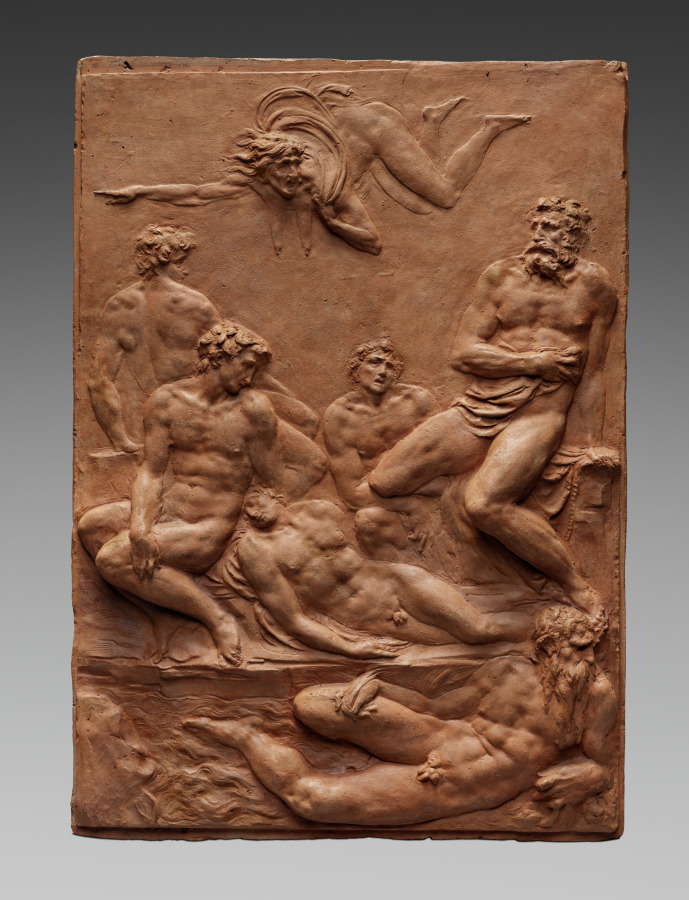
Technical Deconstruction: Form, Color, and the Modern Inferno
The proposed 2026 executive silhouette for Addison Fashion NYC is not merely a collection of garments; it is a sartorial thesis on constrained power and existential geometry. By deconstructing the harrowing tableau of Count Ugolino’s imprisonment and the contrasting Eastern aesthetic principles of “The Herdboy and Water Buffalo” and “The Monk’s Vestment,” we arrive at a wardrobe architecture defined by severe minimalism, calculated texture, and the psychological depth of Slate. This analysis dissects the formal language of this narrative to engineer a uniform for the urban executive who operates within their own modern cella of glass, steel, and data.
Formal Syntax: The Architecture of Constraint
The form is dictated by a dialectic between the earthbound mass and the ascetic line. From Ugolino’s tragic immurement, we extract the concept of the defined silhouette as a cell. Garments become precise, non-negotiable parameters. Think single-breasted blazers with structural shoulders yet suppressed waists, creating a torso of imposing, confined power—a direct formal analogy to the Count’s imposing yet trapped figure. The “Herdboy and Water Buffalo” contributes the principle of “organic integrity.” This translates not into rustic shapes, but into seamless construction. Seamlines are minimized or strategically placed to follow the body’s topography, creating a second-skin effect akin to the unified form of boy and beast. A wool-cashmere coat does not hang from the shoulders; it emerges from them, its A-line flare controlled and deliberate, echoing the water buffalo’s grounded strength without literal replication.
Conversely, the “Monk’s Vestment” informs the verticality and ritualistic precision of the silhouette. The columnar dress, the unbroken line of a tailored jumpsuit, the high, fastened neckline—all serve as secular vestments. They create a solemn, uninterrupted visual flow from shoulder to hem, a metaphor for focused intent and psychological containment. The minimalist ethos is thus not an absence of detail, but the hyper-precision of cut that eliminates superfluity, much as the monk’s robe eliminates worldly distraction. Pockets are seamlessly integrated, closures are hidden, and darts are engineered to be invisible from the exterior, presenting a facade of impenetrable, composed calm.
The Material Dialectic: Texture as Narrative
The fabric story is where the sourced DNA’s philosophical tension becomes tactile. We synthesize the “heavenly earth” and “earthly heaven” dichotomy. From the Herdboy’s “unadorned simplicity” and “texture of kiln-fire memory,” we derive a foundational palette of materials: mattified wool crepe, heavy silk noil, and brushed technical cottons. These fabrics possess a quiet, tactile depth—they are felt as much as seen, grounding the wearer in a sense of tangible reality and resilient, understated luxury. This is the “clay” of the collection.
Against this, the Monk’s Vestment introduces the concept of “luminous austerity.” We interpret the “gold thread” and “silk” not as literal shine, but as a micro-textural contrast. This manifests in subtle, deliberate interventions: a precise panel of faille within a wool coat, a cuff lined in cupro so fine it emits a faint gleen when the arm moves, or a trouser with a hairline shadow stripe woven from a contrasting fiber. These are not decorative; they are structural highlights, akin to the sacred geometry in a mandala, visible only upon considered inspection. They break the matte field with intentional, disciplined light, symbolizing the intellect piercing through despair.
Color Psychology: The Slate Spectrum
The designation of Slate as the core color is a non-negotiable strategic choice. It is the chromatic embodiment of the narrative. Slate is mineral, not pigment—it references the stone of Ugolino’s tower, the ash of the kiln, and the solemn grey of pre-dawn sky before enlightenment. It is a non-color of immense emotional complexity. Our Slate spectrum ranges from a deep, almost charcoal hue (the despair of the cell) to a pale, cool grey with a blue undertone (the detached, cerebral analysis of that despair).
This monochromatic discipline is the ultimate expression of minimalist control. It forces the eye to engage with form, texture, and silhouette alone. A head-to-toe Slate ensemble—comprising a slate wool-mohair blazer, a slate silk turtleneck, and slate wide-leg wool trousers—creates an uninterrupted, powerful visual column. The subtle textural variations (the blazer’s loft, the turtleneck’s fine gauge, the trouser’s dry finish) perform the narrative work that color blocking would in other lines. It is a wardrobe of profound sophistication and chilling intelligence, designed for the executive who understands that power is most potent when it is composed, contained, and analytically cold.
The 2026 NYC Executive Wardrobe Application
This deconstruction informs a cohesive, inter-operable wardrobe system for the forward-facing leader.
The Core Uniform: A tailored jumpsuit in heavy slate silk noil, with a high neck and concealed zip. It is the ultimate synthesis of the herdboy’s unified form and the monk’s vestmental line. It functions as a powerful singular statement for presentations or as a base layer.
The Negotiation Armor: A double-faced wool-cashmere coat-dress. One side a matte slate, the reverse a minute herringbone of charcoal and silver. Its weight and drape convey immovable authority, while the reversible element offers a strategic shift in texture—a modern interpretation of “dualness.”
The Boardroom Proposition: A deconstructed blazer with integrated leather paneling at the inner structure (a nod to the water buffalo’s harness) over a columnar dress in mid-weight slate crepe. The look is severe, intelligent, and communicates a mastery of both foundational strength (the blazer’s architecture) and fluid execution (the dress’s line).
In conclusion, the Addison Fashion NYC 2026 Minimalist silhouette, anchored in Slate, is a rigorous exercise in reductionism with profound narrative depth. It translates existential constraint into empowering form, synthesizes earthy tactility with ascetic precision, and offers the executive a wardrobe that is both a shield and a statement—a calculated, cold, and supremely elegant response to the complex infernos of modern leadership.