Urban Form: Jar
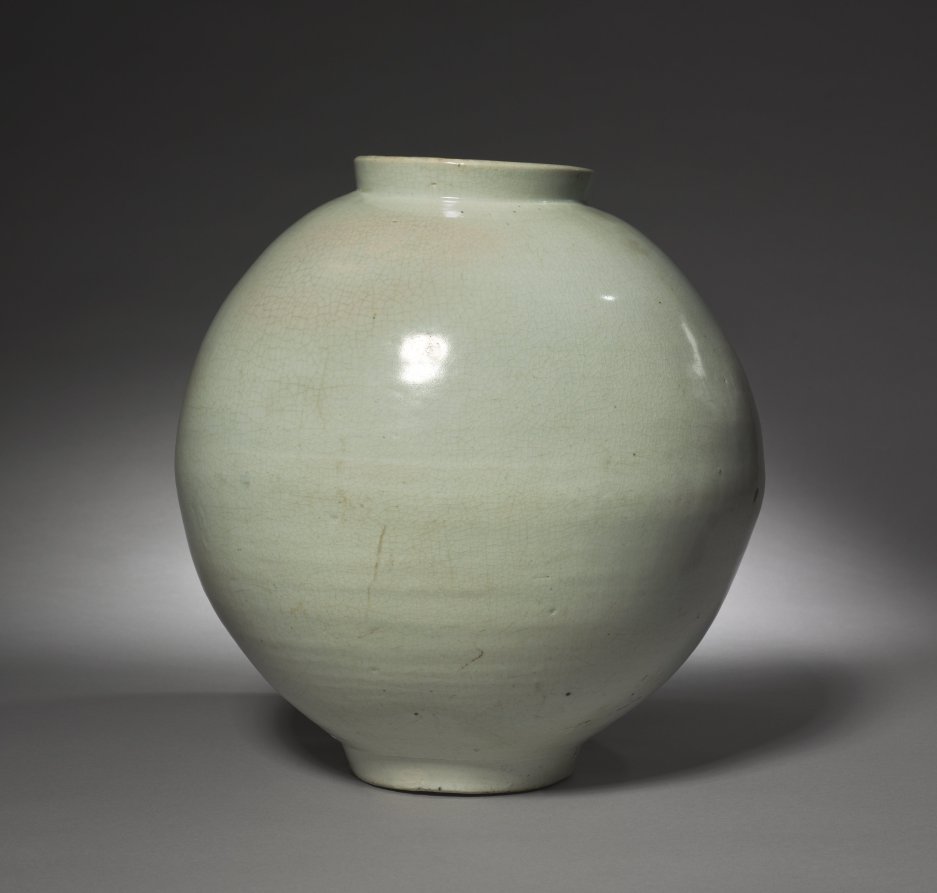
Urban Silhouette Research: The Jar Protocol — Form, Negative Space, and the Aesthetics of Permanence
I. Material Logic and the Fired Surface
The Jar archetype, as derived from the Mold Fragment with Musicians, operates on a principle of material transformation that is directly transferable to the 2026 executive wardrobe. The ceramic mold begins as a soft, impressionable substrate — clay — and is subjected to kiln firing, a process that converts a mutable surface into a rigid, mineralized shell. This is not merely a craft narrative; it is a structural thesis. The garment, like the mold, must begin as a pliable medium (textile) and resolve into a form that holds its architecture under pressure. For the Addison Fashion NYC client, this translates to bonded wool crepe and double-faced cashmere — fabrics that accept a pressed edge, retain a shoulder line, and do not collapse after twelve hours of wear. The fired surface of the mold is matte, slightly porous, and non-reflective. In color terms, this is Slate: a cool, desaturated grey with a mineral undertone that reads as authoritative without the aggressive gloss of black. Slate absorbs light rather than reflecting it, producing a silhouette that is legible at distance and nuanced at close range — precisely the dual-register requirement of the boardroom and the client dinner.
II. Negative Space as Structural Device
The fragment is incomplete. Its missing sections are not failures but active compositional elements — the negative space through which the viewer reconstructs the whole. This is the Eastern principle of yǐ cán jiàn quán (seeing the complete through the fragmentary), and it has a direct corollary in tailoring: the unfinished edge, the raw-seam allowance, the deliberate omission of a collar or a closure. For 2026, the executive jacket should not be over-determined. A single-button closure on a elongated line, a sleeve set without a cuff, a hem that terminates in a clean laser-cut edge — these are the sartorial equivalents of the mold's missing quadrant. They invite the eye to complete the form, which is to say they engage the viewer in the garment's construction. This is not minimalism as absence; it is minimalism as invitation. The silhouette remains closed and controlled, but its surface carries the memory of the hand — a pressed pleat, a taped seam, a shadowed tuck — that reads as evidence of intention rather than decoration.
III. The Mortuary Figure: Mass, Stillness, and Zodiacal Order
The Mortuary Figure of the Zodiac Sign: Ox (Taurus) contributes a countervailing formal logic: mass as calm. The ox figure is not dynamic; it is gravitationally resolved. Its volume is distributed low and wide, its gaze directed into the void, its surface modeled with a restraint that reads as both Han-dynasty severity and Tang-dynasty composure. For the executive wardrobe, this translates to weighted hemlines, dropped shoulder seams, and columnar trousers that do not taper aggressively at the ankle. The body is not cinched; it is encased. The Taurus principle is stability under duress — the wearer who does not shift, does not fidget, does not adjust. In Slate, this mass reads as architectural rather than heavy, because the coolness of the tone prevents the volume from becoming visually oppressive. The figure's stillness is the stillness of someone who has already decided — which is, functionally, the posture of executive authority.
IV. Transience and Permanence: The Dialectical Garment
The two source objects are bound by a single aesthetic tension: the mold captures a fleeting auditory moment (musicians mid-performance), while the mortuary figure freezes a cosmic order (the zodiac sign as eternal recurrence). The garment must hold both. It must be responsive to motion — a walking coat, a turning sleeve, a fabric that moves with the body — and yet structurally permanent, holding its line across seasons and wear cycles. The resolution lies in engineered drape: fabrics with sufficient weight to fall in a controlled column, but sufficient elasticity to recover their shape after movement. The 2026 Addison executive wardrobe proposes a Slate-toned system of three core pieces — the elongated jacket with negative-space closure, the columnar trouser with weighted hem, and the collarless overcoat with a fired-surface finish — each of which functions as a material witness to the wearer's presence. The garment does not decorate the body; it records it, the way the mold records the musician's hand and the figure records the turning of the stars.
V. Conclusion: The Silent Gaze
The aesthetic value of both source objects lies not in their splendor but in their persistence. They are silent, generous, and ancient — and they ask the wearer to be the same. For the NYC executive in 2026, this is the final specification: a wardrobe that does not announce, does not glitter, does not chase the season. It stands. It holds its negative space. It carries its mass with composure. And in Slate — that cool, mineral, unyielding grey — it offers the wearer a surface that is legible, permanent, and entirely their own.