Urban Form: Carving from an Overmantel
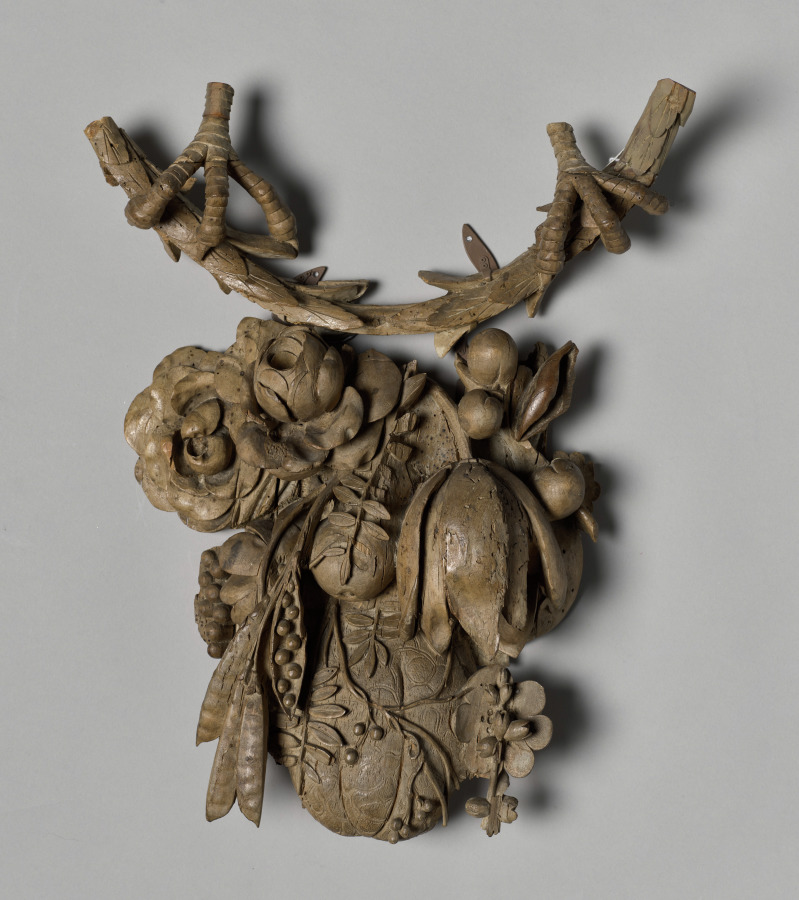
Urban Silhouette Research: Carving from an Overmantel
I. The Material Logic of the Incomplete
The Mold Fragment with Musicians presents a structural proposition that the 2026 executive wardrobe would be negligent to ignore: the aesthetic authority of the unfinished. As a technical artifact, the ceramic mold is not a representation of music but a negative space—a cavity engineered to receive pressure, to transfer force, to reproduce. Its value is indexical rather than iconic. The incised lines that once guided a craftsman's hand now function as a record of kinetic intent, a frozen gesture in clay that anticipates the finger's motion across a pipa string. This is not decoration; it is a grammar of transmission.
Translated to garment architecture, this principle demands that we reconsider the role of the seam, the dart, the raw edge. In the Addison Fashion NYC framework, the overmantel—that architectural zone above the hearth, historically a site of display—becomes a metaphor for the upper torso: the shoulder line, the yoke, the collar. The mold fragment teaches us that the negative space of a garment is as structurally significant as its positive volume. A tailored jacket's armhole seam, when executed with precision, is not merely a joinery element but a cavity that records the body's movement—a kinetic archive in cloth. The 2026 executive does not require ornamentation; she requires a garment that functions as a mold for her own authority, a negative space into which her presence is poured.
II. The Rubbing as Chromatic Reduction
The Rubbing of a Stone from the Tang-Fang Collection operates on an inverse principle: subtraction as amplification. The rubbing is a secondary artifact—a paper-and-ink transcription that strips the stone of its volume, weight, and color to isolate the calligraphic line. What remains is a binary system: black ink, white paper, and the infinite gradations of pressure between them. The Tang aesthetic understood that removing the object's materiality liberates its formal essence. The stone's three-dimensionality is sacrificed so that the brushstroke's velocity and the character's internal tension may be fully perceived.
For the Addison Fashion NYC 2026 collection, this translates into a rigorous chromatic discipline. The palette must function as a rubbing functions: reducing the visual field to a binary of light and shadow, structure and void. Slate—that cold, mineral gray that sits precisely between the ink's black and the paper's white—becomes the operative neutral. It is not a color of compromise but of chromatic precision. A slate wool crepe trouser suit, cut with a single-breasted, peak-lapel jacket and a straight-leg trouser, achieves what the rubbing achieves: the elimination of distraction in favor of line. The lapel's roll, the trouser's crease, the shoulder's slope—these are the calligraphic gestures of the garment, and they require a ground of absolute neutrality to be read.
III. The Dialectical Silhouette: Presence and Absence
The genius of juxtaposing these two artifacts lies in their dialectical relationship: the mold is presence without form; the rubbing is form without presence. The mold fragment is a physical object that has lost its original content—the musicians are absent, but the cavity of their making remains. The rubbing is an image that has lost its original object—the stone is absent, but the trace of its surface remains. Together, they articulate a theory of the garment as a site of productive absence.
The 2026 executive wardrobe must operate within this dialectic. Consider the overmantel as a structural zone: the upper back, the shoulder blades, the nape. A minimalist approach does not mean a reduction of thought; it means the concentration of structural intelligence into fewer, more precise gestures. A slate-colored wool overcoat with a concealed placket and a slightly extended shoulder achieves the mold's logic: it is a cavity for the body, a negative space that records the wearer's motion. A silk crepe blouse with a single asymmetric seam—a line that travels from the collarbone to the waist—achieves the rubbing's logic: it is a trace of the body's geometry, a two-dimensional inscription of three-dimensional form.
The color strategy must reinforce this dialectic. Slate functions as the chromatic equivalent of the rubbing's ink: it is a color that absorbs light without reflecting it, that defines form through shadow rather than highlight. Paired with ivory—the color of the paper—it creates a binary system of absolute clarity. A slate jacket over an ivory silk shell is not a color combination; it is a structural proposition. The eye reads the boundary between the two as a line, and that line is the garment's argument.
IV. Technical Specification for the 2026 Executive Wardrobe
The Addison Fashion NYC design directive for 2026 is therefore clear: garments must function as both mold and rubbing. The construction must be negative-space-oriented—seams that record motion, darts that anticipate gesture, armholes that function as kinetic archives. The color must be reductive—slate as the operative neutral, ivory as the ground, onyx as the accent of absolute depth. The silhouette must be minimalist in gesture but maximal in structural intelligence: a single-breasted coat with a concealed closure, a trouser with a precisely calibrated break, a blouse with a seam that traces the body's architecture.
The overmantel is not a decorative zone; it is a site of structural decision. The 2026 executive does not dress to be seen; she dresses to be read—as a rubbing is read, as a mold is read. Her wardrobe is a system of negative spaces and chromatic reductions, a technical apparatus for the projection of authority through the disciplined elimination of the unnecessary. The mold fragment and the rubbing teach us that the incomplete is not the insufficient; it is the precise. And precision, in slate and ivory, is the only luxury that matters.