Urban Form: A Philosopher
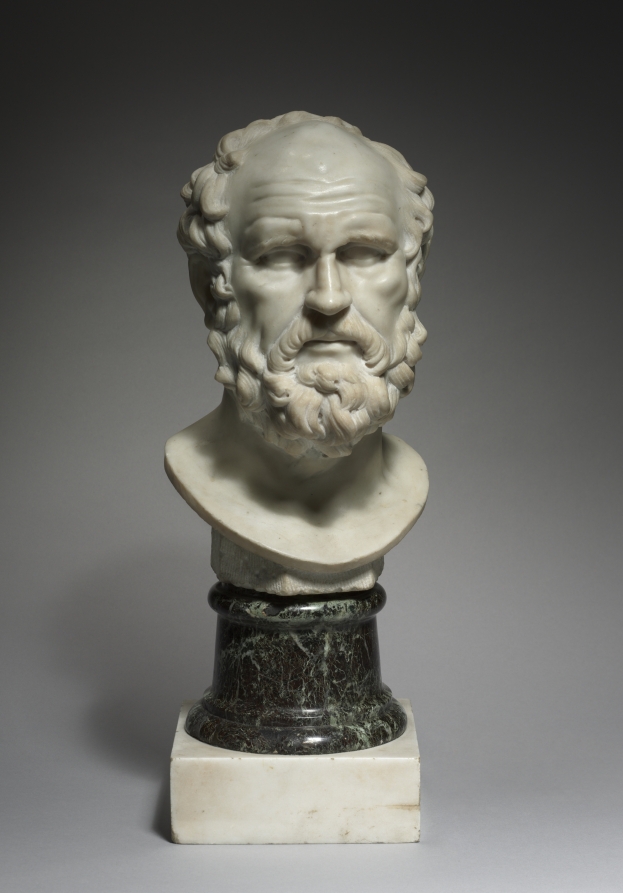
Urban Silhouette Research: The Philosopher — Form, Void, and the Architecture of Restraint
I. The Circular Dialectic: Negative Form as Structural Principle
The Philosopher archetype derives its silhouette logic from a fundamental tension between concave and convex form—a dialectic inherited from two artifacts whose material cultures could not be more divergent, yet whose formal grammars converge with striking precision. The Udumbara temple plaque operates through negative space: carved relief recedes into the wood grain, petals emerging as absence rather than mass, a "flower that is no flower." The Han mirror operates through positive projection: deities, chariot, and the White Tiger rise from the disc's reverse in dense, ordered relief. For the 2026 executive wardrobe, this duality translates into a single governing principle—the garment must read as both aperture and enclosure.
Practically, this manifests in the circular shoulder line: a dropped, rounded armhole that traces the body's natural rotation rather than imposing a tailored angle. The result is a jacket that appears carved inward at the chest—a shallow, negative drape—while projecting a controlled convex volume at the back yoke. The wearer is simultaneously contained and released. This is not decoration; it is structural philosophy rendered in wool.
II. Chromatic Restraint: Slate as the Color of Contemplation
The color directive for The Philosopher is Slate—not the flat industrial grey of corporate convention, but a mineralized, blue-shifted neutral that holds depth under artificial light and recedes under daylight. Slate functions here as the chromatic equivalent of the mirror's oxidized patina: a surface that refuses to reflect the viewer, redirecting attention inward. In the executive context, this is a strategic asset. Slate does not announce; it absorbs. Against the glass-and-steel grid of the Manhattan boardroom, it reads as tonal camouflage—present, authoritative, yet deliberately unreadable.
The palette is monochromatic by design. No contrast stitching, no hardware accents, no logo intervention. The only chromatic variation permitted is a 5–8% value shift between shell and lining—an internal gradient visible only in motion, echoing the plaque's carved depth where shadow, not pigment, creates the image. This is color as subsurface phenomenon, not surface application.
III. Symbolic Economy: The Paradox of the Non-Referential Garment
The Udumbara's "blooming without blooming" is a paradox of representation—a sign that signifies its own impossibility. The Philosopher garment adopts this logic through deliberate referential poverty. It borrows no historical costume, quotes no archive, performs no cultural citation. Its authority derives from proportion alone: a 1:1.618 relationship between torso length and leg opening, a collar stand calibrated to 3.2cm to frame the jaw without constriction, a sleeve pitch rotated 4 degrees forward to accommodate the desk-bound executive posture. These are not aesthetic preferences; they are ergonomic axioms.
The Han mirror's dense iconography—White Tiger, chariot, deities—is inverted here into iconographic silence. Where the mirror crowds its surface with cosmological narrative, The Philosopher strips the garment to its load-bearing seams. Every element that does not perform a structural or functional role is eliminated. The result is a silhouette that reads as inevitable—as though it were not designed but discovered, latent within the fabric's own physics.
IV. The Aesthetic Threshold: From Object to Condition
The critical insight from both artifacts is the transition from artifact to atmosphere—the moment when a functional object (plaque, mirror) ceases to be looked at and begins to condition the space around it. The oxidized mirror no longer reflects faces; it reflects absence, and in doing so becomes sacred. The Philosopher garment must achieve the same threshold shift: it should not be observed as fashion but experienced as environment. This is achieved through tonal monotony (Slate on Slate on Slate), textural uniformity (a single 340gsm wool-silk blend, no panel contrast), and silhouette continuity (no horizontal breaks at waist or hip).
The executive who wears The Philosopher does not present a look. She presents a condition of composure—a visual argument that authority resides not in embellishment but in the elimination of the unnecessary. In the 2026 NYC landscape of algorithmic noise and performative transparency, this is the ultimate luxury: a garment that says nothing and therefore says everything.
V. Conclusion: The Silhouette as Epistemological Statement
The Philosopher is not a trend response. It is a position. Its form language—concave chest, convex back, circular shoulder—encodes a worldview in which restraint is not absence but precision. Its color—Slate, mineral, unreflective—asserts that the executive wardrobe's highest function is not to attract attention but to withstand it. And its symbolic economy—the refusal of citation, the embrace of structural inevitability—positions the wearer not as a consumer of aesthetics but as a practitioner of form. In the lineage of the Udumbara plaque and the Han mirror, The Philosopher understands that the most powerful statement is the one that appears to make no statement at all.