Urban Form: Hollow-Legged Tripod (Li Ding)
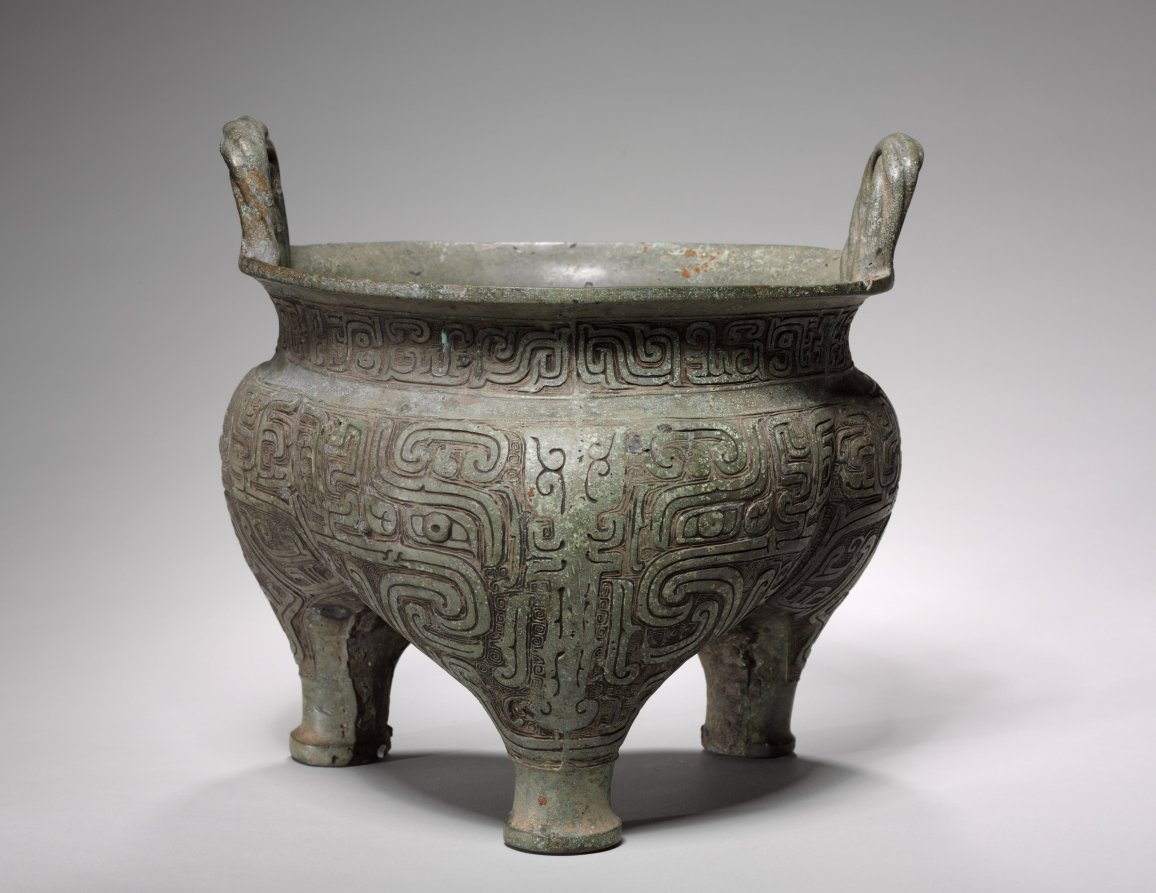
Urban Silhouette Research: The Hollow-Legged Tripod (Li Ding)
I. Structural Premise: The Tripod as Instrument of Suspension
The Li Ding vessel operates on a single, non-negotiable structural proposition: three legs, hollowed at their core, bearing a body whose mass is deliberately withheld from the ground. This is not ornament. It is a load-path argument. The hollow leg is a contradiction rendered in material—a compression member that has been evacuated, forced to carry weight through its absence rather than its substance. For the Addison studio, this constitutes the governing logic of the 2026 executive silhouette: support achieved through calculated void, not accumulated mass. The tripod does not stand because it is heavy; it stands because its geometry distributes force across three points of contact while its interior remains empty. Translated to tailoring, the principle yields a garment that holds its line through engineered negative space—shoulder to hem, the hollow leg becomes the dropped armhole, the open seam, the deliberate channel of air that lets a coat hang without padding.
II. The Static Register: Onyx and the Stillness of the Vessel
The first DNA source—the still-life language of The Death of Socrates—supplies the chromatic and volumetric discipline. The vessel's surface is a study in arrested time: the cold rim of the cup, the fall of drapery, the grain of the table, all compressed into a ritualistic stasis. In color terms, this register is Onyx—not black as absence, but black as density, a hue that absorbs light the way the vessel absorbs the moment of departure. The Onyx palette functions as the collection's anchor: a near-black with sufficient depth to register shadow and fold, refusing the flatness of pure pigment. Applied to the executive wardrobe, Onyx appears in the shell fabrics—wool gabardine, bonded crepe, double-faced cashmere—where the surface must read as continuous and undisturbed. The silhouette mirrors the still-life composition: a single vertical axis, a controlled shoulder, a hem that terminates with the finality of a table edge. Nothing gestures. Nothing pleads. The garment, like the vessel, is the residue of a completed action.
III. The Dynamic Register: Tension Held at the Threshold
The second DNA source—the hunting narrative of The Hunt—introduces the countervailing force. Where the still life compresses, the hunt extends; where the vessel rests, the bow bends. The aesthetic value here is not the kill but the millisecond before release—the drawn sinew, the suspended leap, death held in the un-arrived instant. This is the precise emotional register the 2026 executive requires: authority expressed as potential energy, not kinetic discharge. The hollow leg, read through this lens, becomes a tension member—a structural bowstring. In pattern terms, the Addison atelier achieves this through articulated seaming: seams that follow the body's force lines rather than its contours, creating garments that appear to be mid-motion even at rest. A coat back cut with a single hollowed pleat; a trouser leg that tapers through an internal channel rather than an external dart. The wearer is never caught in the act—only in the instant before it.
IV. The Dialectical Synthesis: Form as the Shadow of Death
The two sources converge on a single aesthetic paradox that governs the entire research: the still object prolongs disappearance, while the moving figure suspends arrival. The vessel anchors death and makes it endless; the hunt chases death and never reaches it. The Addison silhouette resolves this by refusing both poles. It is neither a monument nor a motion study. It is a tripod—three points of contact with the ground, a hollow core, a body held in equipoise. The 2026 executive wardrobe, built on this chassis, presents a figure who is simultaneously still and poised, grounded and unlanded. The Onyx shell provides the stillness; the hollow-leg construction provides the latent tension. What the wearer projects is not presence but imminence—the sense that the decisive gesture has been withheld, deliberately, as a matter of design.
V. Commercial Application: The Executive Uniform, Recalibrated
For the Addison Fashion NYC 2026 line, the tripod logic translates into a compact, high-conviction wardrobe. The core piece is a hollow-shouldered overcoat in Onyx double-faced wool: no padding, no lining excess, the armhole dropped and channeled so the sleeve hangs from structure rather than stuffing. Beneath it, a column dress or straight-leg trouser in Onyx bonded crepe, cut with an internal hollow seam that allows the fabric to breathe and the line to remain unbroken. Accessories follow the vessel's restraint: a single hard-edged cuff, a bag with a tripodal base, hardware in matte gunmetal rather than polish. The palette admits no accent—Onyx is the argument, and the argument is complete. What the collection sells is not novelty but a resolved position on how authority should look when it has stopped performing: quiet, hollowed, and standing on three points of contact with the world.
The research concludes where the vessel began—with the recognition that death, and by extension power, is never shown directly. We see only its residue or its prelude. The Addison 2026 silhouette chooses the residue, and dresses it in Onyx.