Urban Form: Carved Bowl
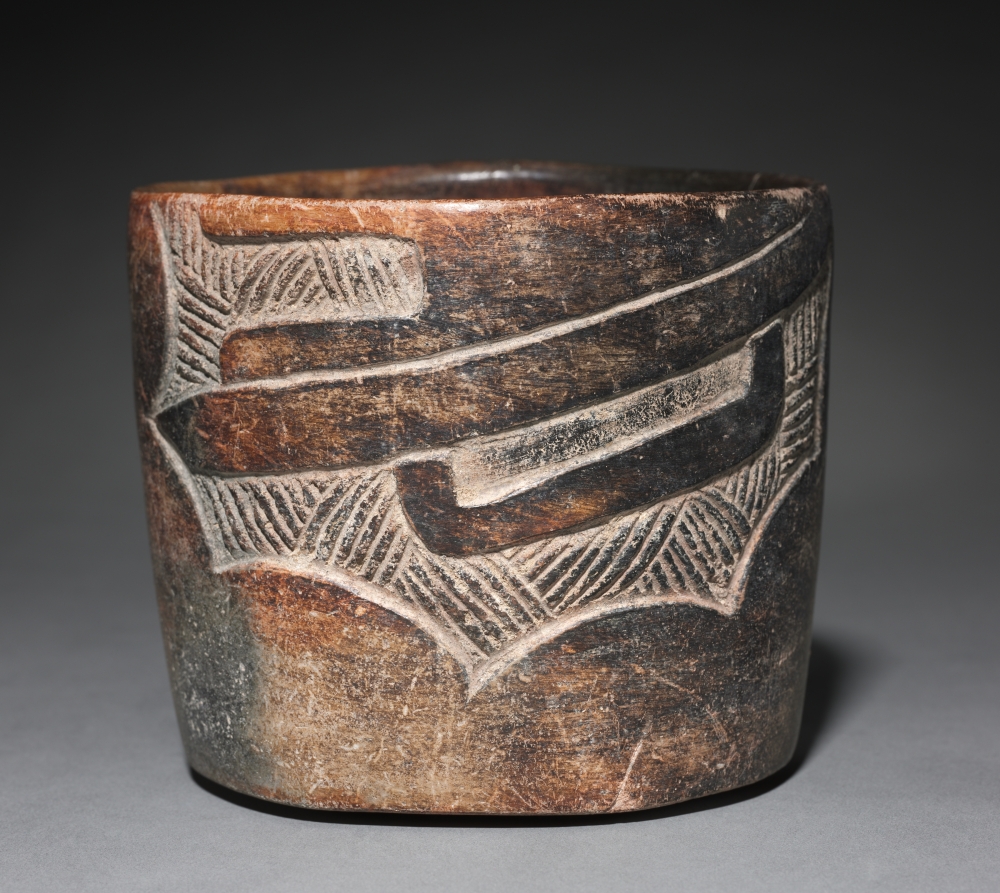
Urban Silhouette Research: The Carved Bowl as Structural Archetype
I. Geometric Integrity and the Executive Line
The Carved Bowl presents a closed geometric system of remarkable discipline. Its profile resolves into a continuous arc—a single, uninterrupted curve from lip to foot—governed by a rotational symmetry that admits no deviation. This is not ornament; it is structural logic made visible. For the 2026 executive silhouette, the bowl functions as a primary reference for the contained volume: a form that swells at the body and tapers with deliberate restraint at the base, producing a silhouette that is at once generous and severe. The Addison interpretation translates this into a shoulder that arcs without padding, a waist that recedes without cinching, and a hem that gathers weight only to release it. The geometry is absolute. The garment must obey it.
II. The Poetics of the Carved Surface
Where the bowl is incised, it does not decorate—it articulates. Each carved channel is a structural rib, a load-bearing gesture that distributes visual mass across the vessel's flank. This is the principle of tectonic surface: material that carries its own argument. In the Addison atelier, this translates to seams that are not hidden but declared—raised, bonded, and finished with a precision that reads as both armor and skin. The carved bowl teaches that a surface may be quiet and still be emphatic. The 2026 executive does not require embellishment; she requires evidence of construction. Every line must justify its presence.
III. Urban Materiality: Slate, Glaze, and the Weight of Restraint
The bowl's materiality is its argument. A glazed ceramic body—dense, cool, and light-absorptive—operates in the register of Slate: a color that refuses spectacle and rewards proximity. This is the palette of the urban executive who moves through glass corridors and concrete thresholds without announcing herself. The Addison fabrication applies this logic to wool-silk blends with a matte hand, to bonded leathers that hold a crease without cracking, to hardware reduced to a single brushed point of contact. The bowl does not shine. It resonates. The 2026 silhouette must do the same—absorb light, hold shadow, and reveal its quality only under sustained attention.
IV. The Contained Volume and the Executive Body
The bowl's genius is its negotiation between interior and exterior. The wall thins toward the lip and thickens toward the foot—a distribution of mass that is both functional and philosophical. Translated to tailoring, this is the asymmetric weight principle: structure concentrated at the base of the garment (the hem, the cuff, the collar stand) and released at the extremities. The result is a silhouette that appears to float while remaining anchored. For 2026, Addison proposes the carved coat: a single-breasted overgarment with a continuous shoulder arc, a suppressed waist achieved through panel geometry rather than darting, and a hem that carries a bonded inner facing for weight. It is a vessel for the body. It does not follow the body. It contains it.
V. Structural Poetics: The Silhouette as Argument
The deepest lesson of the Carved Bowl is that form is not neutral. A bowl holds. A bowl withholds. Its curve is a decision about what to reveal and what to protect. The 2026 executive silhouette, as derived from this object, is an architecture of discretion—a form that communicates authority through proportion rather than proclamation. The Addison design language for the coming season is therefore subtractive: remove the superfluous shoulder, remove the decorative seam, remove the color that competes. What remains is a carved volume in Slate, moving through the city with the silence of fired clay. This is not minimalism as absence. It is minimalism as compression—the maximum of intention held within the minimum of gesture.
VI. Conclusion: The Bowl as Urban Prototype
The Carved Bowl is not a historical reference. It is a working drawing for the executive silhouette of 2026. Its geometry defines the line; its surface defines the material; its contained volume defines the relationship between garment and body. Addison Fashion adopts this prototype without nostalgia—only with precision. The result is a wardrobe that operates as the bowl operates: self-contained, structurally resolved, and silent in its authority. The urban landscape does not require louder clothes. It requires better vessels.