Urban Form: Carving from an Overmantel
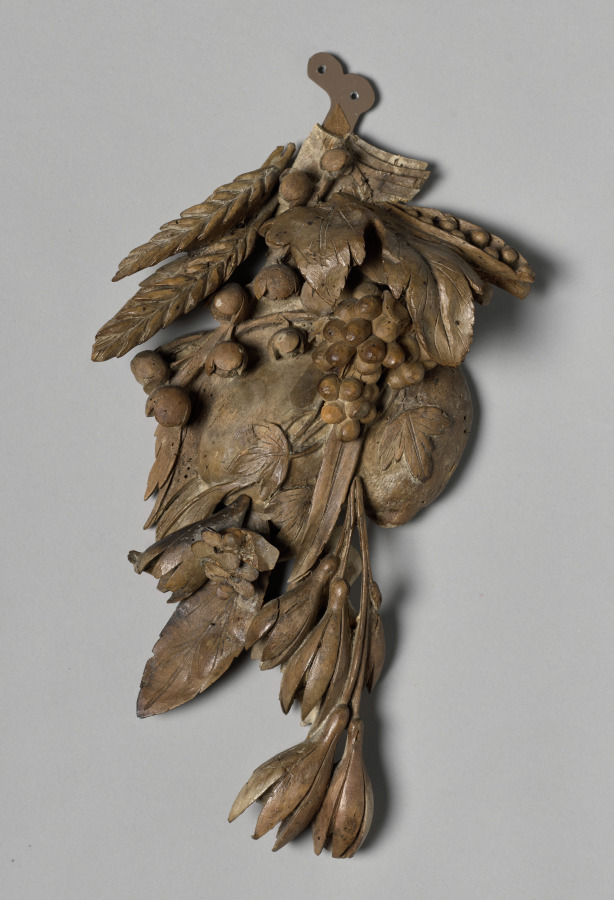
Technical Deconstruction: The Overmantel as Urban Silhouette
The subject Carving from an Overmantel presents a unique opportunity to interrogate the relationship between architectural permanence and bodily form. In the context of the 2026 NYC executive wardrobe, this is not a nostalgic reference to domestic ornamentation. Rather, it is a study in compression, weight, and the negative space that defines the modern silhouette. The overmantel—historically a carved stone or wood panel above a fireplace—serves as a fixed, monumental frame. Its aesthetic DNA, drawn from the dualities of the Senusret Stela and Goya’s The Disasters of War, offers a dialectical framework: the cold, ordered geometry of ancient Egyptian commemoration versus the chaotic, visceral rupture of Spanish Romanticism. For the Addison Fashion executive, this translates into a wardrobe that is simultaneously a shield and a statement—a carved presence in the urban landscape.
I. Form: The Architecture of Compression and Release
The overmantel’s defining formal characteristic is its rigid, rectilinear structure—a carved frame that contains but does not constrain. This informs the primary silhouette for the season: the structured, high-neck tunic over a tapered, columnar pant. The tunic’s shoulder line is sharp, almost architectural, echoing the stela’s precise grid. The fabric—a dense, double-faced wool or a bonded jersey—must hold its shape without draping. This is not a silhouette that yields to the body; it is one that the body inhabits, much like a carved niche. The neckline is a key point of tension: a mandarin collar or a high, stand-away neck that creates a visual barrier, referencing the overmantel’s role as a protective, framing element. This is the “order of Ma’at”—a visual contract of stability and authority.
However, the Goya influence introduces a necessary counterpoint: asymmetry and controlled disruption. The overmantel’s carving is not always perfectly symmetrical; it often features a central motif flanked by subordinate elements. In the 2026 executive wardrobe, this manifests as a single, sharp shoulder drape or a diagonal seam that cuts across the torso, mimicking the violent, diagonal brushstrokes of Goya’s painting. This is not chaos; it is calculated tension. The silhouette is anchored by a high-waisted, wide-leg trouser that falls with a heavy, weighted hem—a nod to the stela’s base. The pant’s volume is controlled, not billowing, creating a vertical line of force that grounds the wearer. The overall form is a study in compression (the tunic) and release (the trouser), a dialogue between the static and the dynamic.
II. Color: The Onyx Spectrum and the Materiality of Light
The chosen color, Onyx, is not a simple black. It is a deep, absorptive, and mineral-rich hue that references both the limestone of the stela and the dark, oil-soaked shadows of Goya’s canvas. Onyx, as a material, is a form of chalcedony; it is layered, with subtle bands of gray and white that catch light at oblique angles. This informs the color strategy for the collection: a monochromatic palette built from tonal variations of black. The base is a matte, almost chalky black—the “stela black”—used for the primary structural pieces. This is achieved through a heavy, felted wool or a sanded, matte-finish cotton that absorbs ambient light, creating a sense of weight and permanence.
Against this, we introduce “Goya black”—a glossy, almost wet-looking black achieved through lacquered silk or patent leather. This is used for accent pieces: a single sleeve panel, a belt, or a boot. This glossy black catches and reflects light in sharp, unpredictable flashes, mimicking the dramatic chiaroscuro of Goya’s The Disasters of War. The contrast between matte and gloss creates a visual rhythm that is both sophisticated and unsettling. The third element is the “overmantel gray”—a cool, stone-like gray that appears in the form of a fine pinstripe or a subtle, woven check. This is not a decorative pattern; it is a structural one, echoing the carved lines of the overmantel. It is used sparingly, perhaps as a lining or a facing, visible only in movement.
III. Construction: The Logic of the Carved Line
The construction methodology is paramount. Every seam must be a carved line, not a stitched one. This means a reliance on laser-cut edges, fused seams, and bonded finishes. The goal is to eliminate bulk and create a silhouette that feels monolithic. The tunic’s hem is raw-edged but sealed with a micro-fusion, creating a clean, sharp termination. The trouser’s waistband is a high, structured band that sits at the natural waist, with no visible button or zipper—a seamless, carved closure. Pockets are integrated into the seam lines, appearing as negative spaces rather than bulges.
The most critical construction detail is the shoulder seam. It is not a simple drop or a padded shoulder. It is a cantilevered structure, where the sleeve is attached via a hidden, internal frame that extends slightly beyond the natural shoulder line. This creates a floating, architectural silhouette that is both protective and imposing. The internal frame is made of a lightweight, rigid polymer that is invisible to the eye but provides the necessary structure. This is the “overmantel effect”—the garment becomes a frame for the body, not a covering.
IV. The 2026 NYC Executive: A Case Study in Controlled Presence
The 2026 NYC executive operates in a landscape of verticality, density, and constant visual negotiation. The overmantel-inspired wardrobe is not about comfort or ease; it is about authority and containment. The wearer moves through glass-and-steel towers, their silhouette a carved, monolithic presence that commands space without occupying it aggressively. The matte black tunic absorbs the city’s harsh, fluorescent light, while the glossy accents catch the eye in controlled, deliberate moments. The wide-leg trouser creates a sweeping, ground-clearing line that is both practical (allowing for rapid movement through crowded sidewalks) and symbolic (a visual claim to territory).
The color Onyx, in this context, is not a retreat into darkness. It is a strategic absorption—a way to become a negative space in the urban fabric, allowing the wearer to observe and be observed on their own terms. The “stela black” of the main garment provides a stable, unchanging base, while the “Goya black” accents introduce a dynamic, almost volatile energy. This is the executive as a living overmantel—a carved, enduring frame that contains both the order of ancient commemoration and the chaos of modern existence. The wardrobe is a visual manifesto: a declaration that the wearer is not subject to the city’s flux but is, instead, a fixed, carved point within it.
V. Conclusion: The Aesthetics of the Fixed and the Fractured
The Carving from an Overmantel research yields a silhouette that is minimalist in appearance but maximalist in intention. It is a study in form as structure and color as material. The Onyx palette, with its tonal variations, creates a layered, mineral depth that is both ancient and hyper-contemporary. The construction techniques—laser cuts, fused seams, cantilevered shoulders—elevate the garment from clothing to architectural object. For the 2026 NYC executive, this is not a trend. It is a strategic tool for navigating a world that demands both impenetrable composure and the ability to rupture expectations with a single, sharp line. The overmantel is no longer a domestic artifact; it is a wearable frame for the urban body.