Urban Form: Herakles the Archer
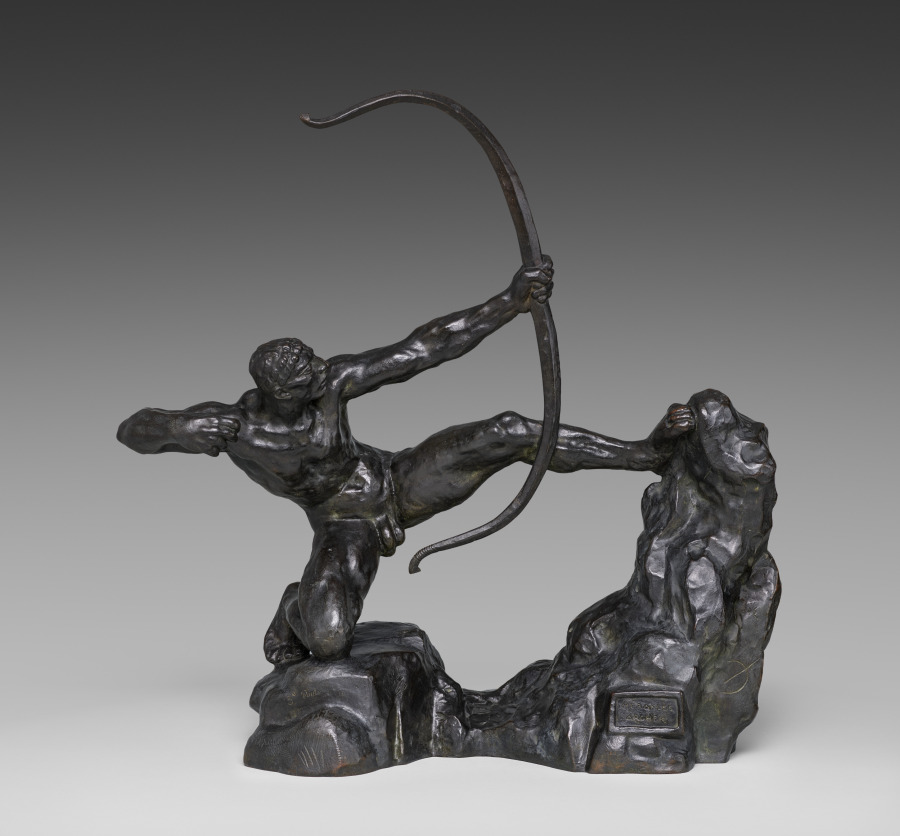
Executive Summary: The Heraklean Silhouette as Urban Armature
This research deconstructs the formal language of Herakles the Archer through the dual lenses of Chinese scholar’s rock (lingbi) aesthetics and Buddhist figuration. The objective is to distill a 2026 NYC executive wardrobe that operates as a system of compressed energy and spatial negation. The resulting silhouette is not a costume but a minimalist armature—a volumetric response to the urban condition that prioritizes negative space, geological weight, and static dynamism. The chosen color, Slate, anchors this system in the tonal gravity of metamorphic rock, providing a neutral yet assertive foundation for architectural layering.
I. Formal Deconstruction: The Rock as Silhouette Blueprint
A. The “Thin, Wrinkled, Leaky, Transparent” Lexicon
The lingbi stone’s governing principle—瘦 (thin), 皱 (wrinkled), 漏 (leaky), 透 (transparent)—offers a radical departure from Western tailoring’s emphasis on surface smoothness and structural closure. For the executive wardrobe, this translates into a negative-volume approach:
- Thin (瘦): Not emaciation, but vertical compression. The silhouette must shed all excess fabric mass, reducing the torso to a linear column that elongates the figure. This is achieved through zero-ease tailoring in the shoulder and chest, with seams that trace the body’s skeletal architecture rather than its musculature.
- Wrinkled (皱): Texture as geological record. The surface of the garment must resist flatness. Think micro-pleated wool or crushed cashmere that holds permanent, deliberate creases—not as signs of wear, but as topographic markers of time and pressure. This rejects the sterile ironed finish of corporate suiting in favor of a lived, tectonic surface.
- Leaky (漏) & Transparent (透): The stone’s cavities create light theaters. In garment construction, this is strategic perforation—not literal holes, but negative-space cutouts at the neckline, underarm, or hem. A Slate double-breasted jacket with a single, elongated keyhole at the sternum allows the skin or an inner layer of Ivory silk to become the “light” passing through the rock. This creates a visual rhythm of opacity and exposure, echoing the stone’s interplay with shadow.
B. The Seated Luohan: Static Dynamism and the Fold
The Seated Luohan introduces a counterpoint: stillness as a form of action. The figure’s robe folds are not random drapery but stratified rock layers—each crease a compressed narrative. For the executive wardrobe, this informs the treatment of sleeves and trousers:
- The Fold as Structure: Rather than cutting sleeves as separate cylinders, the garment should fold from a single piece of fabric, using origami-like pleats at the shoulder to create a monolithic sleeve that moves as a single tectonic plate. The Slate wool is steam-set into permanent, sharp folds that mimic the Luohan’s robe—creating a visual weight that suggests the figure is carved, not sewn.
- Gaze as Directional Line: The Luohan’s downward gaze creates a vertical axis of contemplation. In the silhouette, this is translated into a central seam running from the nape to the hem, acting as a spine of attention. All other construction lines—lapels, pocket flaps, side seams—must radiate from this axis, never crossing it. This establishes a hierarchical visual flow that directs the eye downward, grounding the executive in a posture of controlled stillness.
II. Color as Geological Substance: Slate
A. Chromatic Weight and Urban Camouflage
Slate is not a neutral gray. It is a metamorphic color—a composite of deep charcoal, blue-black, and mineral flecks that shift under different light conditions. In the 2026 NYC context, this color serves three functions:
- Absorption of Urban Noise: Slate absorbs the visual chaos of glass, steel, and digital screens. It acts as a visual anchor in the city’s cacophony, allowing the wearer to recede into the background while simultaneously projecting unassailable presence.
- Temperature of Power: Unlike black, which is absolute and final, Slate retains a geological warmth—a reminder of the stone’s origin in pressure and time. This communicates endurance rather than aggression, stability rather than dominance.
- Layering as Stratigraphy: The color’s tonal range allows for monochromatic layering that mimics rock strata. A Slate-on-Slate ensemble—jacket, trousers, and a Silver-grey silk shell—creates a vertical gradient from dark to light, echoing the lingbi stone’s internal shadows.
B. The Mineral Palette: Slate as Foundation
Slate is the base layer of a larger mineral system. It pairs with:
- Ivory as the “light” passing through the stone’s cavities—used for inner linings, pocket squares, or a single visible cuff.
- Onyx as the deepest shadow—reserved for buttons, belt hardware, or a single structural seam.
- Silver as the mineral fleck—a metallic thread woven into the fabric’s warp, visible only in direct light, creating a subsurface shimmer that references the stone’s crystalline inclusions.
III. The 2026 Executive Silhouette: Technical Specifications
A. The Jacket: “The Lingbi Column”
- Construction: Single-breasted, two-button closure, with a zero-ease shoulder and a slightly dropped armhole to create a continuous line from neck to wrist. The fabric is a 550g Slate wool-mohair blend with a crushed finish—pre-creased to hold permanent folds.
- Negative Space: A single keyhole cutout at the left sternum, 3cm in diameter, lined with Ivory silk. This is the “leaky” element—a visual puncture that allows light to pass through the rock.
- Seam Strategy: All seams are felled and exposed, with a 2mm Onyx thread visible on the surface. This is the “wrinkled” texture—a topographic map of the garment’s construction.
B. The Trouser: “The Luohan Fold”
- Cut: High-waisted, straight leg, with a single, sharp pleat at the front that runs from waist to hem. This pleat is steam-set at 180 degrees, creating a permanent fold that mimics the Luohan’s robe.
- Hem: Unfinished, with a raw edge that is frayed intentionally—a reference to the stone’s eroded surface. The hem falls 1cm above the shoe, creating a clean break that does not pool.
- Pocket: A single vertical welt pocket at the left hip, aligned with the jacket’s keyhole. This creates a vertical axis of negative space running through the entire ensemble.
C. The Layering System: Stratigraphy
- Base Layer: A Slate silk-cotton crewneck with a micro-pleated surface. The pleats are horizontal, creating a sedimentary texture that contrasts with the jacket’s vertical folds.
- Second Layer: A Silver-grey cashmere scarf worn as a cravat, tucked into the jacket’s keyhole. This is the “light” passing through the stone—a mineral flash that draws the eye.
- Outer Layer: The jacket itself, which acts as the geological crust—the hardest, most compressed layer.
IV. Conclusion: The Silhouette as Inhabited Philosophy
The Heraklean silhouette is not a garment but a portable landscape. It operates on the principle of “useless utility”—the lingbi stone’s rejection of function in favor of spiritual resonance. For the 2026 NYC