Minimalist
Ivory
Urban Form: White Flower
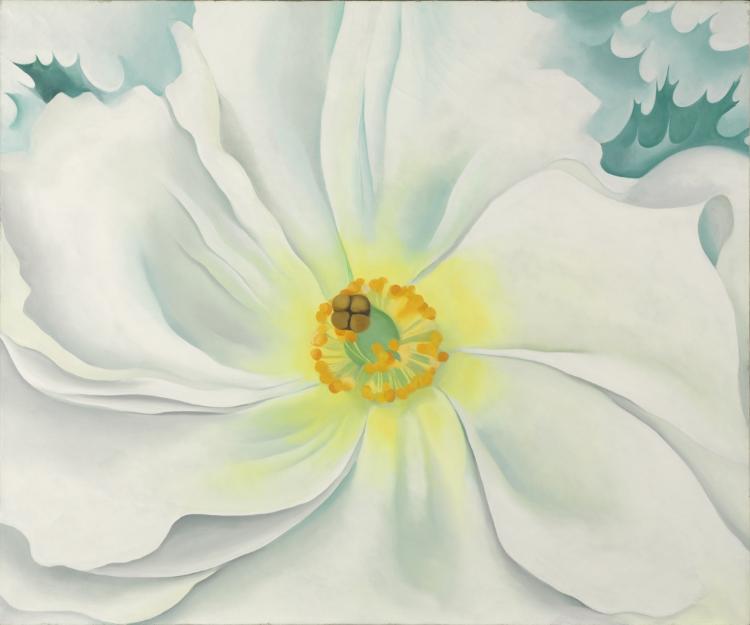
Technical Deconstruction: The White Flower as Urban Silhouette
The subject of the White Flower, as excavated from the Shōsōin’s Tang dynasty artifacts—specifically the *Udumbara Flowers Temple Plaque* and the *Square Wine Container (Fangyou)*—offers a rigorous framework for rethinking the 2026 NYC executive wardrobe. These objects, one a suspended floral apparition in wood, the other a cast bronze vessel of geometric precision, do not merely decorate. They encode a dialectic of form and color that, when translated into garment construction, yields a silhouette of profound urban authority. This analysis deconstructs their material logic, spatial rhetoric, and temporal weight to propose a minimalist, ivory-based wardrobe for the executive who operates at the intersection of power and poetics.Material Transposition: From Wood Grain to Fabric Drape
The *Udumbara Flowers* plaque achieves its aesthetic potency through a technique of “following the material to give form” (*suì wù fù xíng*). The wood grain is not carved into a flower; rather, the flower emerges from the grain’s inherent flow. This is a rejection of imposition in favor of revelation. For the urban silhouette, this translates into a fabric strategy where the material’s own behavior—its weight, weave, and memory—dictates the form. Consider a double-faced ivory wool crepe. Its surface is not printed with a floral motif; instead, the fabric’s subtle slubs and directional sheen create a visual rhythm akin to wood’s annular rings. The garment’s cut—a single-seam, bias-cut column dress—allows the fabric to “bloom” at the hem, mimicking the petal’s unfurling without structural interference. This is not decoration; it is material honesty. The executive’s body becomes the vessel, and the fabric, the awakened life force. In contrast, the *Fangyou*’s bronze is a study in controlled rigidity. Its hard lines and angular profile demand a fabric that can hold a sharp edge without collapsing. Here, a heavyweight ivory linen-cotton blend, treated with a matte finish, serves as the urban equivalent. The garment—a tailored, double-breasted blazer with a notched lapel—is constructed with fused interfacing and a structured shoulder pad, creating a “cast” silhouette. The fabric’s crispness echoes the bronze’s cast precision, while its ivory hue softens the severity, preventing the look from becoming militaristic. The blazer’s seams are topstitched with a contrasting thread—a subtle nod to the *Fangyou*’s incised decorative bands—but the overall effect remains one of monolithic purity. The material does not mimic metal; it *becomes* a second skin of urban armor.Spatial Rhetoric: The Inner Void and the Outer Frame
The *Udumbara* plaque constructs an “inner space” (*nèi xiàng kōngjiān*) through its floating, stemless flower. The blossom exists in a void, unanchored, inviting the viewer’s gaze inward. This is a space of contemplation, not proclamation. For the wardrobe, this translates into garments that create negative space around the body—a deliberate absence that amplifies presence. The ivory column dress, for instance, is cut with a high, standing collar that frames the neck without constricting it. The sleeves are eliminated entirely, leaving the arms bare, creating a visual “stemlessness” that draws the eye to the torso as a singular, uninterrupted form. The dress’s back is cut low, exposing the spine’s line—a subtle, inward-facing gesture. This is not seduction; it is a spatial strategy. The executive’s body becomes the “plaque,” and the void around it, the field of authority. The *Fangyou* operates on an opposite principle: an “outer frame” (*wài xiàng kuàngjià*). Its four sides are precisely divided into registers, each containing a specific motif—taotie masks, thunder patterns—that organize the viewer’s gaze into a rational procession. The garment equivalent is a structured, A-line coat in ivory cashmere. The coat’s silhouette is defined by sharp, vertical seams that run from shoulder to hem, creating a “framed” panel on the front and back. Each panel is left unadorned, but the seams themselves—topstitched in a slightly darker ivory thread—function as the “decorative bands.” The coat’s collar is a wide, notched lapel that mirrors the *Fangyou*’s flared rim, directing the eye outward. The garment does not invite introspection; it declares a territory. The executive wearing this coat occupies space with geometric authority, her silhouette a mobile architecture of urban order.Temporal Weight: The Instant and the Epoch
The *Udumbara* flower’s legend—blooming once every three thousand years—is paradoxically captured in a permanent, static form. This is the “instant as eternity” (*shùnjiān jí yǒnghéng*). For the wardrobe, this demands garments that feel both ephemeral and enduring. The ivory column dress, cut from a fabric that drapes like liquid, appears to be in a state of perpetual motion, yet its construction is rigorously engineered. The bias cut ensures that the fabric hangs with a weight that resists wrinkling, while the hem is finished with a hand-rolled edge that will not fray for decades. The dress is designed to be worn for a single, high-stakes meeting—a board presentation, a keynote—yet its construction ensures it will survive seasons. This is the temporal paradox of the executive: the ability to command the moment while building a legacy. The *Fangyou*’s patina—its layers of oxidation, its centuries of handling—embodies “accumulated time” (*jīlěi shíjiān*). The garment equivalent is a piece that gains character through wear. The ivory linen-cotton blazer, initially crisp, will soften with each dry cleaning, developing a subtle sheen at the elbows and lapels. The topstitching will fade, the seams will relax. This is not degradation; it is the garment’s “bronze patina.” The executive who wears this blazer for five years will have a garment that tells a story of its own—a record of negotiations, handshakes, and late nights. The color, ivory, is chosen precisely because it is a neutral that accepts time’s marks. Unlike black, which hides wear, or white, which demands pristine perfection, ivory absorbs the patina of urban life. It becomes a canvas for the executive’s own history.Color as Structural Element: Ivory as the New Neutral
In the context of the 2026 NYC executive wardrobe, ivory is not a mere background color. It is a structural choice that operates on three levels: optical, psychological, and symbolic. Optically, ivory reflects light with a warmth that flatters all skin tones, creating a unified visual field that does not compete with the wearer’s presence. Psychologically, it signals a departure from the corporate black and navy—a move toward openness and approachability without sacrificing authority. Symbolically, ivory echoes the *Udumbara* flower’s ethereal whiteness and the *Fangyou*’s aged bronze, bridging the gap between the sacred and the secular. It is the color of parchment, of ancient manuscripts, of the blank page upon which the executive writes her own narrative. The wardrobe’s palette is deliberately monochromatic: ivory for the base, with accents of slate (for a structured handbag or belt) and silver (for hardware—a minimalist watch, a geometric brooch). This is not a color scheme; it is a system of tonal modulation. The ivory column dress, when paired with a slate leather tote, creates a contrast of texture—soft wool against hard leather—that echoes the wood-bronze dialogue of the original artifacts. The silver accents, like the *Fangyou*’s bronze fittings, serve as punctuation marks, drawing the eye to points of structural importance: the collar, the waist, the wrist.Conclusion: The Silhouette as Urban Mandala
The White Flower, as reimagined through the *Udumbara* plaque and the *Fangyou*, yields a wardrobe that is neither decorative nor austere. It is a system of form and color that operates on the principles of material honesty, spatial clarity, and temporal depth. The ivory column dress and the structured blazer are not garments; they are vessels. They carry the executive’s body as the plaque carries the flower and the *Fangyou* carries the wine. In the 2026 NYC landscape—where speed, noise, and visual overload are the default—this silhouette offers a counterpoint. It is a statement of minimalism that is not empty, but full of the weight of history and the lightness of the present. The executive who wears it does not merely dress; she performs a ritual of presence, her form a white flower blooming in the urban void.
Technical Insight
NYC Perspective: Translating Ivory tones into Minimalist silhouettes.