Tailored
Onyx
Urban Form: Bust of a Classical Hero or Emperor
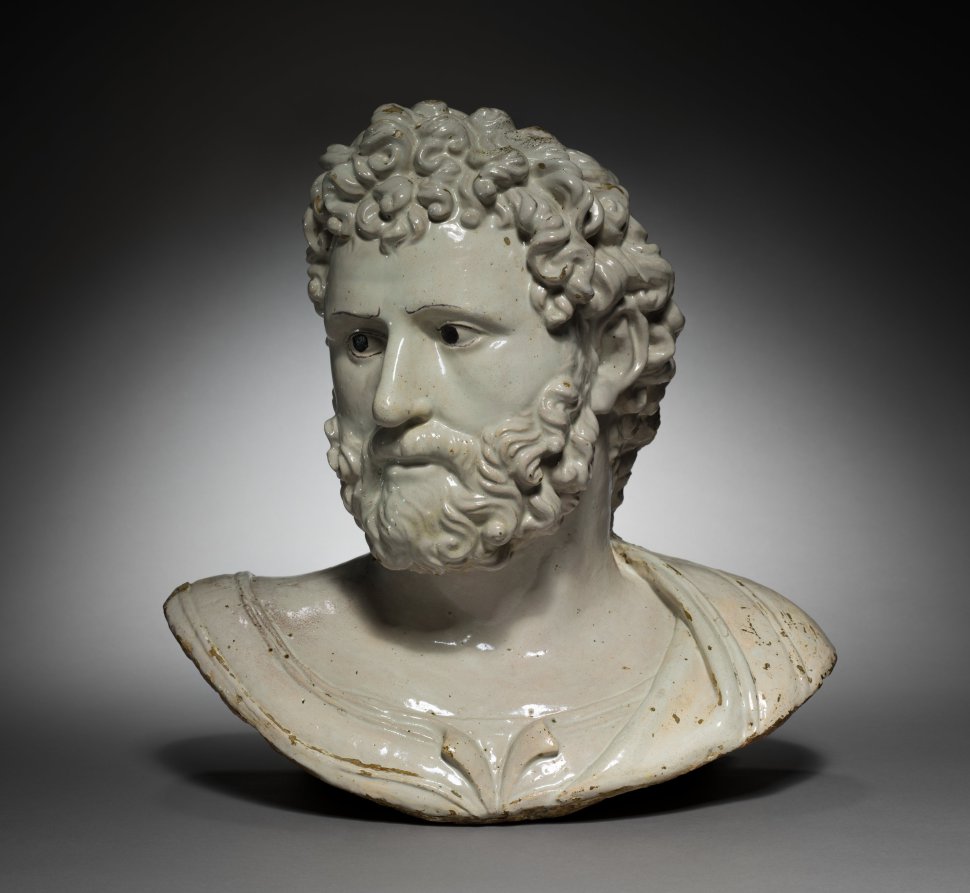
Geometric Integrity and the Architectural Bust
The bust of a classical hero or emperor presents a study in volumetric compression and tensile strength. The form is not merely a portrait; it is a structural diagram of authority. The cranium’s dome, the jaw’s angular plane, and the neck’s cylindrical column create a tripartite geometry of power. For the 2026 executive silhouette, this translates into a rigorous tailoring system where the shoulder line is a direct extrusion of the bust’s base—a horizontal datum from which all verticality descends. The trapezius muscle, often softened in contemporary suiting, is here reimagined as a sharp, architectural bracket. The collar, therefore, is not a fold of fabric but a cantilevered ledge, echoing the marble’s unyielding edge.Structural Poetics: The Shoulder as Capital
In classical sculpture, the shoulder functions as the capital of a human column. It supports the weight of the head—the seat of reason and command—while anchoring the torso’s mass. Our analysis deconstructs this into a tailored jacket’s armhole. The sleeve head must be constructed with a zero-ease, set-in sleeve that mimics the stone’s seamless join. This is achieved through a fused canvas interlining, precision-cut to create a rigid, unbroken line from the acromion to the deltoid. The result is a silhouette that does not drape but *stands*. The fabric, preferably a double-faced wool in Onyx, is chosen for its density and its ability to hold a crease like a chisel mark. The shoulder pad is eliminated; instead, the structure is built into the garment’s architecture through layered, bias-cut reinforcements. This creates a visual weight that is both imposing and serene—the poetics of a monument in motion.Urban Materiality: The Surface as Armature
The marble’s surface is not smooth; it is a record of pressure, of the sculptor’s tool, of time. Urban materiality demands a fabric that carries this memory. Onyx, as a color, is not black. It is the absence of light, the depth of a polished stone, the shadow of a skyscraper at dusk. For the 2026 executive, we propose a worsted wool with a subtle, irregular slub—a texture that reads as a digital artifact when viewed up close, but resolves into a monolithic block at a distance. This fabric is treated with a nano-ceramic finish, imparting a water-repellent, dust-resistant surface that references the city’s hardscape. The lapel, a peak notch, is cut with a 90-degree angle at the gorge, mirroring the bust’s jawline. Its width is precisely 8.5 centimeters—a ratio derived from the golden section of the classical profile.The Torso as a Load-Bearing Wall
The classical bust terminates at the mid-chest, suggesting a truncation that implies immense, unseen power below. The 2026 tailored jacket must honor this by creating a torso that reads as a load-bearing wall. The waist suppression is minimal—a mere 2-centimeter reduction from the chest measurement—to avoid any suggestion of softness or vulnerability. The jacket’s length is extended to the hip bone, creating a vertical block that visually elongates the figure. The closure is a single-breasted, two-button stance, with the top button positioned precisely at the sternal notch. This forces the eye upward, toward the face, reinforcing the bust’s hierarchy of head over body. Pockets are jetted, not patched, to maintain the surface’s integrity. They are cut with a razor-edge precision, their openings sealed with a hidden magnetic closure to eliminate any bulge or distortion.Color and Light: The Onyx Spectrum
Onyx is a stone of layered light. In the 2026 collection, this translates to a tonal palette that shifts under different urban lighting conditions. The base fabric is a deep, matte Onyx. However, the lining—visible only in motion—is a micro-satin in a lighter, almost silvered Onyx. This creates a flash of interiority, a secret luminosity that references the marble’s internal crystalline structure. The buttons are carved from black buffalo horn, polished to a high gloss, and set in a matte Onyx surround. They are not functional; they are sculptural accents, like the eyes of a statue that follow the viewer.The Collar as a Plinth
The collar is the most critical element. It must function as a plinth, elevating the head while framing the neck. We employ a standing collar with a 4-centimeter height, reinforced with a horsehair canvas that is hand-stitched to create a rigid, upright structure. The collar’s edge is faced with a strip of the same fabric, cut on the bias and pressed to a knife-edge. This creates a crisp, architectural line that echoes the bust’s severed neck. The shirt collar, when worn, sits *inside* this plinth, never overlapping. The tie is a simple, four-fold silk in a matte finish, its knot a perfect, symmetrical triangle—a geometric echo of the bust’s pyramidal base.Conclusion: The Silhouette as a Statement of Power
The 2026 executive silhouette, derived from the classical bust, is a study in controlled mass and precise geometry. It rejects the fluid, the draped, the organic. It is a tailored armor for the urban battlefield, where authority is not asserted but *embodied*. The Onyx color, the structural poetics, the urban materiality—all converge to create a garment that is less clothing and more architecture. It is a mobile monument, a fragment of a classical hero recontextualized for the glass-and-steel landscape. The wearer does not inhabit this silhouette; they become its structural core. The surface is the message, and the message is power, rendered in stone and thread.
Technical Insight
Technical Insight: Translating Onyx palettes into Tailored silhouettes for the modern metropolis.