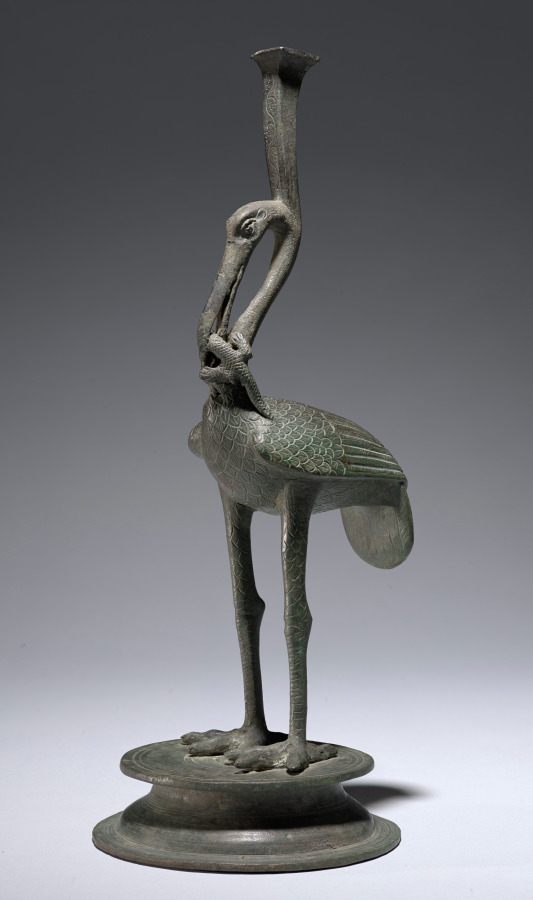
Urban Form: Ibis Eating a Lizard
Geometric Integrity and the 2026 Executive Silhouette
The subject of an ibis consuming a lizard presents a study in predatory stillness—a moment of raw, elemental tension frozen in form. For the 2026 executive silhouette, this artwork dictates a departure from the merely tailored. It demands an architecture of contained violence, where the body is both predator and prey, shelter and exposure. The ibis’s long, curved beak, the lizard’s rigid tail, the taut line of the bird’s throat as it swallows—these are not organic curves but structural vectors. They define a silhouette that is oversized not in volume alone, but in the poetics of extension.
Structural Poetics: The Beak and the Tail
The ibis’s beak is a linear weapon—a sharp, downward arc that severs the lizard’s body from its future. In garment construction, this translates to a dramatic shoulder line that extends beyond the natural acromion, not as a padded puff but as a cantilevered plane. Think of a double-breasted jacket in ivory wool-cashmere, where the lapel is cut to a razor-thin point that mimics the beak’s tip. The lizard’s tail, rigid and segmented, becomes the vertical seam that runs from the nape to the hem, creating a spine of tension. This is not a relaxed drape; it is a controlled fall, where fabric is held in place by internal boning or a hidden waist stay, ensuring the silhouette remains unbroken from shoulder to floor.
The act of swallowing—the lizard’s body disappearing into the ibis’s throat—informs the neckline architecture. A high, funnel-like collar that rises to the jawline, crafted from a single piece of felted merino, creates a smooth, unbroken cylinder. This collar is not a separate piece; it is an extension of the bodice, a continuous form that suggests the bird’s esophagus. The interior is lined with sanded silk charmeuse in a deep onyx, a hidden luxury that mirrors the dark interior of the predator’s body. The wearer’s neck becomes the lizard—contained, consumed, yet protected.
Urban Materiality: Ivory as a Field of Tension
Ivory is the chosen color for this silhouette. It is not a soft, creamy white. It is the bleached bone of the ibis’s skull, the desiccated desert where the hunt occurs. In urban materiality, ivory reads as architectural blankness—a canvas for shadow and light. The fabric must be heavy, matte, and dense. A double-faced wool with a tight, almost impermeable weave is ideal. It holds its shape without collapsing, much like the ibis’s feathers after a kill. The surface is unadorned—no buttons, no pockets, no visible stitching. The only texture is the subtle ribbing of a herringbone pattern, visible only at close range, like the scales of the lizard.
This materiality speaks to urban survival. The executive in this silhouette is not a passive observer. They are the apex of their environment, moving through glass and steel with the same predatory stillness as the ibis. The oversized proportions—a coat that falls to the ankle, sleeves that extend past the wrist—are not for comfort. They are territorial markers, claiming space without aggression. The weight of the fabric creates a gravitational pull, anchoring the wearer to the ground. This is not a garment for flight; it is a garment for standing one’s ground.
The Bodhisattva and the Bovine Head: A Dual Reading
Returning to the internal DNA of the Bodhisattva and the bovine-headed amulet, we find a dialectic of transcendence and protection. The Bodhisattva’s silent compassion is rendered in the stillness of the ibis—a predator that does not flinch, that holds its prey with a dispassionate grace. The bovine head, with its raw, protective power, is the lizard’s last resistance—the tail that stiffens, the scales that catch the light. In the 2026 silhouette, these two forces are synthesized.
The oversized coat becomes the Bodhisattva’s robe—a field of mercy that envelops the wearer. Yet the internal structure—the boning, the stays, the hidden seams—is the amulet’s power, a skeletal armor that protects without being seen. The ivory color is the Bodhisattva’s purity, but the matte finish is the bovine’s earthiness. The beak-like lapel is the weapon of compassion—a tool that consumes suffering and transforms it into silent strength.
Conclusion: The Geometry of Predation
The 2026 executive silhouette, as derived from the ibis eating a lizard, is a study in controlled power. It rejects the soft, the draped, the forgiving. It embraces the hard, the extended, the predatory. The oversized form is not a trend; it is a statement of ecological dominance. The ivory color is not a neutral; it is a field of potential, waiting to be marked by the urban landscape. The geometric integrity of the artwork—the beak, the tail, the throat—is translated into seams, collars, and hems that define a new kind of executive: one who moves through the city with the silent, inevitable grace of a bird of prey.