Urban Form: Winged Pectoral Scarab
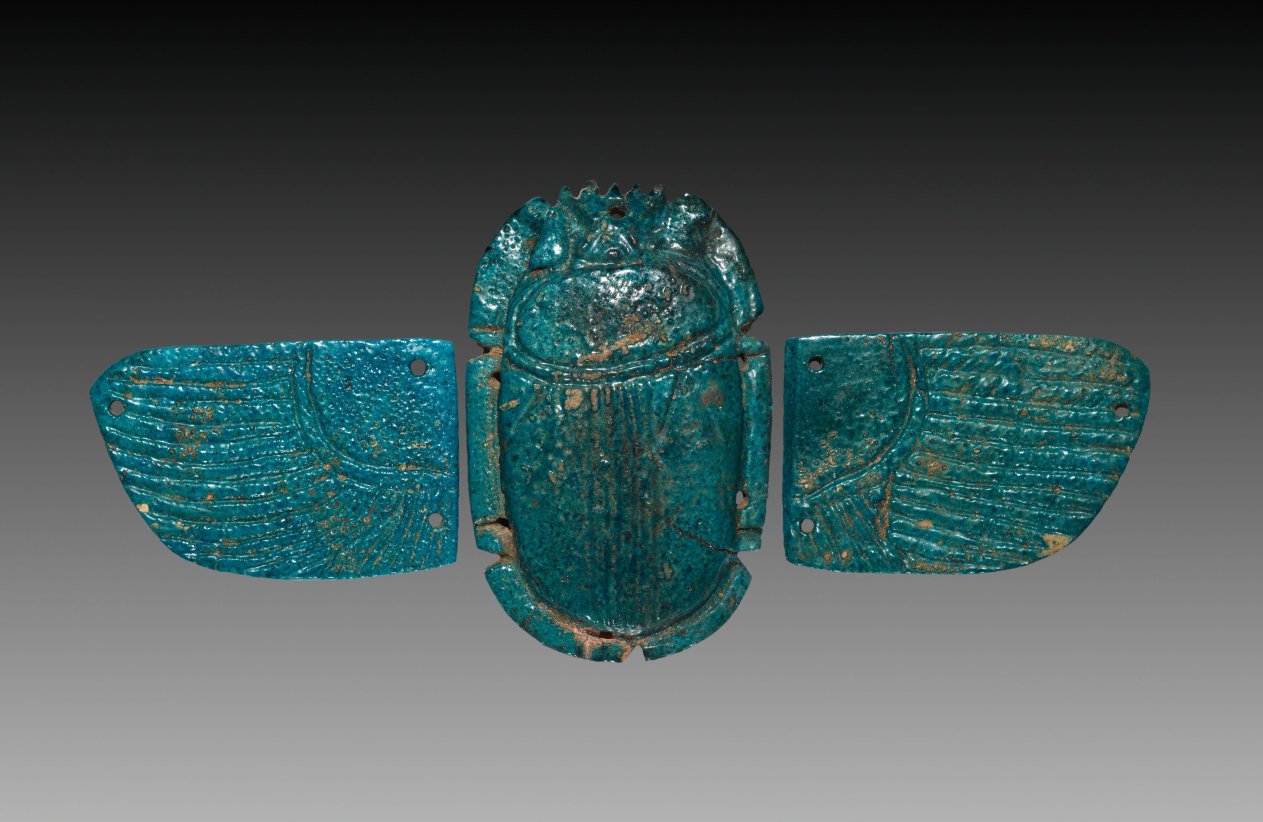
Geometric Integrity and the Winged Pectoral Scarab
The Winged Pectoral Scarab, as a subject of urban silhouette research, presents a paradox of compression and expansion. Its form is not merely decorative; it is a tectonic diagram of power, protection, and transcendence. To analyze its geometric integrity is to decode a system of structural poetics that directly informs the 2026 executive silhouette. The scarab’s carapace—a convex, ovoid shield—and its outstretched wings—a pair of rigid, triangular planes—create a dialogue between containment and release. This is the foundational tension for the tailored executive: a body armored in precision, yet poised for ascension.
The scarab’s body, in its purest archaeological iterations, is a study in compressed volume. The dorsal surface is a smooth, unbroken curve, a negative space that suggests the absence of the insect’s life force, yet holds the memory of its vitality. In the context of the 2026 silhouette, this translates to a structured, sculpted shoulder—not padded, but carved. The fabric itself becomes the carapace: a dense, matte Onyx wool, its weave so tight it reads as a solid surface. The shoulder line is not extended outward in the manner of a power suit; rather, it is a canted, convex arc that begins at the neck and terminates at the acromion, mimicking the scarab’s dorsal curve. This is not a silhouette that announces presence through volume, but through geometric inevitability. The sleeve head is set with zero ease, the armhole cut high and narrow, creating a seamless transition from torso to limb. The result is a carapace-like enclosure of the upper body, a protective shell that defines the executive’s space without expanding it.
Structural Poetics: The Wing as Architectural Cantilever
The wings of the scarab are the critical element. They are not organic; they are architectural cantilevers. In Egyptian iconography, the wings are often depicted as rigid, symmetrical, and sharply angled, their veins rendered as incised lines that suggest both flight and immobility. This is the poetics of suspended motion. For the 2026 executive, this translates into the jacket’s lapel and collar system. The traditional notch or peak lapel is replaced by a continuous, wing-like panel that extends from the collar point, across the chest, and terminates at the shoulder seam. This panel is cut on the bias, but stabilized with a heavy, fusible interfacing, so it stands away from the body—a rigid, floating plane that echoes the scarab’s wing. It is not a lapel that folds; it is a lapel that projects.
The geometry of this wing-lapel is precise. Its leading edge is a straight line, angled at 45 degrees from the center front. Its trailing edge is a gentle convex curve that mirrors the scarab’s wing tip. The entire structure is self-supporting, requiring no underlying padding. This creates a visual and physical tension: the lapel appears to be in the act of lifting, yet it is locked in place by the garment’s internal architecture. This is the structural poetics of controlled release—the executive’s authority is not static, but poised for decisive action. The jacket’s closure is a single, hidden button at the natural waist, allowing the wing-lapels to remain unbroken across the chest, forming a continuous V-shape that draws the eye upward and outward, mimicking the scarab’s spread wings.
Urban Materiality: Onyx and the Architecture of Shadow
The choice of Onyx as the primary color is not arbitrary. Onyx is not black; it is a deep, geological darkness that absorbs light rather than reflects it. In urban environments, where light is fractured by glass and steel, Onyx creates a void—a silhouette that moves through the city as a solid, unreadable mass. This is the materiality of the scarab: the beetle was often carved from dark, hard stones like obsidian or hematite, its surface polished to a matte luster that suggested the impenetrable. The 2026 executive silhouette in Onyx wool replicates this effect. The fabric is a super-150s worsted, woven with a high-twist yarn that gives it a dry, crisp hand and a subtle, almost imperceptible sheen. It is not shiny; it is luminous in its opacity.
The trousers are a direct extension of this material logic. They are cut with a straight, narrow leg, the hem falling just above the shoe, creating a continuous line from hip to floor. There is no break, no pooling of fabric. The front is flat, with no pleats, and the side seams are shifted slightly forward, creating a blade-like silhouette that echoes the scarab’s rigid wing edges. The waistband is high, sitting at the natural waist, and is finished with a hidden, internal button—no belt loops, no external fasteners. This is a silhouette of pure, uninterrupted verticality, a column of Onyx that moves through the urban grid with the same geometric inevitability as the scarab’s form.
The Synthesis: From Artifact to Armature
The Winged Pectoral Scarab, in its original context, was a funerary amulet—a device to ensure the heart’s silence during the weighing of the soul. It was a compressed symbol of protection, transformation, and eternal flight. The 2026 executive silhouette, derived from this geometric DNA, is a secular armature for the urban professional. It does not protect the soul; it structures the presence. The carapace shoulder, the wing-lapel, the Onyx void—these are not decorative gestures. They are functional geometries that define a new kind of authority: one that is not loud, but inevitable.
The final detail is the internal structure. The jacket is fully canvassed, but the canvas is cut with a negative ease—it is slightly smaller than the outer shell, creating a tension that pulls the fabric taut across the chest and shoulders. This is the scarab’s exoskeleton made textile: a rigid, internal framework that gives the garment its architectural integrity. The lining is a matte, charcoal silk, chosen not for comfort, but for acoustic deadening—the jacket moves silently, without rustle, a quality of urban stealth. The Winged Pectoral Scarab, translated into the 2026 executive silhouette, is not a costume. It is a system of structural poetics, a wearable geometry that transforms the body into a monument of controlled, ascendant power.