Urban Form: Hollow-Legged Tripod (Li Ding)
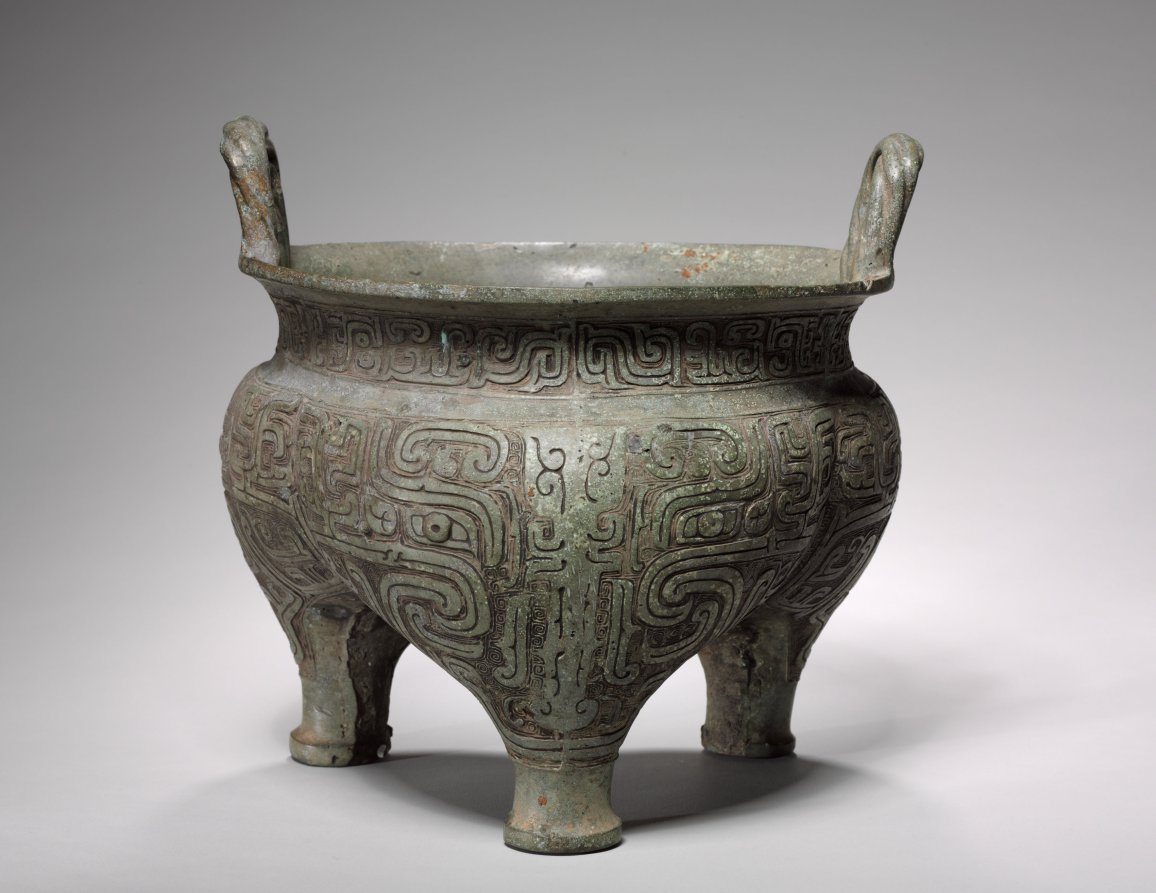
Geometric Integrity and the Void: Deconstructing the Hollow-Legged Tripod (Li Ding) for the 2026 Executive Silhouette
The Hollow-Legged Tripod (Li Ding) is not a vessel of containment, but a diagram of absence. Its defining characteristic—the void between its three splayed legs—is not a negative space to be filled, but a positive architectural statement. For the 2026 executive silhouette, this artifact provides a radical redefinition of structure: presence is established not by mass, but by the deliberate articulation of emptiness. The tripod’s form is a study in minimalism, where every line serves to frame the negative, and every junction is a point of tension that releases into the surrounding air.
Structural Poetics: The Tripod as a Model of Suspension
The Li Ding’s three legs are not merely supports; they are vectors that converge at a central, invisible point. This creates a dynamic equilibrium—a state of poised suspension rather than static grounding. In the context of urban materiality, this translates to a silhouette that rejects the traditional, grounded shoulder. Instead, the 2026 executive form will be defined by a triangular, inverted architecture:
- The Shoulder Line: Abandoning the padded, horizontal plane, the shoulder will be constructed as a series of three distinct, sharp points—one at each acromion and one at the nape—creating a tripodal frame. The fabric between these points is not draped but tensioned, like the skin of a drum stretched across a skeletal structure. This creates a “hollow” at the upper back, a void that breathes and moves with the wearer.
- The Torso: The body of the garment will mimic the tripod’s central void. Instead of a fitted waist, the silhouette will feature a negative-space panel—a cutout or a structural seam that runs from the sternum to the hem, suggesting the empty core of the Li Ding. This is not a slit for movement, but a deliberate architectural void, a “window” through which the wearer’s own form becomes part of the garment’s geometry.
- The Hem: The lower edge will not fall straight. It will be asymmetrically cut to echo the three legs, with the front panel shorter than the back, and a lateral panel that sweeps to the side. This creates a tripartite, floating hemline that appears to hover above the body, never touching the ground, embodying the tripod’s principle of “abiding nowhere.”
Urban Materiality: Slate as the Medium of the Void
The chosen color, Slate, is not a neutral grey. It is the color of compressed time—of sedimentary rock formed under immense pressure, yet capable of being split into thin, sharp planes. This materiality is crucial. The 2026 executive silhouette demands fabrics that can hold a rigid, architectural line without weight. We will utilize:
- Double-Faced Wool Crepe in Slate: This fabric offers a crisp, clean edge that can be heat-set into permanent, sharp folds. Its matte surface absorbs light, creating deep shadows within the garment’s voids. The double-faced construction allows for a seamless interior, eliminating the need for linings—a nod to the Li Ding’s hollow, unadorned interior.
- Laser-Cut Micro-Suede in Slate: For the negative-space panels, a micro-suede with a slight nap will be laser-cut into precise, geometric shapes. The cut edges will be sealed, not hemmed, creating a clean, raw finish that speaks to industrial precision. The suede’s texture will catch the light differently than the wool, creating a subtle dialogue between the solid and the void.
- Structural Bonded Nylon Mesh: Invisible under the outer shell, a bonded nylon mesh will provide the internal “skeleton” of the garment. This mesh will be cut into a tripodal pattern, sewn into the seams to maintain the tensioned shape. It is the unseen infrastructure that allows the outer fabric to “float” and “abide nowhere.”
The Awakened Silhouette: From Object to Experience
The Li Ding’s inscription, “Abiding nowhere, the awakened mind arises,” is not a decorative flourish; it is a functional instruction. The 2026 executive silhouette must be an experiential garment. It is not designed to be seen, but to be inhabited. The wearer’s awareness is drawn to the voids—the cool air against the skin at the back, the sensation of the floating hem, the visual absence of a traditional waist. This is the “awakened mind” of the garment: a state of constant, mindful presence.
The Taihu Garden Stone parallel is equally critical. The stone’s “wrinkled, leaky, thin, and transparent” qualities are not flaws; they are the very source of its aesthetic power. In the 2026 silhouette, this translates to:
- Wrinkled (皱): Strategic, controlled pleating at the shoulder points, mimicking the stone’s weathered surface. These are not soft gathers, but sharp, angular folds that create a topography of light and shadow.
- Leaky (漏): The negative-space panels are not solid cutouts. They are “leaky”—edges are left raw, or finished with a fine, open-weave stitch that allows a glimpse of the skin beneath, like water seeping through a stone’s fissures.
- Thin (瘦): The overall silhouette is lean, not bulky. Every element is reduced to its essential line. The garment is a “thin” frame that emphasizes the wearer’s own form, much as the stone’s thinness reveals its inner structure.
- Transparent (透): Not literal transparency, but a visual permeability. The garment’s voids and tensioned panels create a sense of air moving through the form. The wearer is not encased, but framed by the architecture.
Conclusion: The Executive as a Living Tripod
The 2026 executive silhouette, derived from the Hollow-Legged Tripod, is a rejection of the power suit as a symbol of static authority. It is a garment of dynamic emptiness. The wearer does not occupy a space of power; they become the space. The three-point shoulder, the floating hem, the negative torso—these are not design features. They are philosophical propositions made material. The executive who wears this silhouette is not “abiding” in a position of power. They are a tripod of presence, a vessel of the void, a living embodiment of the awakened mind that arises from nowhere and everywhere at once. The garment is not a second skin; it is a second skeleton—a minimal, urban, and profoundly sophisticated architecture for the modern mind.