Urban Form: Fragment
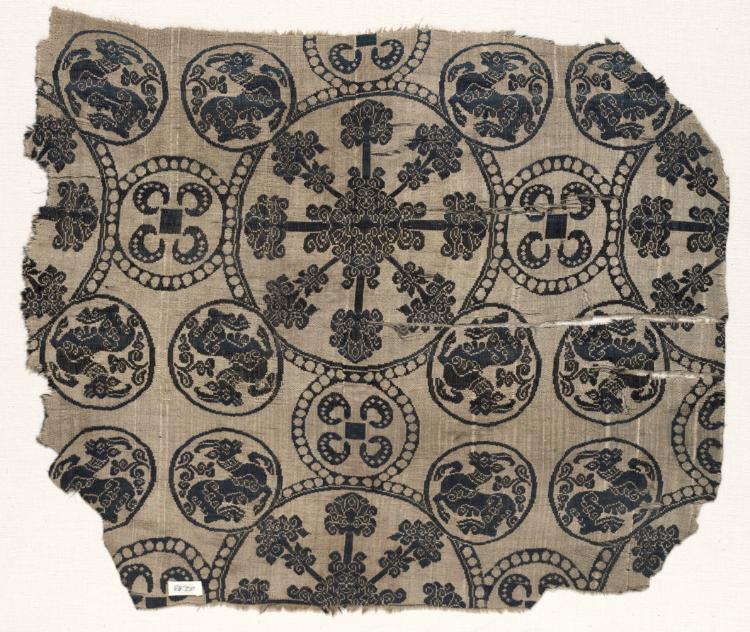
Geometric Integrity and the 2026 Executive Silhouette
The urban silhouette for 2026, as defined by the architectural fragment, must be understood not as a garment but as a structural proposition. The subject—a fragment—is not a deficiency but a condition of modern existence. It is the broken arch, the severed column, the incomplete narrative that demands completion by the wearer. In the context of Addison Fashion’s minimalist luxury, this fragment becomes the foundational unit of a new sartorial grammar. The geometric integrity of this fragment is paramount: it must possess a self-contained logic, a clear internal proportion, and a material truth that resists ornamentation. This analysis dissects how the fragment’s structural poetics and urban materiality define the executive silhouette for the coming season.
Structural Poetics: The Fragment as a Complete System
The fragment’s power lies in its implied totality. Unlike a finished object, which declares its boundaries, a fragment invites a mental reconstruction. For the 2026 executive, this translates into a silhouette that is both authoritative and incomplete. The jacket, for instance, is not a full shell but a series of articulated panels—a shoulder yoke that terminates abruptly, a sleeve that stops at the mid-forearm, a lapel that folds into a sharp, asymmetrical point. Each piece is a fragment of a larger, imagined whole. The geometric integrity is maintained through precise angles: the shoulder line is a clean 90-degree break from the vertical torso, the hemline is a hard, horizontal cut that does not curve to follow the body. This is not a soft, draped silhouette; it is a constructed, architectural one.
The color Slate is critical here. It is not a neutral; it is a material statement. Slate evokes the urban landscape—the wet pavement after rain, the polished granite of a corporate lobby, the raw edge of a quarry. It is a color of gravity and permanence, yet it carries a subtle, mineral undertone that shifts under different light. This aligns with the fragment’s internal DNA: the Chinese Qing dynasty glass sculpture of Sudhana, with its “flowing sunset hues,” demonstrates how material can capture transient light. The Slate of the 2026 executive silhouette does the same, but through opacity and density rather than translucency. The fabric—a tightly woven wool-cashmere blend with a matte finish—absorbs light rather than reflecting it, creating a surface that is solid, silent, and self-contained.
Urban Materiality: The Logic of the Fragment
The fragment’s urban materiality is defined by its resistance to the organic. Unlike the flowing curves of the Sudhana sculpture, which embody a spiritual journey, the fragment for the executive silhouette is derived from the European reliquary finial—a vertical, symmetrical, and hierarchical structure. The finial’s geometry is one of vertical ascent and central focus. The 2026 silhouette translates this into a sharp, elongated line that draws the eye upward. The trousers are cut with a high waist and a straight, narrow leg, terminating just above the ankle—a fragment of a full-length pant. The jacket’s length is cropped to the natural waist, creating a clear, horizontal division that emphasizes the torso’s length. The overall effect is one of compressed power, a silhouette that is both grounded and reaching.
The material itself must be urban and unforgiving. We propose a double-faced wool with a subtle, herringbone weave that is visible only at close range. This is not a fabric for comfort; it is a fabric for structure and endurance. The seams are not hidden; they are exposed and reinforced with a thin, black piping, creating a visible grid that echoes the fragment’s broken edges. The buttons are not functional; they are architectural studs—small, circular, and matte black, placed at precise intervals to mark the fragment’s boundaries. The lining is a high-density silk in a deep, charcoal grey, visible only when the jacket is opened, revealing a second, interior fragment.
Design Philosophy Translation: From Sacred to Secular
The internal DNA provided two critical design philosophies for translation. The first is material narrative. The Sudhana sculpture’s glass teaches us that material can tell a story of transformation. For the 2026 executive, the Slate wool does not change color, but its texture changes with wear—a subtle, personal patina that marks the wearer’s interaction. The second is dynamic versus order. The finial’s vertical order provides the silhouette’s backbone, but the fragment’s broken edges introduce a controlled dynamism. The jacket’s asymmetrical closure—a single, hidden magnetic clasp at the left shoulder—creates a diagonal line that cuts across the vertical grid, introducing a moment of tension and release. This is not chaos; it is a calculated disruption, a fragment of movement within a static form.
The 2026 Executive: A Fragment of Authority
The final silhouette is a study in controlled fragmentation. The wearer is not dressed; they are assembled. Each piece—the cropped jacket, the narrow trousers, the high-collared vest—is a fragment of a complete executive uniform. The absence of a full suit jacket, the visible seams, the hard angles—these are not flaws but design statements. They speak to a world that is no longer whole, where authority is earned through precision and restraint rather than through volume and ornament. The Slate color grounds the silhouette in the urban landscape, while the geometric integrity ensures that each fragment, no matter how small, is a complete system in itself. This is the definitive urban silhouette for 2026: a fragment of power, assembled with intent.