Urban Form: Mourner from the Tomb of John the Fearless and Margaret of Bavaria
Geometric Integrity and the Executive Silhouette
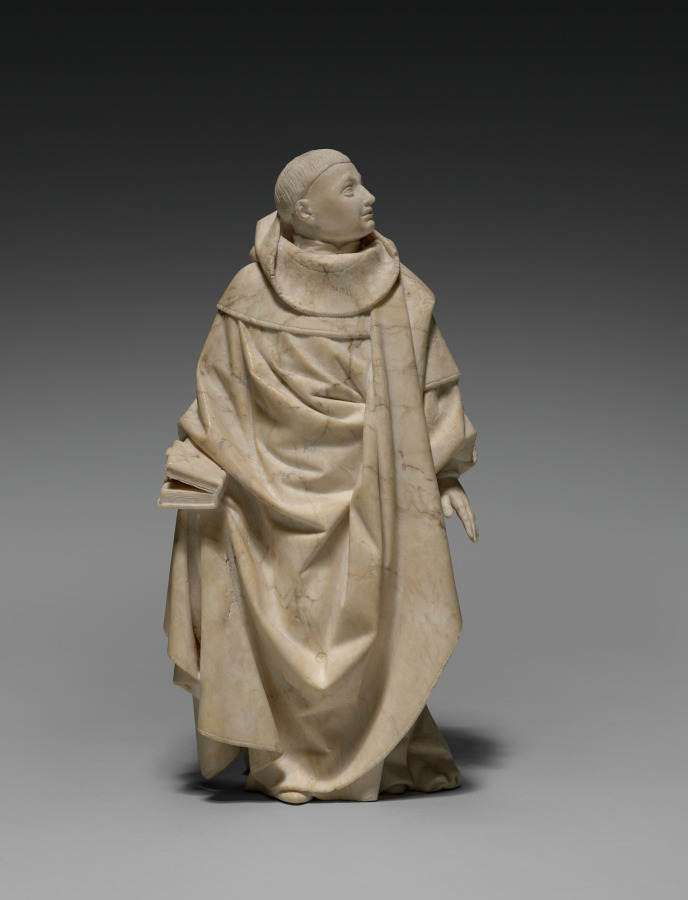
The Mourner from the Tomb of John the Fearless and Margaret of Bavaria presents a masterclass in restrained verticality and draped mass, a paradox that defines the 2026 executive silhouette. This 15th-century Burgundian sculpture, carved in alabaster, depicts a figure enveloped in a heavy, hooded mantle. The body is nearly obliterated by the garment, yet the geometry of the folds creates a precise, architectural volume. For Addison Fashion, this work is not a historical relic but a blueprint for structural poetics—the art of using fabric to define space rather than merely cover form.
The mourner’s posture is one of profound compression: the head bowed, shoulders curved inward, arms crossed or clasped. This inward-turning geometry produces a silhouette that is both protective and authoritative. The vertical pleats of the mantle fall in uninterrupted lines from the shoulders to the ground, creating a columnar effect. This is not the fluidity of classical drapery; it is a tailored rigidity that suggests a body armored in cloth. The 2026 executive silhouette borrows this principle: the garment becomes a second skeleton, a carapace of urban authority. The key is the elimination of excess—no lapels, no collars, no visible fastenings. The hood, rendered as a cowl, adds a ceremonial weight, transforming the wearer into an anonymous, powerful figure.
Structural Poetics: The Fold as Architecture
The mourner’s garment is defined by deep, parallel folds that do not follow the body’s natural contours. Instead, they create an independent geometry—a series of vertical channels that mimic the fluting of a classical column. This is the core of structural poetics: the fold is not a response to movement but a deliberate, static composition. In the 2026 collection, this translates to garments where seams and darts are replaced by engineered pleats and pressed creases. The fabric—a heavyweight wool or bonded jersey—is treated as a material capable of holding its own form, like stone or metal.
The mourner’s cowl is particularly instructive. It frames the face without revealing the neck, creating a sense of enclosure and mystery. For the executive silhouette, this becomes a high, sculptural collar that extends to the jawline, or a hood that sits like a built-in architectural element. The shoulders are slightly dropped, not to relax the line but to emphasize the downward pull of the fabric. This creates a silhouette that is both grounded and imposing—a figure that occupies space with quiet dominance.
Urban Materiality: From Alabaster to Onyx
The materiality of the mourner—cold, polished alabaster—dictates its visual language. The stone is smooth yet matte, absorbing light rather than reflecting it. This is the quality we seek in urban materiality: fabrics that are dense, non-reflective, and tactile. The Onyx color palette is chosen for its depth and neutrality. It is not black, but a near-black with undertones of charcoal and slate—a color that absorbs the city’s ambient light and transforms it into a uniform, authoritative surface.
The mourner’s folds are not soft; they are sharp, almost knife-like. To replicate this in fabric, we use bonded wool or double-faced cashmere, materials that hold a crease without softening. The surface is matte, with a slight nap that catches light only at the edges of the folds. This creates a visual rhythm of shadow and highlight, similar to the alabaster’s subtle translucency. The garment’s weight is crucial: it must fall with a deliberate gravity, not float or flutter. This is the antithesis of fluidity—a tailored mass that anchors the wearer to the ground.
The 2026 Executive Silhouette: A Synthesis
The mourner’s silhouette is fundamentally vertical and monolithic. There is no waist definition, no hip emphasis. The body is a single, uninterrupted column from shoulder to hem. For the 2026 executive, this translates to a long, single-breasted coat or a floor-length tunic worn over narrow trousers. The hemline falls just above the ankle, creating a clean line that does not break the vertical flow. The sleeves are set-in but cut with a slight drop, allowing the fabric to hang straight from the shoulder.
The hood is optional but recommended for the most powerful iteration. It is not a casual accessory but a ceremonial element, a nod to the mourner’s ritualistic function. In an urban context, the hood serves as a psychological barrier, a way to retreat into the garment’s protective volume. The fabric’s weight ensures that the hood stays in place, creating a consistent silhouette from all angles.
Conclusion: The Geometry of Power
The Mourner from the Tomb of John the Fearless and Margaret of Bavaria teaches us that power in dress is not about revealing the body but about enclosing it in a precise, architectural volume. The 2026 executive silhouette is a direct descendant of this medieval logic: a garment that suppresses the individual in favor of the archetype. The Onyx palette and Tailored category are not choices but necessities. They allow the wearer to become a figure of authority, anonymous yet unmistakable. The geometry is rigid, the materiality is urban, and the effect is absolute. This is the definitive silhouette for the executive who commands not through gesture but through presence.