Fluid
Slate
Urban Form: Tunic or Shawl Ornament
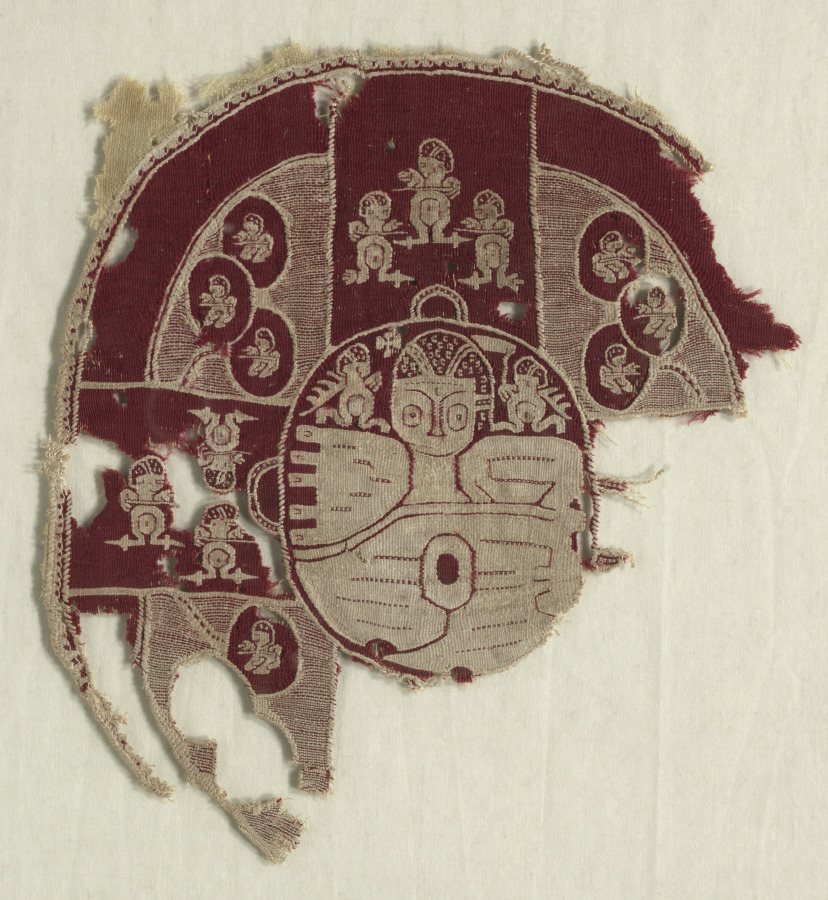
Technical Deconstruction: The Tunic or Shawl Ornament as an Urban Silhouette Archetype
The subject ornament—whether articulated as a tunic or a shawl—is not merely a garment component; it is a volumetric proposition. Drawing from the aesthetic dialogue between the *Famous Women* wedding chest and the *Caparisoned Elephant* miniature, we isolate two critical formal principles: **surface-as-structure** and **ornament-as-authority**. These principles, when translated into the 2026 NYC executive wardrobe, yield a silhouette that is simultaneously protective and declarative. The tunic or shawl ornament functions as a mobile architectural envelope, one that negotiates between the body’s natural geometry and the urban environment’s demand for controlled visual presence.Formal Analysis: The Tunic as a “Fabricated” Volume
The *Famous Women* chest operates through a logic of **enclosure and display**. Its painted surface is a “fabricated” narrative space—wood rendered as textile, women rendered as moral patterns. For the tunic, this translates into a silhouette that prioritizes **continuous surface over anatomical articulation**. The tunic must not cling; it must drape with a deliberate, almost architectural weight. The ideal form is a **modified A-line or boxy rectangle**, with shoulder seams dropped 2–3 inches beyond the natural acromion to create a soft, structured overhang. This is not a relaxed fit; it is a controlled volume. The fabric—ideally a double-faced wool or a dense silk-cotton blend—must possess sufficient heft to hold a crease yet enough fluidity to break into soft folds at the hemline. The hem itself should fall between mid-thigh and just above the knee, a length that signals authority without sacrificing mobility. The ornamentation, in this context, is not appliqué; it is **integral pattern**. Borrowing from the chest’s “image-textile” logic, the tunic’s surface should feature a subtle, repeating geometric motif—perhaps a **micro-herringbone or a tonal jacquard**—that reads as texture from a distance and as pattern up close. This avoids the trap of literal narrative (no figurative prints) while maintaining the chest’s principle of encoding meaning within surface. The color Slate anchors this: a neutral that absorbs light, creating a matte, non-reflective field that emphasizes form over flash. It is the color of urban stone, of controlled opacity.Formal Analysis: The Shawl as a “Caparison” of Power
The *Caparisoned Elephant* miniature inverts the relationship between body and covering. Here, the fabric is not a container but a **re-definer of mass**. The elephant’s natural bulk is subsumed by the patterned textile, which imposes a new geometry—symmetrical, ordered, imperial. For the shawl ornament, this translates into a **rectangular or slightly trapezoidal drape** that is worn not for warmth but for volumetric expansion. The shawl must be substantial: a minimum of 60 inches in width and 80 inches in length, constructed from a fabric that has both **drape and memory**—a cashmere-wool blend with a brushed finish, or a matte silk faille. The weight should be such that it falls in clean, vertical folds when draped over one shoulder, creating a **secondary silhouette** that extends the wearer’s lateral presence by 6–8 inches. The ornamentation here is **strategic placement**. Taking cues from the miniature’s “gaze-directing” surface, the shawl’s pattern should be concentrated along one edge or in a central panel. A **narrow, woven border** in a slightly lighter tone of Slate, or a subtle metallic thread (silver, not gold), creates a visual anchor. This border functions like the elephant’s embroidered trappings: it draws the eye to the edge, framing the wearer’s face and upper torso. The shawl is not a blanket; it is a **declaration of territory**. When worn over a tailored blazer or a minimalist column dress, it introduces a second, softer architectural layer—a dialogue between the rigid and the fluid.Color and Material Strategy: Slate as a Neutral of Power
Slate is not a passive color. It is a **compound neutral**—a blend of blue-gray and charcoal that reads as both cool and grounded. In the 2026 NYC context, Slate functions as a **signature urban tone**: it is the color of wet pavement, of skyscraper glass at dusk, of controlled anonymity. For the tunic, Slate in a matte finish (wool crepe or double-faced jersey) creates a **monolithic surface** that minimizes visual noise. For the shawl, a slightly lighter Slate with a subtle sheen (silk-cashmere) introduces a **tonal contrast** without breaking the color’s authority. The materiality must be tactile but not ostentatious: a fabric that feels expensive to the touch but does not demand attention through shine or texture.Integration into the 2026 Executive Wardrobe
The tunic and shawl ornament are not standalone pieces; they are **system components**. The tunic should be worn as a **third layer** over a high-neck base (turtleneck or mock neck) and slim trousers or a pencil skirt. The volume of the tunic contrasts with the base’s fitted silhouette, creating a **vertical line** that elongates the figure. The shawl, when worn, should be the **outermost layer**, draped over the tunic or a structured blazer. This layering strategy—base, tunic, shawl—creates a **tripartite silhouette** that is both protective and authoritative. It echoes the *Famous Women* chest’s logic of nested surfaces: each layer reveals or conceals, but all are controlled. The ornamentation, whether woven or printed, must be **repetitive and non-figurative**. A micro-check, a subtle stripe, or a tonal grid—these patterns reference the *Caparisoned Elephant*’s ordered geometry without mimicking its cultural specificity. The goal is to encode a sense of **structured luxury** that communicates competence and restraint.Conclusion: The Aesthetics of Controlled Opacity
The tunic and shawl ornament, when executed in Slate and constructed with volumetric precision, become **instruments of urban poetics**. They do not reveal the body; they **redefine its boundaries**. They do not shout; they **command through presence**. The 2026 NYC executive who wears this silhouette operates within a visual grammar that is both ancient and hyper-contemporary—a grammar where surface is substance, and ornament is authority. The dialogue between the *Famous Women* chest and the *Caparisoned Elephant* is not a historical footnote; it is a **design brief**. The tunic and shawl are the answer.
Technical Insight
NYC Perspective: Translating Slate tones into Fluid silhouettes.