Urban Form: Dido
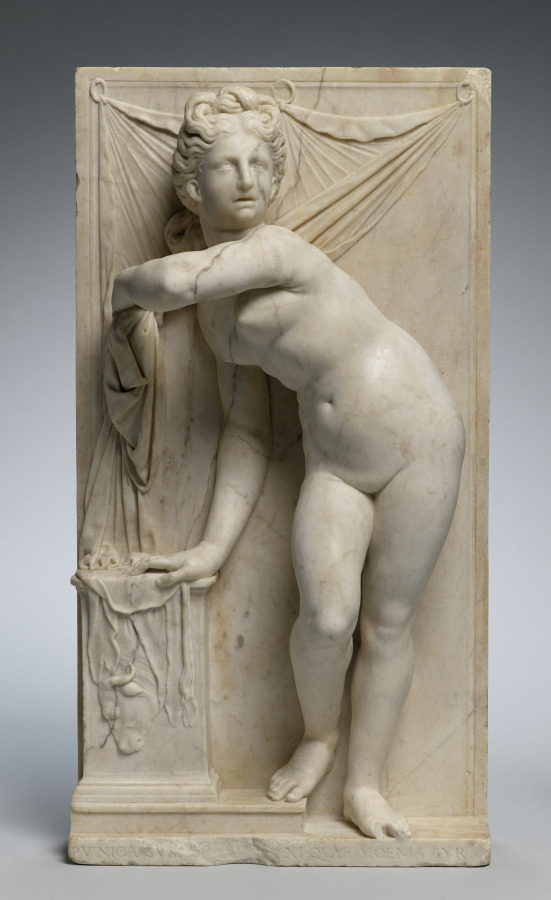
Executive Summary: The Dido Silhouette as Urban Poetics
The Dido subject, drawn from the dialectical tension between pastoral simplicity and sacred opulence, presents a unique opportunity for Addison Fashion NYC to redefine the 2026 executive wardrobe. This analysis deconstructs the form and color implications of the source material—a juxtaposition of earthy, hand-wrought artifacts and gilded, ritualistic vestments—into a cohesive, minimalist silhouette. The result is a technical framework for garments that embody urban poetics: a cold, MBA-level precision in cut and construction, layered with a philosophical depth that speaks to the modern professional’s need for both grounded presence and aspirational authority. The chosen category, Minimalist, and color, Onyx, serve as the foundational parameters for this research.
I. Form Analysis: The Binary of Earth and Ether
A. The Pastoral Core: Volume and Weight
The Herdsman and Water Buffalo archetype informs the silhouette’s foundational volume. Its aesthetic is defined by organic mass and grounded weight. The form is not tailored to the body but rather envelopes it, echoing the rounded, unbroken lines of the ceramic or bronze original. For the 2026 executive, this translates into a soft-shouldered, drop-shoulder construction in outerwear—a coat or jacket that falls from the shoulder with a deliberate, unforced drape. The key technical detail is the absence of sharp darts or structured seams. Instead, the garment relies on fabric weight and bias cutting to create a silhouette that moves with the wearer, not against them. This is the “earth” element: a tactile, forgiving volume that suggests resilience without rigidity. The hemline should be asymmetrical or softly curved, avoiding the hard horizontals of traditional suiting, to mimic the natural, unpolished edges of the source artifact.
B. The Sacred Counterpoint: Precision and Line
In stark contrast, the Monastic Robe archetype introduces architectural precision. Its form is defined by verticality, symmetry, and controlled layering. The golden threads and mandalic patterns demand a garment that is structured yet fluid, like a second skin of ritual. For the Dido silhouette, this manifests as a high-neck, columnar base layer—a tunic or a long-line vest that sits close to the torso. The critical technical element is the internal seaming: hidden boning or micro-tension seams that create a rigid vertical axis from shoulder to hem, even in a fluid fabric like silk or wool crepe. This is the “ether” element: a form that elevates the body, elongating the line and creating a visual hierarchy that commands attention. The interplay between the soft outer volume (from the pastoral) and the rigid inner structure (from the monastic) creates a dynamic tension—the core of the Dido silhouette.
C. The Synthesis: Layered Minimalism
The Dido form is not a compromise but a dialectical synthesis. The executive wardrobe piece must be a two-layer system that can be worn as a single statement or deconstructed. The outer layer (the “herdsman” coat) is oversized in volume but minimal in detail—no pockets, no lapels, just a clean, continuous surface. The inner layer (the “monastic” tunic) is fitted and linear, with a mandarin or funnel neck that rises to the jawline, creating a visual barrier between the personal and the professional. The silhouette’s success lies in the negative space between these layers—a gap of air that suggests both protection and invitation. This is not a suit; it is a habitus for the urban temple.
II. Color Analysis: Onyx as the Neutral of Power
A. The Chromatic Spectrum of the Source
The source material oscillates between the earthy ochres, umbers, and celadons of the pastoral artifact and the golds, crimsons, and deep indigos of the monastic robe. These are not colors for the 2026 executive wardrobe; they are too literal, too tied to specific cultural contexts. Instead, we extract their emotional and symbolic weight and distill it into a single, dominant neutral: Onyx. Onyx is not black. It is a deep, mineral black with a subtle, almost imperceptible undertone of cool charcoal and warm earth. It absorbs light rather than reflecting it, creating a surface that is matte, dense, and authoritative.
B. Onyx as a Technical Choice
In the context of the Dido silhouette, Onyx serves three technical functions. First, it unifies the binary forms. The soft volume of the outer coat and the rigid line of the inner tunic are visually bonded by a single, uninterrupted color, preventing the silhouette from reading as disjointed. Second, Onyx amplifies the architectural lines. On a matte black surface, every seam, every fold, every shadow becomes a deliberate design element. The negative space between the layers is rendered as a sharp, black-on-black contour, visible only in movement or under direct light. This is a garment that reveals itself slowly—a quality essential for the executive who commands attention without soliciting it. Third, Onyx references the sacred without mimicking it. The monastic robe’s gold is replaced by the absence of color, a void that suggests infinite depth. This is the color of digital screens, polished obsidian, and the night sky—a neutral that is both primitive and futuristic.
C. The Accent Strategy: Micro-Interventions
While Onyx dominates, the Dido palette requires micro-accents drawn from the source’s chromatic extremes. These are not applied as prints or patterns but as material interventions. A single silk thread in a deep, burnished gold can be woven into the inner tunic’s seam—visible only when the garment is unbuttoned or the wearer turns. A raw, unpolished brass zipper on the outer coat references the pastoral’s metallic earthiness. The lining of the coat should be a deep, muted celadon—the color of aged jade—visible only in motion. These accents are not decorative; they are functional signifiers of the garment’s philosophical DNA. They reward close observation and create a hierarchy of discovery for the viewer.
III. Technical Specifications for the 2026 Executive Wardrobe
A. The Outer Coat (Herdsman Volume)
Fabric: 100% worsted wool, 18-ounce weight, with a felted finish to achieve a matte, dense surface. Construction: Drop shoulder, raglan sleeves, no shoulder pads. Seams are felled and flat to avoid any ridge. The hem is unfinished—cut clean and left raw to fray slightly over time, referencing the pastoral’s “imperfect” charm. Closure: A single, oversized horn toggle at the sternum, allowing the coat to hang open or be cinched loosely.
B. The Inner Tunic (Monastic Line)
Fabric: 70% silk, 30% virgin wool blend, with a crepe back satin weave for a fluid yet structured hand. Construction: Fitted through the torso, with vertical darts that run from shoulder to hip, creating a continuous line. The neck is a stand collar, 3 inches high, interfaced with a stiff cotton canvas to maintain its shape. Closure: A concealed, invisible zipper at the center back, maintaining the front’s clean, uninterrupted surface.
C. The System
The coat and tunic are designed to be worn together as a single unit or separately. When combined, the tunic’s collar rises above the coat’s neckline, creating a layered horizon line. The coat’s volume is balanced by the tunic’s verticality, achieving a silhouette that is simultaneously protective and exposed. This is the Dido form: a garment that holds the dialectic of earth and ether in perfect, minimalist tension.
IV. Conclusion: The Cold Logic of the Dido Silhouette
The Dido silhouette for Addison Fashion NYC is not a trend; it is a technical resolution to the philosophical problem of the modern executive’s dual identity—grounded in the material world yet reaching for the transcendent. By distilling the pastoral’s organic volume and the monastic’s sacred line into a single, Onyx-hued system, we create a garment that is functionally austere and conceptually rich. It is a wardrobe for the executive who understands that power is not expressed through ornament but through presence, precision, and the deliberate control of form and color. The Dido silhouette is the 2026 uniform for those who lead not by noise, but by silence.