Minimalist
Slate
Urban Form: Avenue of the Banian Trees, Seringham, India
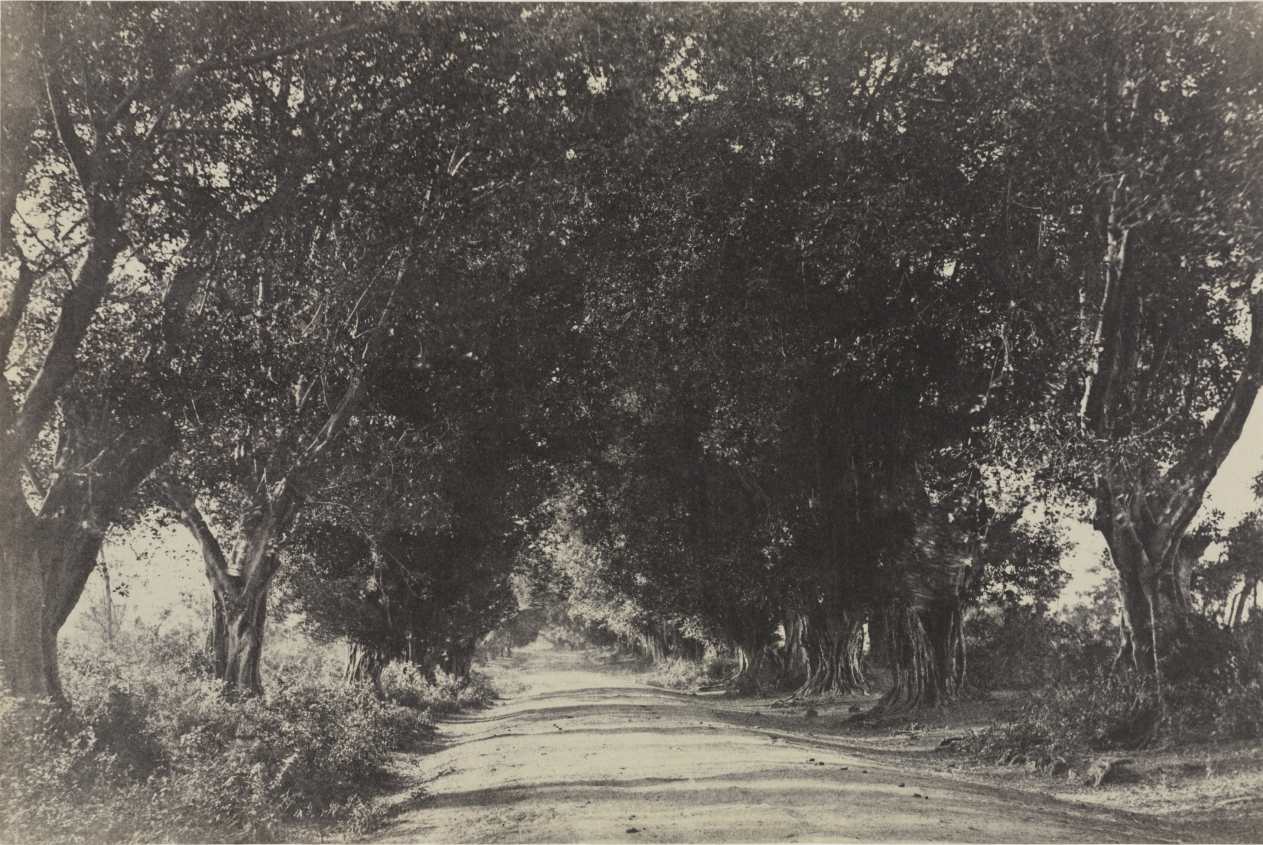
Technical Deconstruction: The Avenue of the Banian Trees as a Study in Sacred Compression
The Avenue of the Banian Trees in Seringham, India, presents a living architectural paradox: a colonnade of aerial roots that descend from a central canopy to form a secondary forest of vertical supports. This natural phenomenon, when analyzed through the lens of the provided DNA source—the juxtaposition of the Metropolitan Museum of Art’s *Bodhisattva* and the Walters Art Museum’s *Bull-Headed Seated Amulet*—yields a precise formal vocabulary for the 2026 executive wardrobe. The Banian tree is neither singular nor plural; it is a system of *manifestation* and *containment*. The Bodhisattva represents the idealization of form as a vessel for transcendence; the amulet represents the compression of power into a portable, protective symbol. The Banian tree synthesizes both: its aerial roots are the Bodhisattva’s flowing drapery made structural, and its central trunk is the amulet’s dense core made monumental. The critical insight for urban silhouette research is this: the Banian tree’s form is a study in **verticality achieved through horizontal expansion**. The canopy spreads laterally, but the roots descend vertically, creating a grid of negative space that is both sheltering and isolating. This is the antithesis of the 2025-era power shoulder or the exaggerated volume of the 1980s. For 2026, the silhouette must be **compressed at the core and released at the periphery**, a direct translation of the tree’s root-to-canopy relationship.Formal Analysis: The Aerial Root as Structural Line
The Bodhisattva’s drapery is not fabric; it is a rhythmic line that guides the eye upward, away from the material. The Banian tree’s aerial roots perform the same function. They are not random; they are a disciplined repetition of vertical lines that create a **rhythmic enclosure**. In garment construction, this translates to a **rigorous use of vertical seam lines, paneling, and darts** that do not merely follow the body but actively *define* a new architectural space around it. The 2026 executive silhouette must abandon the soft, unstructured blazer. Instead, we propose a **structured, double-breasted jacket with a pronounced vertical panel system**. The fabric should be a heavy, matte wool-silk blend in Slate—a color that absorbs light rather than reflects it, echoing the dappled shade of the Banian canopy. The lapels should be narrow and elongated, terminating at the natural waist, not the hip. This creates a visual “trunk” from the collarbone to the navel, compressing the torso into a column of power. The sleeves should be set with a high armhole and a clean, unbroken line from shoulder to wrist, eliminating any puff or gather. This is the *Bodhisattva* principle: the garment is an idealized container for the body, not a mimicry of its contours. The amulet’s influence appears in the **compression of the waist**. The Bull-Headed Seated Amulet is a dense, compact object; its power lies in its small scale and concentrated symbolism. For the executive wardrobe, this translates to a **high-waisted, wide-leg trouser** that cinches the torso at the diaphragm, not the hip. The waistband should be a rigid, structured band of the same Slate fabric, approximately 3 inches wide, with no belt loops. This creates a visual “amulet” around the midsection—a zone of concentrated authority. The trouser leg should fall straight from the hip to the floor, with a slight break at the shoe, creating a continuous vertical line that echoes the aerial root’s descent.Color Theory: Slate as a Medium of Negative Space
Slate is not a neutral; it is a **chromatic compression**. It sits between charcoal and blue-gray, absorbing the warmth of the spectrum while retaining a cool, mineral undertone. In the context of the Banian tree, Slate is the color of the bark, the shadow beneath the canopy, and the still water of the nearby Kaveri River. It is the color of *containment*. For the 2026 palette, Slate functions as the **primary structural color**. It is the ground against which all other elements are measured. The jacket and trousers are Slate. The shirt, if worn, must be a **pure Ivory**—not cream, not white, but a cold, stark Ivory that reads as bone or parchment. This is the color of the Bodhisattva’s skin in polished stone: idealized, unblemished, and slightly removed from the organic. The tie or neckpiece should be **Onyx**—a black so deep it appears as a void, referencing the amulet’s dense, protective core. The color blocking is deliberate: Slate (structure) + Ivory (idealized surface) + Onyx (compressed power). There is no room for pattern, texture, or gradient. The Banian tree’s beauty is in its repetitive, almost industrial uniformity. The executive wardrobe must mirror this: a uniform of quiet, absolute authority.Silhouette Application: The 2026 NYC Executive Uniform
The final silhouette is a **Minimalist Column with a Compressed Core**. The jacket’s vertical paneling creates a visual “canopy” that broadens the shoulders without padding, while the high-waisted trousers create a “trunk” that narrows the waist. The overall effect is a **tall, narrow, and slightly top-heavy** profile—a direct translation of the Banian tree’s form. Key construction details: - **Jacket**: Single-button closure at the natural waist. No vents. The hem should fall at the mid-hip, creating a clean line that does not interrupt the vertical flow. - **Trousers**: No pleats. A flat front with a single, centered crease. The hem should be cuffed at a 1.5-inch depth, adding weight and ensuring a clean break. - **Footwear**: A plain-toe Oxford in Onyx leather, with a slim sole and a low, stacked heel. The shoe should be invisible beneath the trouser hem, preserving the unbroken vertical line. This is not a silhouette for movement; it is a silhouette for *presence*. The executive who wears this uniform is not walking through the city; they are standing within it, like a Banian tree in a courtyard—rooted, sheltering, and utterly immovable in their authority.Conclusion: The Sacred in the Secular
The Avenue of the Banian Trees teaches us that the most powerful forms are those that compress the sacred into the structural. The Bodhisattva’s drapery and the amulet’s density are not opposites; they are the same impulse expressed at different scales. For the 2026 executive wardrobe, the lesson is clear: eliminate the decorative, amplify the structural, and let the silhouette speak of a power so internalized it requires no ornament. Slate is the color of that power—cool, mineral, and eternal.
Technical Insight
NYC Perspective: Translating Slate tones into Minimalist silhouettes.