Urban Form: Side Chair
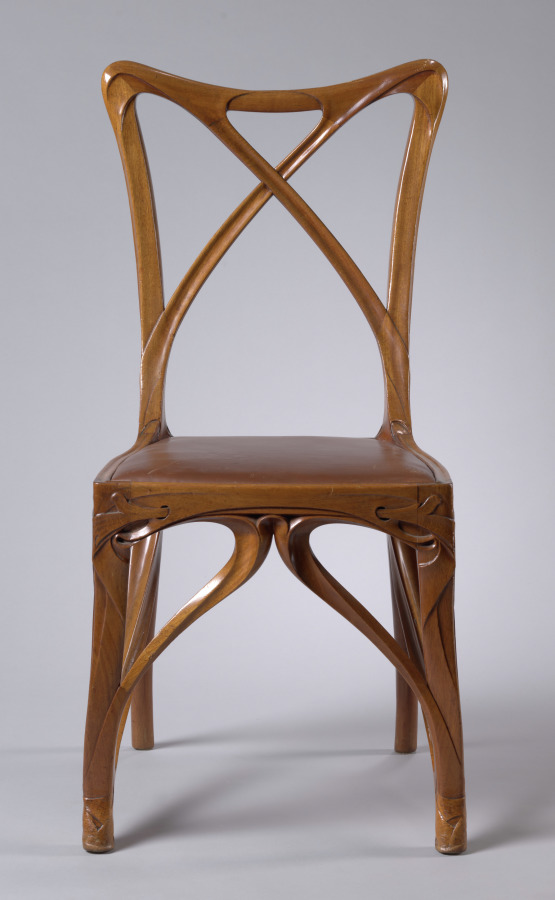
Structural Poetics of the Side Chair: A Technical Analysis for the 2026 Executive Silhouette
Geometric Integrity and the Architectural Frame
The side chair, in its most reductive form, is a study in orthogonal tension. For the 2026 executive silhouette, we extract its core geometric principle: the cantilevered support and the vertical spine. The chair’s backrest, a rigid plane, dictates the posture of authority—a straight, unyielding line from nape to sacrum. This is not a lounge piece; it is a command post. The seat plane, horizontal and unadorned, mirrors the desk’s surface, creating a continuous field of action. The legs, whether splayed or rectilinear, anchor the form to the ground with a deliberate, almost brutalist clarity.
In the context of the internal DNA—the Famous Women cassone and the Caparisoned Elephant—the side chair becomes a minimalist reliquary. Where the Renaissance wedding chest used painted surfaces to encode feminine virtue, the side chair uses negative space. Its “decoration” is the absence of decoration. The chair’s frame is a structural narrative: every joint, every angle, every material junction is a statement of intent. The Famous Women box concealed its ideology beneath floral motifs; the side chair exposes its ideology through pure geometry. The power is not in what is depicted, but in what is permitted—the rigid containment of the body within a prescribed posture.
Urban Materiality: From Fabric to Frame
The Caparisoned Elephant presents fabric as a second skin, a layer of imperial authority that redefines the natural form. For the side chair, we invert this. The “caparison” is not draped; it is integrated into the structure. The upholstery—a single, seamless panel of ivory wool or technical linen—is not an addition but a surface membrane. It is stretched taut, like a drum skin over a ribcage, eliminating all wrinkles and folds. This is the antithesis of the Mughal elephant’s opulent drapery. Here, fabric is disciplined. It is a mineralized textile, treated to resist wear, to repel moisture, to maintain its pristine, planar surface.
The frame itself speaks to urban materiality. Consider a powder-coated steel or brushed aluminum chassis—materials of the city, of infrastructure, of bridges and scaffolding. The chair’s legs might terminate in cast bronze feet, a subtle nod to the Famous Women box’s gilded hardware, but rendered in a matte, industrial finish. The joints are exposed, not hidden. A visible mortise-and-tenon or a polished weld becomes a design feature, a confession of construction. This is the poetics of honesty: the chair does not pretend to be carved from a single block of wood; it is assembled, engineered, urban.
The Surface as Ideological Interface
Both historical artifacts in the internal DNA operate through a paradox of surface. The Famous Women box uses painted surface to simulate fabric, while the Caparisoned Elephant uses actual fabric to simulate power. The side chair collapses this distinction. Its surface is its structure. The ivory upholstery is not a narrative; it is a blank screen. It invites projection, but refuses to dictate content. This is the executive aesthetic of 2026: a surface that is impenetrable yet receptive, a field of potential rather than a fixed message.
The color: Ivory is critical. It is not white—white is sterile, absolute. Ivory is warm, aged, and slightly translucent. It recalls the parchment of illuminated manuscripts, the vellum of the Caparisoned Elephant miniature, the bone inlay of Renaissance cabinets. It is a color of accumulated history, but rendered in a modern, matte finish. It absorbs light rather than reflecting it, creating a soft, volumetric presence that avoids the harsh glare of corporate minimalism. This is a tactile minimalism, where the eye is drawn to the surface’s subtle grain, its slight sheen, its material truth.
Silhouette Implications for the 2026 Executive
The side chair’s geometry directly informs the executive silhouette. The vertical backrest dictates a straight, elongated spine. The seat’s horizontal plane demands a clean, unbroken line from hip to knee. The sitter’s posture is architectural: shoulders back, head poised, arms resting on the chair’s arms (if present) or on the desk. The silhouette is minimalist in its restraint. There is no slouching, no asymmetry, no casual draping. The body becomes a component of the chair, an extension of its structural logic.
This is a powerful, androgynous form. It rejects the gendered ornamentation of the Famous Women box, which framed women as decorative objects. Instead, it adopts the imperial authority of the Caparisoned Elephant’s caparison, but stripped of its exoticism. The executive is not a ruler on a throne; they are a node in a network, a function within a system. The chair is their interface. The urban materiality—steel, aluminum, technical fabric—speaks to a world of glass towers, data streams, and constant motion. The ivory surface offers a moment of stillness, a blank space for contemplation.
Conclusion: The Aesthetics of Control
The side chair, analyzed through the lens of Famous Women and Caparisoned Elephant, reveals itself as a device for the management of presence. Its geometric integrity is not merely aesthetic; it is a behavioral script. It dictates how one sits, how one works, how one is seen. The minimalist category is not an absence of style, but a concentration of meaning. Every line, every material, every joint is a decision. The color: Ivory is the final, silent note—a color that holds history without narrating it, that invites touch without yielding to it.
For the 2026 executive, this is the definitive silhouette: controlled, intentional, and materially honest. It is the urban warrior’s seat, a throne of pure function, where power is not displayed but inhabited.